
Lieferung heute & morgen

Qualitätsgarantie

Willkommens-Angebote freischalten: KOSTENLOSE Lieferung | Bis zu 80 % RABATT | Kostenlose 30-Tage-JoyPlus-Testphase
App herunterladen
Toy cars for children may seem straightforward at first glance. In practice, however, models differ significantly in terms of age suitability, space requirements, drive type and accessories. A small car for on-the-go has different demands to a children’s race track or a large car park garage.
To ensure your purchase doesn’t disappoint after a short time, parents, grandparents and other family members should particularly watch out for three common pitfalls:
For children between 3 and 8 years old, different vehicle concepts come into question. A simple push-along car is usually easier to operate than a remote-controlled car for children. Construction kits with many parts, on the other hand, are better suited to older children or require adult supervision.
Pay attention to:
The CE marking should be present. It indicates that the manufacturer declares compliance with applicable EU requirements. Additionally, information about materials, the manufacturer and the responsible person in the EU is helpful. However, the marking does not replace checking for damaged parts, loose wheels or sharp edges.
A toy car park garage can take up permanent space in a child’s bedroom. The Theo Klein Bosch Car Service multi-storey car park measures 55 × 55 × 85 cm according to the product details and has five levels. This height should be compared with your available space before purchasing.
For a children’s race track, you should also consider the length of the assembled track, the stability of the connections and how the track pieces are stored. Small vehicle play sets are more flexible but can contain many individual parts. A storage box or a vehicle with integrated storage can make everyday life much easier.
Manual vehicles don’t need batteries and are ideal for spontaneous play sessions. With electronic models, buyers should check whether batteries are included and how many are required. This is especially important for models with light and sound effects.
A remote-controlled car for children should have a clear, simple control system. For younger children, basic driving functions are usually more accessible than multiple speed and direction modes. For outdoor use, ground clearance, tyre tread and dry storage also matter.
For construction vehicle toys and a fire engine toy, moving components such as tipping beds, cranes, ladders or hoses are particularly appealing. What’s crucial is that these functions are robustly made and don’t lead to an overwhelming number of small accessory pieces.
The following recommendations group products by specific usage profiles. The key factors are the stated dimensions, features, age suitability and what’s included in the box.
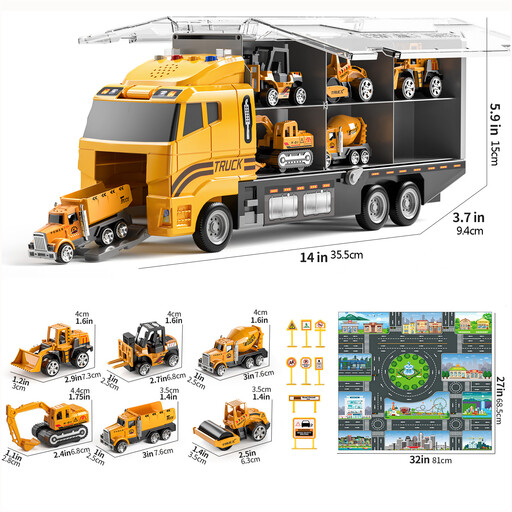
Why this product fits the profile: The set combines a transporter base, several construction vehicles, a foldable play mat and accessories. According to the product description, it’s suitable for children aged 3 to 8 and enables various play scenarios without needing additional vehicles.
The play mat creates a defined play area, while the transporter can hold several vehicles. This makes the set easier to store tidily after play than loose individual cars.
Includes several construction vehicles, traffic signs and a play mat. Some features such as light and sound require batteries.
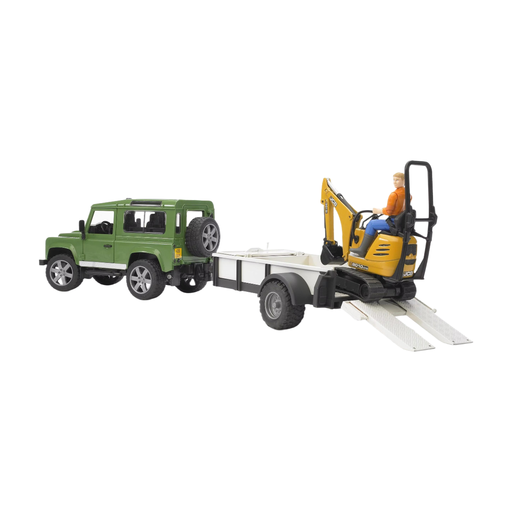
Why this product fits the profile: According to the details, this vehicle play set is aimed at children aged 3 and up and combines a 1:16 scale vehicle with a trailer, micro excavator and figure. It suits children who prefer realistic construction site scenarios.
The product description lists specific moving functions such as opening doors, a rotating excavator body and a drop-down trailer tailgate, rather than just general play promises.
Manual operation with no batteries required; compatible with figures from the bworld series. Small parts mean the age recommendation must be observed.
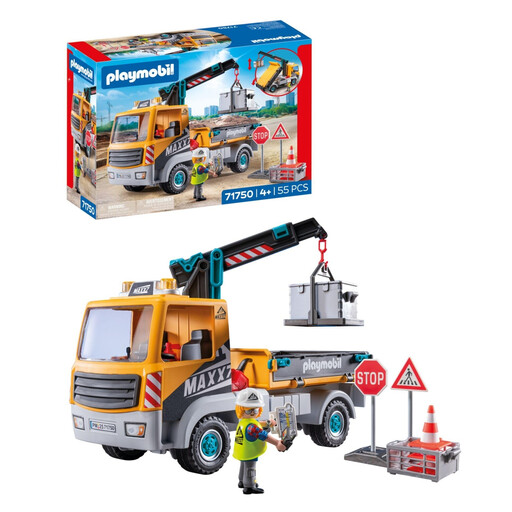
Why this product fits the profile: This model is designed for children aged 4 and up and features an extendable and swivelling telescopic arm, a tipping loading area and fold-down side panels. This makes it ideal for frequent role-play around construction site logistics.
The functions are clearly named and mechanically operated. There are no ongoing battery costs for running the vehicle.
Manual drive, movable crane arm and tipping loading area. According to the manufacturer, the set can be combined with other PLAYMOBIL worlds.
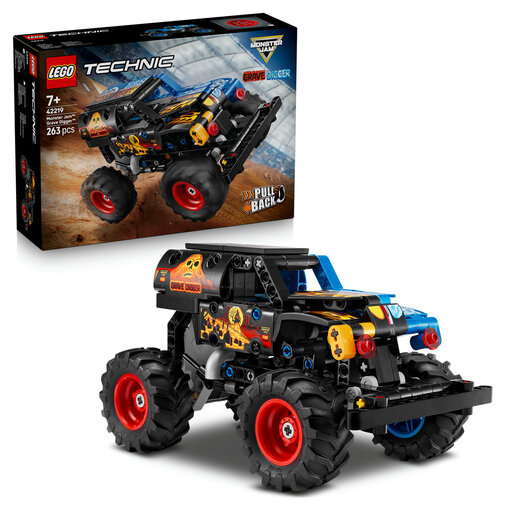
Why this product fits the profile: This construction kit is designed for children aged 7 and up and contains 263 building bricks. The vehicle has a pull-back function and is ideal for children who want to combine building with racing play afterwards.
The contents list states the number of pieces, the recommended age group and the vehicle dimensions. This makes it easier to assess the assembly effort before buying.
263 building bricks, pull-back mechanism and digital building instructions according to the product description. Small parts make this unsuitable for children below the stated age.
We’ve put together a full, regularly updated list of products that fully meet these strict selection criteria and the safety regulations in force in the EU.
Models with a clear age rating, sturdy wheels and a manageable amount of accessories are suitable. With toy cars for ages 3 and up, parents should pay particular attention to small parts, easily detachable components and the supervision instructions. A manual vehicle or a simple vehicle play set is often more accessible than a complex construction kit.
That depends on the model. Check both the dimensions of the assembled track and the space needed for the start, run-off area and operation. With a toy car park garage, height and floor area also come into play. Before buying, you should also clarify whether the parts can be dismantled after play.
In addition to the purchase price, costs for batteries or rechargeable batteries can arise. So compare the number of batteries required, whether batteries are included and whether a charger is needed. Manual children’s vehicles and simple racing car play sets usually don’t incur any additional energy costs during use.