
Lieferung heute & morgen

Qualitätsgarantie

Willkommens-Angebote freischalten: KOSTENLOSE Lieferung | Bis zu 80 % RABATT | Kostenlose 30-Tage-JoyPlus-Testphase
App herunterladen
Toy cars for children come in many different varieties: from simple pull-back vehicles to fire engine toys and detailed construction vehicles. For parents, grandparents and relatives, the choice can therefore be overwhelming. An eye-catching design or lots of features alone doesn't tell you much about whether a vehicle suits a child's age, fine motor skills and the space available.
Lights, sirens, music and moving parts can look appealing. For younger children, however, simple operating sequences are often more appropriate. With a vehicle that has several flaps, levers or small accessories, you should check whether the child can use them independently. Battery-operated functions also incur ongoing costs and require safe storage of button cells.
"Age 3+" does not mean that every child of that age can play safely with every detailed vehicle. Small figures, removable parts or accessories can pose a choking hazard. Scale and vehicle size also affect handling: a 1:16 model may be interesting for a child aged 4 and over, but it needs more space than small toy cars in 1:64 scale.
A large toy lorry with a fold-out ramp needs plenty of floor space and a level surface. For indoor use, compact children's vehicles are often more practical. If you want to play in the garden, look for easy-to-clean materials, sturdy wheels and moving parts. Water features or electronic modules should be maintained according to the manufacturer's instructions after use and stored in a dry place.
Pay attention to the manufacturer's age rating and the warning labels on the packaging and product page. Many models in the toy cars for ages 3+ category contain small accessories. For children under 36 months, such products are generally not suitable. Even with older children, it's a good idea to check regularly for loose or damaged parts.
Plastic is widely used in children's vehicles. What matters is a clear material specification, smoothly finished edges and robust connections. Details such as ABS plastic, 1:16 or 1:64 help with classification, but they don't replace checking the actual product dimensions.
A large model is great for extensive role-play with figures and accessories. Small vehicles are easier to transport and collect. When choosing a gift for a child, you should consider not only the theme but also the available play area.
Manual vehicles don't need batteries and are ready to use straight away. Models with lights and sound, on the other hand, require suitable batteries, which must be fitted safely and kept out of reach of young children. Also check whether batteries are included or need to be bought separately.
With fire engine toys, police car toys and construction vehicles for children, it's worth looking at the specific mechanisms: do doors, ramps, cranes or loading areas work manually? Are accessories fixed or removable? These details determine whether the vehicle can be used in different play scenarios over the long term.
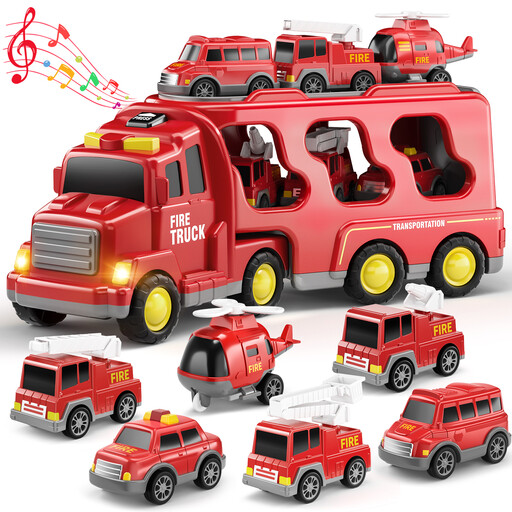
Why this product fits the profile: The 7-in-1 set combines a transporter with several small vehicles, offering a variety of play options for children aged 3 and over.
The product details clearly state the recommended age, the set contents and how the transporter works. This makes it easier to assess what you're getting before you buy.
Transporter with fold-out tailgate, five small vehicles and light and sound function according to the product description.
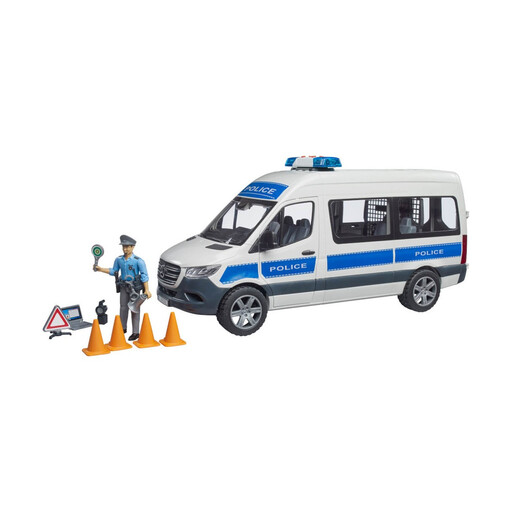
Why this product fits the profile: This 1:16 model is designed for children aged 4 and over who want to create realistic emergency scenarios with a vehicle and play figure.
The product data includes the scale, age rating, figure and light & sound module. This means you can understand the accessories and space requirements before ordering.
Opening doors, integrated light and sound function and an included bworld police officer figure according to the product description.
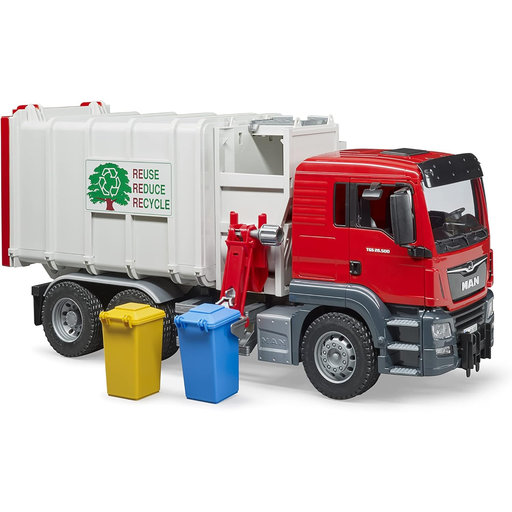
Why this product fits the profile: This rubbish truck toy is suitable for children aged 3 and over who want to understand processes like loading, emptying and transporting.
The mechanical functions are clearly described in the product details. No batteries are required, so there are no ongoing battery costs.
1:16 MAN TGS model with tipping container, opening tailgate and two included wheelie bins.
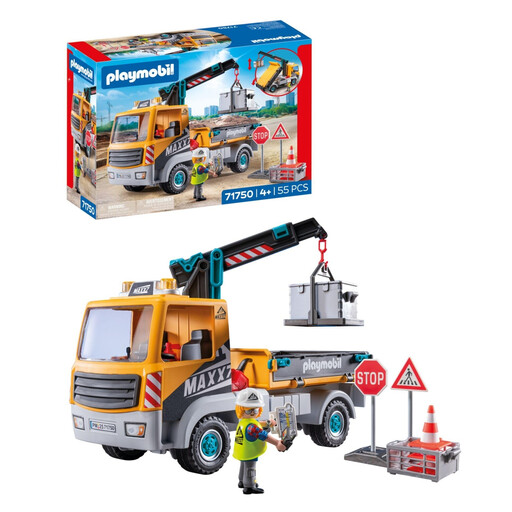
Why this product fits the profile: This construction vehicle for children aged 4 and over combines transport, crane operation and building site role-play without needing batteries.
The product description mentions the extendable and swivelling telescopic function as well as the dimensions. This lets you check the space requirements before buying.
Tipping loading area, extendable and swivelling arm, and expandability with other PLAYMOBIL worlds.
We've put together a full, regularly updated list of products that fully meet these strict selection criteria and the safety regulations in force in the EU.
Models with a clear age rating of 3+ and a manageable number of accessories are suitable. Look out for warning labels about small parts and choose a vehicle that sits comfortably in the hand. A rubbish truck with two bins or a simple fire engine can offer play sequences that are easy for this age group to follow.
That depends on the child and how you plan to use them. Lights and sound can enhance role-play, but they need batteries and can be disruptive in smaller homes. When choosing, check the battery type, what's included and the instructions for safe storage.
How long they last depends on the material, build quality, how intensively they're played with and the environment. It's a good idea to check regularly for loose wheels, damaged doors or broken small parts. Vehicles should be cleaned after playing outdoors and electronic components protected from moisture.