
Lieferung heute & morgen

Qualitätsgarantie

Willkommens-Angebote freischalten: KOSTENLOSE Lieferung | Bis zu 80 % RABATT | Kostenlose 30-Tage-JoyPlus-Testphase
App herunterladen
An electric ride-on car for children can look bigger, faster and more versatile in product photos than it really is in everyday use. But for parents and grandparents, LED effects and a particularly realistic look matter less than finding the right size, a manageable speed and a battery suited to how the car will be used.
Three common buying mistakes can lead to unnecessary costs:
The manufacturer’s age recommendation is a useful guide, but it doesn’t replace checking the technical specifications. Before buying, check:
An electric ride-on car for children aged 3 and over should only be used if the child can sit securely and reach the controls comfortably. For younger children, non-motorised ride-on toys with a low seat may be more suitable. For example, the YEEHOO Ride-On Toy is designed for children aged 10 to 36 months and around 75 to 100 cm tall. It isn’t an electric vehicle, but an indoor ride-on and rocking toy.
When choosing a battery-powered ride-on vehicle for children, consider voltage, capacity and charging information separately. A 12V battery can deliver different levels of performance depending on the motor setup. Check:
A low speed isn’t necessarily a drawback for beginners. The red electric quad for children, with a 6V motor and a speed of 3 km/h, is designed for controlled driving. A 12V model with two speed settings may offer more capability on grass or paved outdoor surfaces, but still requires adult supervision.
An electric ride-on car for children with remote control lets adults step in when needed. Other useful features include soft start, forward and reverse gears, a seat belt, a backrest and easy-to-use controls. Lights and music can make play more fun, but they don’t replace safety measures.
Before buying, check that the vehicle is suitable for the surface where it will be used. Asphalt, wooden floors, grass, gravel and sand all place different demands on the tyres and motor. These toys aren’t designed for public roads, steep areas, stairs, bodies of water or busy car parks with poor visibility.
Also look for clear manufacturer and importer details, warnings, assembly instructions and the required conformity information. For toys, information about CE marking and relevant safety requirements such as EN 71 is important; electrically powered ride-on vehicles may be subject to additional requirements. You should be able to check this information on the product itself and in the documentation.
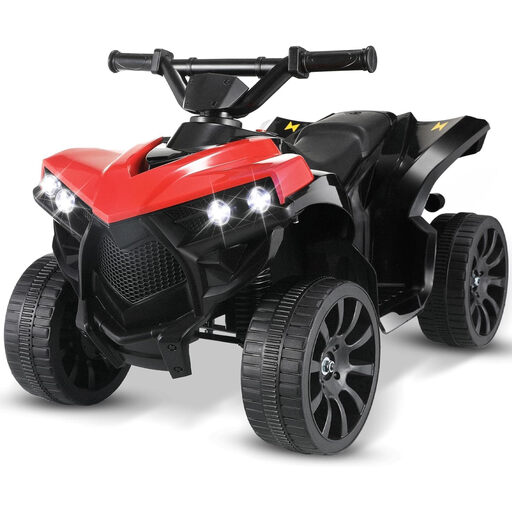
Why it suits this buyer: This electric quad is designed for families looking for a manageable speed and simple controls for supervised play. It comes with LED headlights, music and a horn.
The stated speed of 3 km/h is clearly specified. Four large wheels and a maximum weight capacity of 25 kg make it easier to assess whether it’s suitable before you buy.
6V motor, forward and reverse functions, LED lights and a stated play time of up to 50 minutes per charge.
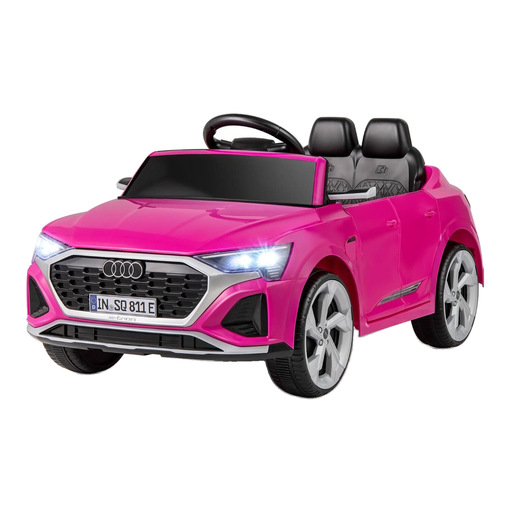
Why it suits this buyer: This model combines manual driving with a 2.4 GHz remote control for parents. It’s a good choice for families who value controllable speed and extra features.
Three speed settings, soft start and remote control make it easier to manage than a model that can’t be controlled by an adult.
12V battery with 4,5 Ah capacity, two 12V motors, seat belt, suspension, LED lights, music and a stated speed of 3 to 5 km/h.
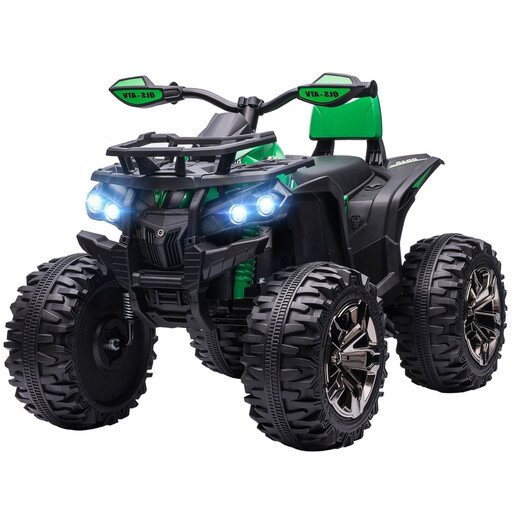
Why it suits this buyer: This 12V quad is designed for supervised outdoor rides. Large treaded tyres, a backrest and rear shock absorbers make it a good fit for families who plan to ride regularly on paved surfaces or grass.
The product description specifies the intended surfaces, two speed settings and a maximum weight capacity of 25 kg. This makes it easier to judge where and how it can be used.
Four wheels, anti-slip tyres, forward and reverse gears, LED headlights, music player and foot-pedal controls.
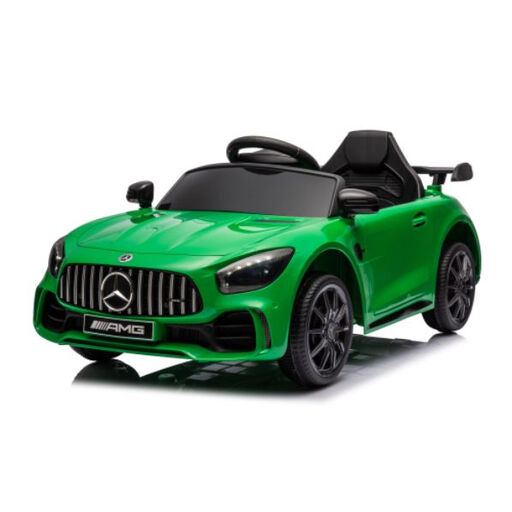
Why it suits this buyer: This electric ride-on car is listed for children aged 3 to 5 and combines manual driving with a 2.4 GHz remote control. It’s a suitable gift for supervised play.
The product details specify three speed settings, a top speed of 3 mph, a weight capacity of 25 kg and a running time of up to 45 minutes.
12V battery with 4,5 Ah capacity, two motors, lights and music, plus a remote control with three speed settings.
Before the first ride, an adult should assemble the vehicle fully and check all screws, wheels, pedals, belts and plug connections. Only charge the battery using the supplied charger, and follow the charging time in the instructions. After use, store the vehicle somewhere dry and frost-free.
Wipe the plastic parts with a soft cloth. Electrical components must not be cleaned directly with water. Check the tyres, cables, casing and fixings regularly. Running costs mainly include electricity, replacement batteries for the remote control and possible battery wear. The actual lifespan depends on use, storage and maintenance.
We’ve put together a complete, regularly updated list of products that meet these strict selection criteria and fully comply with the safety regulations in force in the EU.
Play time depends on the battery, motors, the child’s weight, the surface and the temperature. Figures such as 45 or 50 minutes are guidelines. After play, charge the battery according to the instructions, and don’t store it fully discharged for long periods.
A remote control lets adults adjust the speed and direction, or stop the vehicle. However, it doesn’t replace direct supervision or a suitable, clear area to ride in. The child should be supervised throughout use.
The electricity cost per charge is usually modest and depends on the battery capacity, charging losses and your electricity tariff. Replacement batteries, batteries for the remote control and damaged wear parts may have a bigger impact on your budget. Before buying, check the charger, battery type and spare parts information too.