
Lieferung heute & morgen

Qualitätsgarantie

Willkommens-Angebote freischalten: KOSTENLOSE Lieferung | Bis zu 80 % RABATT | Kostenlose 30-Tage-JoyPlus-Testphase
App herunterladen
Toy cars for toddlers are among the most popular toys for young children. They encourage imaginative play, invite children to sort and move things around, and can be used indoors or outdoors. However, products vary considerably in their age recommendations, design, battery requirements and play systems.
Three common buying mistakes often lead to an unsuitable purchase:
The age recommendation is an important factor when choosing a toy. Toy vehicles for children aged 1 and over should be designed for little hands to grip and move safely. If a model contains small parts, it must not be used by children under three unless the manufacturer has specifically indicated otherwise.
Supervision is also advisable for products marked as suitable from 1 year. Check battery compartments, detachable figures, ladders and accessories regularly to make sure they’re secure and undamaged. An age recommendation of ‘from 1 year’ doesn’t replace an assessment of your child’s individual abilities.
For younger children, pushing, rolling and simple buttons are usually easier to manage than a complex remote control. So, a remote-controlled car for toddlers should have just a few clearly identifiable functions. Also check whether it can move across carpet, parquet or smooth floors.
A toy fire engine or toy digger may have moving ladders, shovels or tipping buckets to add to imaginative play. These parts should move easily and have no sharp edges.
Interactive cars with lights and sounds need batteries, which will need replacing regularly. Check the following:
A battery-free vehicle, such as a classic push-along car, may appeal to families looking to reduce running costs and noise. Avoid using electronic models in damp areas unless the manufacturer states otherwise.
The products below are grouped by how and where they’re used, and by their features. Rather than following a general ranking, the key is to find a good match for your child’s age, play area and preferred way of playing.
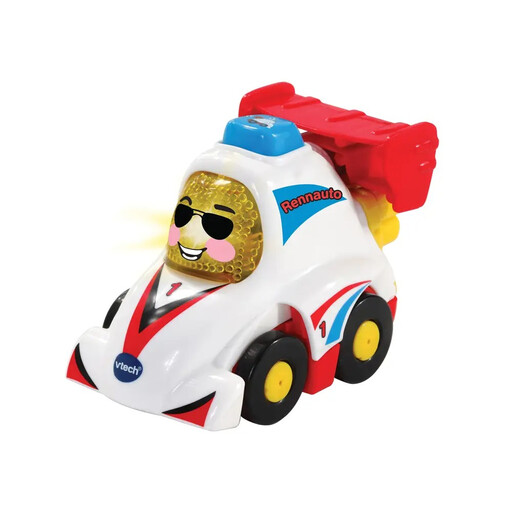
Why it’s a good fit: This compact car is designed for children aged 1 and over, and can be operated by pushing it, pressing a button or using its motion sensors. According to the product details, two AAA batteries are included.
It keeps things simple, with just a button and movement to operate it. It’s also listed as compatible with other Tut Tut Baby Flitzer playsets.
Lights, sounds and melodies; compact dimensions of approximately 5.58 × 9.77 × 7.41 cm.
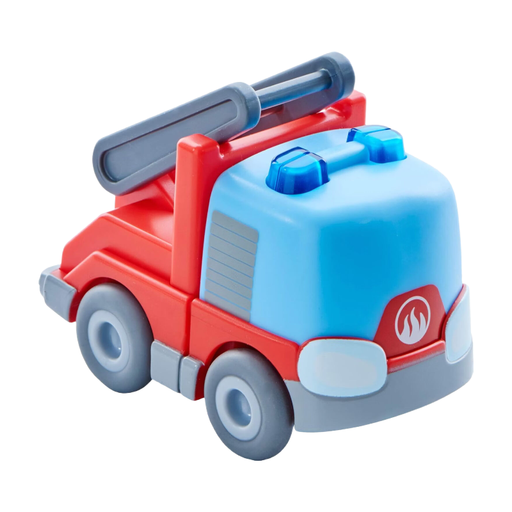
Why it’s a good fit: This fire engine is designed for children aged 2 and over and works with Kullerbü tracks. A moving part adds to fire service role-play.
The system it belongs to is clearly stated: this vehicle is designed for Kullerbü tracks, so it’s best bought alongside a compatible track.
No batteries needed; dimensions of approximately 10 × 7 × 8 cm and a moving fire engine ladder.
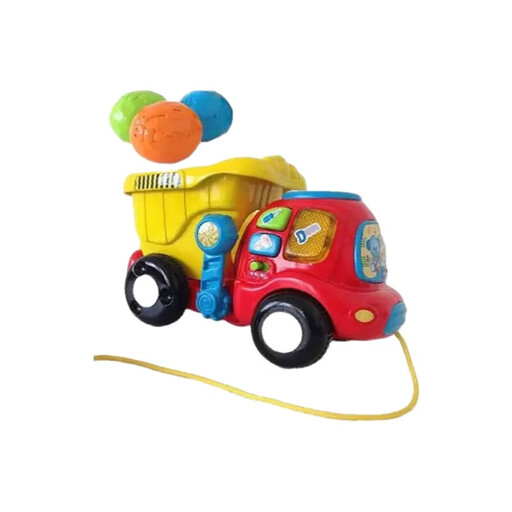
Why it’s a good fit: According to the product details, this tipper is suitable for children aged 12 months and over. It combines pulling, sorting and transport play with light and sound effects.
The product description sets out specific activities rather than promising general entertainment: sorting building blocks and pulling the lorry along.
Dimensions of approximately 30.2 × 24.3 × 13.8 cm; two AAA batteries and interactive sorting play.

Why it’s a good fit: This set includes a dedicated children’s race track, two vehicles, a remote control and several track sections. It’s listed as suitable for children aged 1 and over, although the product also carries a warning about small parts.
The amount of space needed and the time required to assemble the track are clear before you buy. For younger children, an adult should put it together.
Two vehicles, eleven magnetic sensors and four AA batteries according to the product details; assembled dimensions of approximately 23.8 × 134.8 × 74.9 cm.
We’ve put together a complete, regularly updated list of products that meet these strict selection criteria and the safety regulations in force in the EU.
Look for models that are easy to grip, with sturdy wheels and a few simple functions. Pay particular attention to age recommendations and warnings for products with small parts, detachable figures or complex tracks.
Their lifespan depends on the materials, how they’re used and how well they’re cared for. Check the wheels, axles, moving parts and battery compartments regularly. Store electronic vehicles in a dry place and use only the correct batteries. If you notice cracks, loose parts or damage to the battery compartment, stop using the toy.
Push-along cars and battery-free construction vehicles have no ongoing battery costs. Models with lights, music or remote controls, on the other hand, need replacement batteries. Before you buy, check the battery type and quantity, and whether the vehicle switches off automatically. Larger electric vehicles also require charging time, suitable storage and battery care.