
Lieferung heute & morgen

Qualitätsgarantie

Willkommens-Angebote freischalten: KOSTENLOSE Lieferung | Bis zu 80 % RABATT | Kostenlose 30-Tage-JoyPlus-Testphase
App herunterladen
Toy cars and RC cars differ considerably in how they’re controlled, their materials, age recommendations and care requirements. A striking design or the words ‘All Terrain’ alone tell you little about whether a vehicle is right for the way you plan to use it. Before buying, parents, family members and collectors should check a few common marketing claims.
With a remote-controlled car, battery capacity isn’t the only thing that matters. The motor, vehicle weight, surface and driving style all play a part. A 7.4-volt battery with a capacity of 1,500 mAh offers different capabilities from a small 3.7-volt battery with a capacity of 220 or 500 mAh. Without standardised test conditions, you can’t reliably work out a specific run time from the product description alone.
It’s also worth checking whether a battery and USB charging cable are included, and whether the remote control needs additional batteries. For several products, AA or AAA batteries for the controller aren’t included.
An off-road RC car may work on grass, sand or carpet, but it needs sufficient ground clearance, grippy tyres and a sturdy powertrain. Wet surfaces, deep mud or snow can still put strain on the electronics and battery. So ‘waterproof’ shouldn’t be taken to mean that the vehicle can be submerged for long periods.
An RC stunt car that can spin 360 degrees, flip over or drift sideways needs plenty of space and a suitable surface. On delicate furniture, smooth glass or in cramped living spaces, the wheels and bodywork can wear out more quickly. For indoor use, compact models with adjustable speed are often more practical than large off-road vehicles.
The age recommendation is a safety feature, not simply a product suggestion. Many LEGO sets contain small parts and are intended for ages 9, 10 or 18 and over. For RC vehicles, also check whether direct adult supervision is recommended. The models listed shouldn’t be used by children under three.
A 4WD RC car powers all four wheels, which can be an advantage on uneven surfaces. A drift RC car or a vehicle with Mecanum wheels, on the other hand, is designed for sideways movement and spins. Look out for:
Gesture control can make a model easier to get started with, while a traditional handheld remote usually gives you more precise control.
When comparing model cars, scale, materials and moving parts are important considerations. A die-cast model car made from metal and plastic is often a good choice for a display cabinet or desk. Opening doors and bonnets add detail, but also make the model more vulnerable to knocks.
LEGO Speed Champions and a LEGO Technic car take a different approach: the focus is on the building process, recreating vehicle details and displaying the finished model. Depending on the set, LEGO Technic also includes technical features such as steering, engine or door mechanisms.
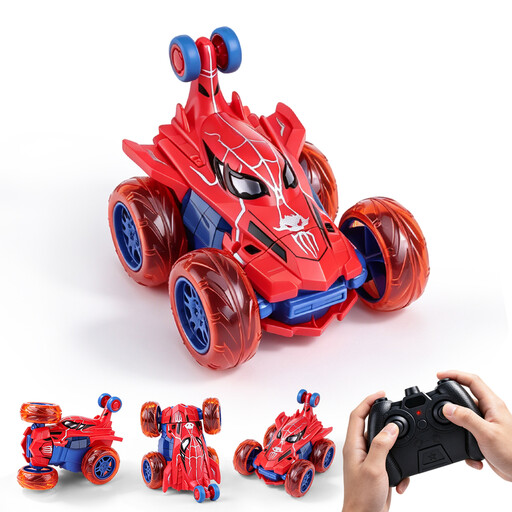
Why it suits this profile: This compact remote-controlled toy car for children has 4WD, LED wheels and a rechargeable 3.7-volt battery. It’s suitable for first driving adventures on roads, grass and sand.
The product details list the battery, USB cable and batteries needed for the remote control separately. This makes it easier to plan for any extras before you buy.
4WD, automatic demonstration function, LED lighting and the ability to drive on both sides.
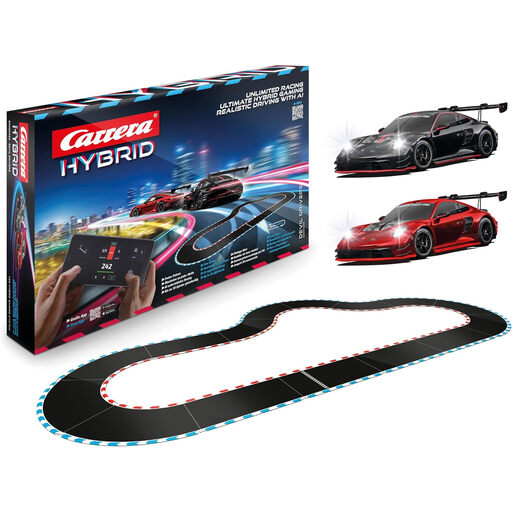
Why it suits this profile: Designed for users aged 12 and over, this set combines 1:50 racing cars with app control, a flexible race track and multiplayer functionality.
The technical details specify the battery, track dimensions, app connection and age recommendation. This gives you a clearer idea of the space and set-up required before you buy.
Up to 16 local race participants according to the product description, smartphone control and a rechargeable lithium-polymer battery.
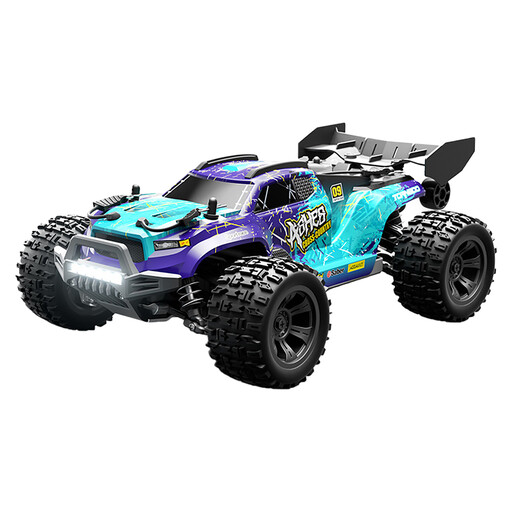
Why it suits this profile: This off-road RC car is for anyone looking for a larger vehicle with four-wheel drive, LED headlights and shock absorbers for tackling different surfaces.
The description lists the chassis, tyres, differential, drive shafts and battery separately. It also states that the vehicle should be used under adult supervision.
4WD metal chassis, 7.4-volt 1,500 mAh lithium-ion battery and 2.4 GHz remote control; three AA batteries for the remote control are required separately.
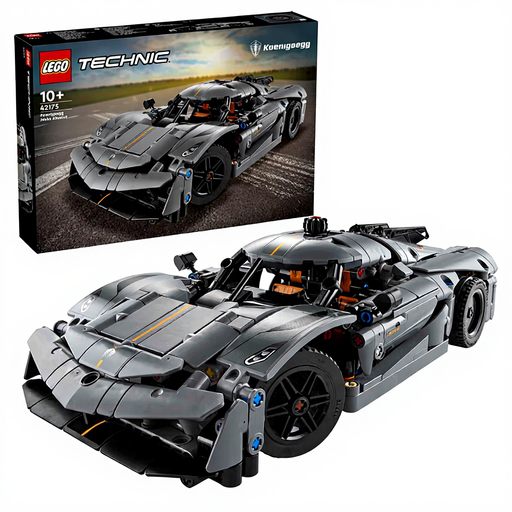
Why it suits this profile: This set is aimed at fans of building and automotive engineering aged 10 and over. It features 801 pieces, a V8 engine, differential, steering and a moving door mechanism.
The product description gives the recommended age, number of pieces, dimensions and specific components. This helps buyers get a better idea of the space needed and the time involved in the build.
Technical features, a model length of 28 cm, and building instructions or support through the LEGO Builder app.
We’ve put together a complete, regularly updated list of products that meet these strict selection criteria and fully comply with the safety regulations in force in the EU.
For a younger child, a simple toy racing car without a battery may be a better choice than a complex RC model. The Siku Bugatti Chiron, for example, has a metal body, rubber tyres and opening doors, and doesn’t need batteries. For teenagers and adults, a collector’s car, a die-cast model car or a detailed LEGO model could be a better fit.
When choosing a gift, it’s also worth considering the size of the packaging, how to store small parts and whether replacement parts are available. Switch off battery-powered vehicles after play, store them in a dry place and charge them according to the manufacturer’s instructions. Keep the electronics and battery out of water, even if some components may be splash-resistant.
Actual run time depends on battery capacity, motor, speed, surface and driving style. A higher mAh figure indicates greater capacity, but doesn’t guarantee a particular play time. If you use the car regularly, an additional compatible spare battery may be useful, but only if the manufacturer recommends one.
Small models with limited speed can be used indoors if there’s enough clear space. Stunt vehicles with LED wheels, drift functions or flip features need to be kept away from furniture and breakable objects. Check the dimensions, turning circle and recommended surface before you buy.
A model car is usually designed to be pushed along, collected or displayed, and doesn’t have remote control. An RC car is driven by radio control, an app or gesture control, and generally needs a rechargeable battery or disposable batteries. LEGO models, on the other hand, combine the building process with play and display features.