
Lieferung heute & morgen

Qualitätsgarantie

Willkommens-Angebote freischalten: KOSTENLOSE Lieferung | Bis zu 80 % RABATT | Kostenlose 30-Tage-JoyPlus-Testphase
App herunterladen
Toy cars and model cars differ significantly in terms of age recommendation, material, play style and maintenance requirements. An inexpensive vehicle may be suitable for a toddler, whereas a detailed die-cast model car is typically intended as a collector's item for teenagers or adults. If you focus only on appearance or a long list of features, you can easily overlook important buying criteria.
Small parts, mini-figures and removable accessories may be unsuitable for children under three years old. Even a product labelled as a "children's toy" is not automatically appropriate for every age. You should always check the manufacturer's specific age recommendation, warning notices and the intended use before making a purchase.
A LEGO model from the LEGO Speed Champions range, for example, is aimed at children aged 9 or 10 depending on the set. A detailed die-cast model car, on the other hand, may only be suitable from age 14. For younger children, robust vehicles without small, swallowable parts are a better option.
A car racing track can come as a simple flexible circuit, a multi-storey car park with ramps, or an electrically powered rail system. The assembly area, power supply and gameplay vary considerably. A children's racing track several metres long needs plenty of space and should be safely storable after play.
With an electric track, you also need to consider the power adapter, batteries, connectors and whether it is suitable for indoor use. A flexible track without batteries is easier to set up, but offers a different play experience compared to a Carrera track with controllers and lanes.
A model car with opening doors, a bonnet and a delicate interior is often intended for display in a cabinet. Such features can be damaged more quickly during everyday play than a simple plastic vehicle. Conversely, a robust racing car toy usually offers less scale-accurate detail.
Before choosing, you should therefore be clear about whether the vehicle will be driven, built, collected or mainly displayed.
Pay attention to the age group specified by the manufacturer and the warning about small parts. For sets containing building blocks, mini-figures or accessories, use by younger siblings should only be considered under appropriate supervision. With remote-controlled vehicles, you should also take into account charging instructions, battery type and moving wheels.
ABS plastic is commonly used for construction kits and toy vehicles. It is lightweight and allows for snap-fit connections. A die-cast model car, on the other hand, is usually made from a metal alloy with plastic elements, making it feel heavier. Opening doors or moving parts increase the level of detail, but are additional components that need to be considered during play.
The product dimensions are crucial for practical use. A LEGO car model can sit permanently on a shelf after assembly, whereas a five-storey car park requires considerably more floor space. With a racing track, you should factor in not only the track length, but also curves, loops and space for the controllers.
For a remote-controlled car for children, the floor surface and range in the intended environment also matter. Smooth indoor floors, carpets and flat outdoor surfaces may each suit different wheel designs.

Why this product suits the profile: The flexible track is designed for children aged 3 and over and requires no batteries. It can be rolled up and used indoors or outdoors.
The age recommendation and warning about small parts are clearly stated. As it operates without batteries, there are no charging or replacement battery costs.
4.5 metres of flexible dual-lane track, two pull-back vehicles and suction cups for attaching to smooth surfaces.
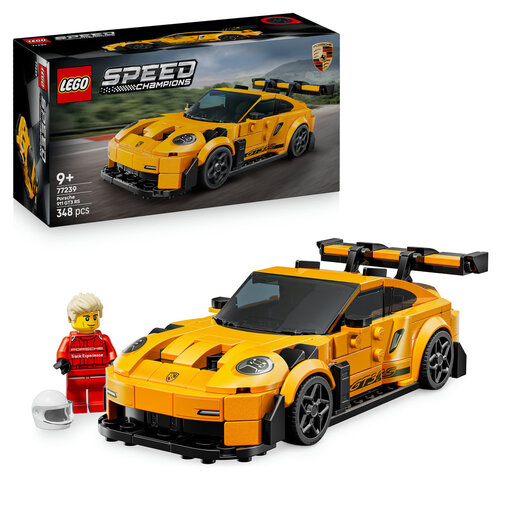
Why this product suits the profile: This car construction kit combines a structured building experience with a model for the shelf. It is aimed at fans aged 9 and over and contains 348 pieces.
The piece count, dimensions and age recommendation make it easy to assess the actual building effort. The model is not labelled as a toddler toy.
Detailed design with rear spoiler, air intakes, wheel rims and racing driver mini-figure.
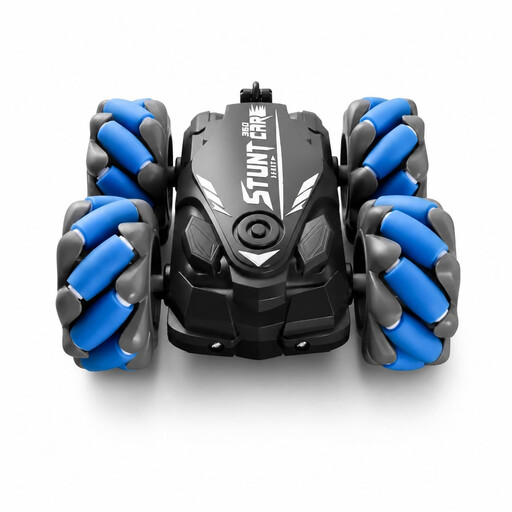
Why this product suits the profile: This remote-controlled car for children aged 8 and over is designed for stunts, drifting and use on flat indoor and outdoor surfaces.
The usage is described in relation to age. The charging, care and safety instructions include, among other things, protection from water, heat and overcharging.
2.4 GHz remote control, gesture control, four-wheel drive, USB charging cable and Mecanum wheels.

Why this product suits the profile: According to the product information, this metal model is aimed at people aged 14 and over and is suitable for display or occasional play.
The scale indication and age recommendation clearly distinguish this model from toy cars for toddlers.
Alloy construction, opening doors and pull-back mechanism in a compact design.
We have put together a complete, regularly updated list of products that fully meet these strict selection criteria and the safety regulations in force in the EU.
Many simple vehicles are available from age 3. However, sets with small building blocks, mini-figures or detailed accessories may have a higher age recommendation. The manufacturer's specifications and warning notices are always the deciding factor.
A model car is a scale-accurate or stylised vehicle model. A die-cast model car is predominantly made from a metal alloy and often contains plastic parts. It is usually offered for collectors and for display, but depending on the design it may also have a pull-back mechanism.
For smaller spaces, roll-up flexible tracks or compact car parks are practical. Electric systems additionally require a clear assembly area, a power socket or batteries, and enough space next to the track for operation. Before buying, you should therefore compare the assembled dimensions with the available room.