
Lieferung heute & morgen

Qualitätsgarantie

Willkommens-Angebote freischalten: KOSTENLOSE Lieferung | Bis zu 80 % RABATT | Kostenlose 30-Tage-JoyPlus-Testphase
App herunterladen
Toy cars for toddlers may seem straightforward at first glance. In practice, however, they can differ considerably in terms of age suitability, operation, battery consumption and small parts. Parents, grandparents and anyone else buying a gift should therefore look beyond colours, sounds or familiar characters.
A product may be described as suitable for children aged 1 and over while also containing small parts that could pose a risk to younger children. The information on the packaging and the specific warnings should always be the deciding factors. For sets with tracks, accessories or removable figures, the size of each individual part is particularly important.
Lights, music, sensors and remote controls can be appealing. For a child in their second year, however, complicated controls can quickly become confusing. A vehicle with a few easy-to-reach controls may be used for longer in everyday play than a model with numerous functions that only work with adult guidance.
Before buying, check whether batteries are included, which types are required and whether the battery compartment can be secured. An RC car for children often needs additional batteries for the remote control. Vehicles with sound and lights may use more power than a purely mechanical push-along car.
For children aged 1 and over, large, easy-to-grip vehicles without small parts that can be detached easily are generally suitable. With vehicles for children aged 1 and over, rounded edges, a sturdy casing and a secure battery compartment are practical points to check. Models for children aged 18 months or 2 and over may also include larger building blocks and moving features. However, the age recommendation does not replace adult supervision.
A push-along car, an interactive toy car and a remote-controlled car for children are designed for different play situations:
Plastic can be cleaned with a soft, slightly damp cloth. Wooden toys should be checked regularly for splinters, loose parts and cracks. All motor-skills toys for toddlers should be visually inspected before use. Damaged vehicles, loose wheels or battery compartments that do not close securely should be removed from the play area.
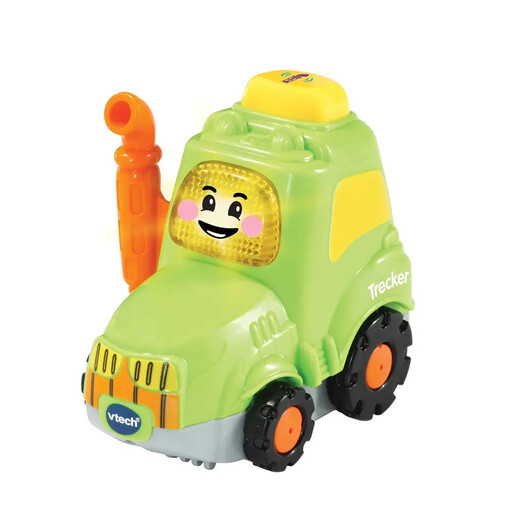
Why this product suits this profile: According to the product information, the tractor is suitable for children aged 1 and over and requires two AAA batteries, which are included. This means there is no need to buy additional batteries before getting started.
The battery type and age range are clearly stated. Adults should still check the vehicle for damage before every use.
Lights, sounds, songs and responses to wheel movement; compatible with the Tut-Tut-Baby-Flitzer play world.
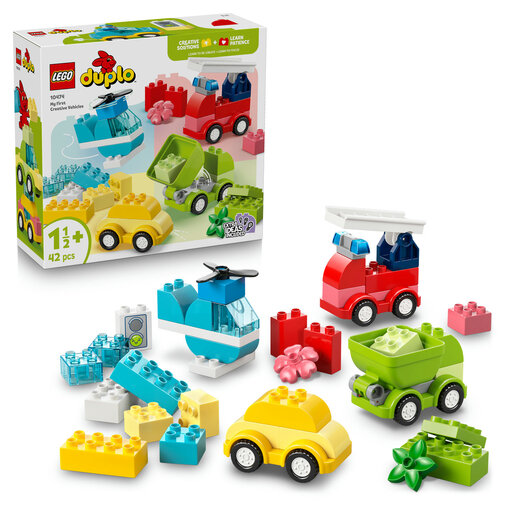
Why this product suits this profile: The large building blocks and three vehicle bases offer a range of different construction options. According to the product description, the set is suitable for children aged 18 months and over.
The play value does not depend solely on lights or sound: the vehicles can be changed again and again using 42 building blocks. Small parts and warnings must still be taken into account.
Large building blocks, moving vehicle parts and several creative building ideas without batteries.
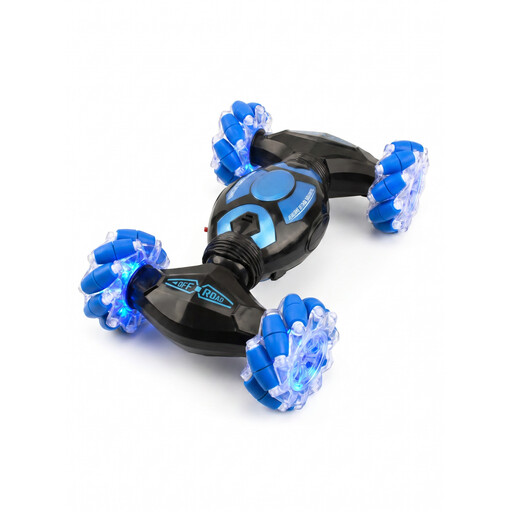
Why this product suits this profile: This remote-controlled car for children offers a classic remote control plus a gesture-controlled wristwatch. This setup is particularly suitable for older children aged 3 and over and larger open play areas.
The type of control is clear before purchase. Because of its stunt functions and the warning about small parts, it is not intended as a vehicle for very young toddlers.
Four-wheel drive, 2.4 GHz control, gesture control and rotating driving manoeuvres according to the product description.
We have put together a complete, regularly updated list of products that fully meet these strict selection criteria and the safety regulations applicable in the EU.
From the age of 1, large, easy-to-grip push-along or interactive vehicles may be suitable. The key factors are the specific age recommendation, a secure battery compartment and the absence of small parts that can be detached easily. With sets that include accessories, the child should initially play under direct supervision.
That depends on the model and the child’s age. Simple controls may be intended for children from around 18 months, while stunt or construction vehicles are often recommended only from the age of 3. Before buying, check the range of controls, batteries, operating range and warnings.
Their lifespan depends on the materials, build quality, play environment and care they receive. Mechanical vehicles do not need batteries and are straightforward to maintain with regular checks. With electronic models, batteries should be removed after play or the vehicle should be switched off according to the instructions. Tracks, wheels and moving features should be stored dry, clean and without being subjected to heavy loads.