
Lieferung heute & morgen

Qualitätsgarantie

Willkommens-Angebote freischalten: KOSTENLOSE Lieferung | Bis zu 80 % RABATT | Kostenlose 30-Tage-JoyPlus-Testphase
App herunterladen
A toy castle is more than just a toy—it's a stage for imagination, a gateway to medieval adventures or fairytale worlds. But the selection is vast and overwhelming. From classic knight's castles for children to detailed construction sets for adults, the differences in quality, complexity, and play value are enormous. Many buyers only realise after unboxing that their expensive gift brings more frustration than joy. This guide will help you navigate the common pitfalls and make an informed decision.
Before you buy a Disney castle or opt for a large knight's fortress, you should be aware of the most common problems that often only become apparent at home.
To avoid the problems mentioned above, you should check three core aspects. These will help you objectively assess a product's quality and utility.
Safety is the most important criterion, especially for toys intended for younger children. Look for the CE marking, which confirms that the product meets EU requirements. A crucial indicator is the EN 71 standard. It regulates, among other things, the mechanical and physical properties as well as the chemical safety of toys. High-quality products, like those from brands such as LEGO or Playmobil, are typically made of robust ABS plastic. This material is durable, dimensionally stable, and free of harmful plasticisers. Also, check that the design features rounded edges to prevent injuries.
Choosing the right system largely depends on the child's preferences. There are fundamental differences here:
castle building set offers almost limitless possibilities due to the combinability of the bricks.Playmobil castle is ideal for children who want to dive straight into imaginative role-playing.The manufacturer's age recommendation is an important guideline but should be supplemented by a look at the piece count and level of detail.
princess castle for this age group should include simple mechanisms and sturdy figures.adult castle building set, such as the Harry Potter Hogwarts Castle or models from the LEGO Architecture series, is characterised by a high piece count (often over 2,000 pieces) and a focus on architectural details. These sets are designed as challenging construction projects and display pieces.Based on the criteria above, we have identified some models that are particularly well-suited for different user profiles.
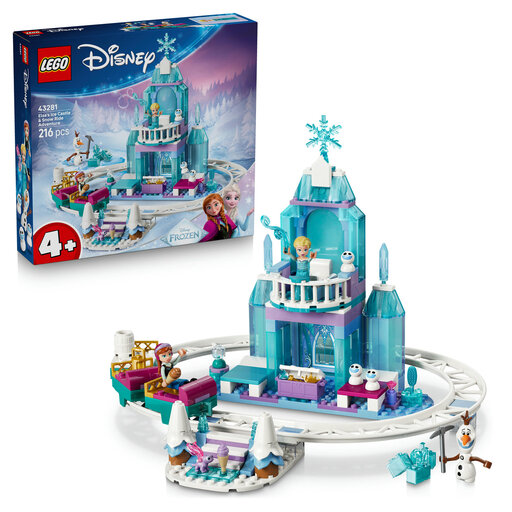
Why it's a great fit: Ideal for preschoolers who love the world of Disney. The set combines a simple building process with high play value thanks to familiar characters and interactive elements like the sleigh train.
The included LEGO Starter Bricks and illustrated instructions prevent frustration during assembly (avoids pitfall 2). The robust LEGO quality ensures stability during play (avoids pitfall 1).
Includes 7 figures and a sleigh train with tracks, which immediately enables diverse play scenarios and stimulates creativity.
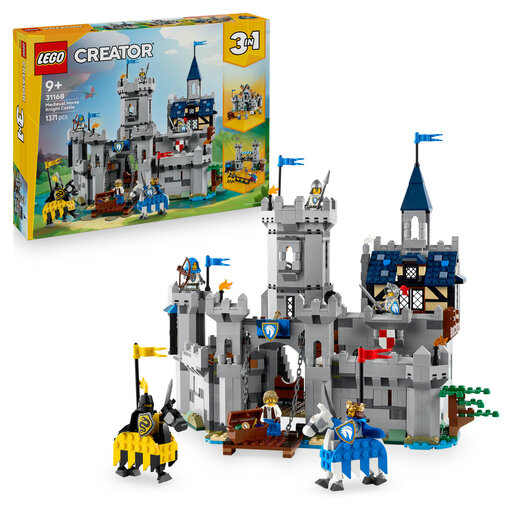
Why it's a great fit: Perfect for children who not only want to play but also build and redesign. The classic theme of a children's knight's castle is given a modern interpretation here.
The 3-in-1 concept directly counteracts the problem of low long-term play value (avoids pitfall 3). Children can rebuild the castle into a tournament scene or a town.
Offers three complete, distinct models in one set. This maximises the building and playing fun and provides excellent value for money.
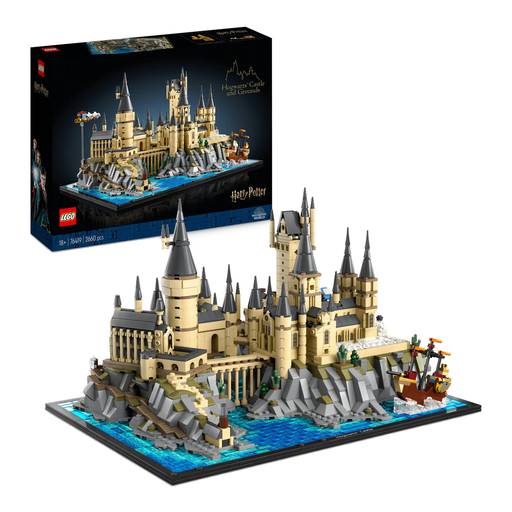
Why it's a great fit: A highly detailed microscale model for adult fans and collectors. It is designed as a challenging building project that results in an impressive display piece.
The high complexity is a desired feature here, not a flaw (avoids pitfall 2 for this target audience). As a collector's item, its value is long-term and lies in its detail, not active play (avoids pitfall 3).
This set is the first LEGO model to depict the entire Hogwarts grounds, including the Main Tower, Astronomy Tower, Great Hall, and the Black Lake.
We've compiled a complete, up-to-date list of products that fully meet these strict selection criteria and European safety regulations.
1. What is the difference between a LEGO castle and a Playmobil castle? The main difference lies in the play concept. A LEGO castle is a building set where construction and creative redesign are the focus. It promotes construction skills. A Playmobil castle is primarily a backdrop for role-playing with the characteristic Playmobil figures. Assembly is simpler and faster, so the focus is directly on storytelling.
2. How can I identify a safe toy castle for toddlers? Look for the CE marking and the EN 71 standard. Check the manufacturer's age recommendation. For children under three, sets with small parts are unsuitable (choking hazard). A safe castle for toddlers is made of robust, non-toxic plastic (e.g., ABS), has no sharp edges, and the parts are large enough that they cannot be swallowed.
3. How do I properly care for and clean a toy castle? For plastic bricks like LEGO, the manufacturer often recommends gentle hand washing in lukewarm water (below 40°C) with a mild soap solution. The parts should then be air-dried. Avoid the dishwasher or aggressive cleaning agents, as they can damage the material or stickers. For Playmobil parts, wiping with a damp cloth is usually sufficient. Always follow the specific care instructions provided by the manufacturer.