
Lieferung heute & morgen

Qualitätsgarantie

Willkommens-Angebote freischalten: KOSTENLOSE Lieferung | Bis zu 80 % RABATT | Kostenlose 30-Tage-JoyPlus-Testphase
App herunterladen
A child's eyes light up when they unbox a new construction vehicle. But that joy can be short-lived if the excavator arm breaks off after its first trip to the sandbox, or the truck's trailer won't stay attached. The selection of toy construction vehicles is vast, and not every model delivers on its promises. As a Joybuy Product Recommendation Officer, I see daily what features make a toy durable and which marketing traps lead to disappointment.
Before you make a decision, you should be aware of three common pitfalls that often lead to frustration in the playroom:
To avoid buyer's remorse, you should focus on a few crucial core parameters. These will help you objectively evaluate a model's quality.
The choice of material is critical for longevity and intended use. There are two leading approaches here:
A good toy excavator or toy crane is defined by its realistic functions. A movable excavator arm, a tipping dumper on a toy truck, or an extendable crane arm promotes fine motor skills and an understanding of mechanics.
Ensure that the mechanical parts are smooth and easy for little hands to operate. Equally important is a consistent scale if you plan to build a Siku construction site or a fleet of Bruder construction vehicles. This allows the vehicles to be used in a consistent size ratio to one another, enabling the creation of complex play scenarios.
To make your decision easier, we have selected a few models based on typical use cases.
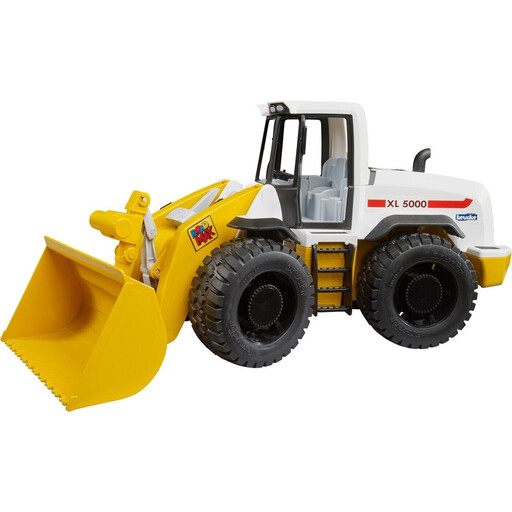
Why it's a great fit: Specifically designed for toddlers aged 2 and up. The rounded shapes, robust ABS plastic, and simple operation via a central handle are ideal for small hands just developing their motor skills.
This model avoids the material trap. The high-quality plastic is designed for rugged indoor and outdoor use and won't break under the first load in the sandbox.
The articulated steering and easy-to-operate loading arm playfully promote an understanding of complex movements. Carries the "spiel gut" (good toy) seal.

Why it's a great fit: For children who appreciate realistic details and functions. The combination of metal and plastic ensures stability, while the fully movable shovels and swivelling backhoe allow for precise play.
This model solves the scale problem. At a 1:50 scale, it's compatible with many other vehicles in the SIKU construction world, making it easy to build a cohesive collection.
High level of detail and multiple manual functions (front loader, backhoe) in a single, robust model. Ideal as a versatile centrepiece for a toy construction site.
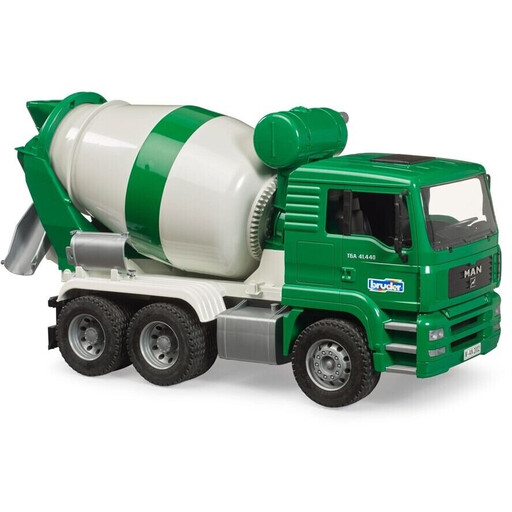
Why it's a great fit: A large, impressive vehicle made for outdoor action. The large scale (1:16) and a functional mixing drum that can be filled with sand or water make it the star of any sandbox construction site.
This model debunks the multi-function set fallacy. It focuses on one core function—mixing and pouring—and executes it exceptionally well and robustly, rather than combining many unstable features.
The rotating drum with a conveyor screw and the fold-out concrete chute simulate the real process, offering high, interactive play value. The tilting cab reveals the engine block.
If you're looking for more models that meet our criteria for durability, play value, and safety, you can find a wider selection here.
For use in the sandbox, the larger ABS plastic models from Bruder (1:16 scale) are often the more practical choice. The material is resistant to moisture, and sand is easy to rinse off. SIKU models, which are often made of metal and have finer mechanical parts, are better suited for indoor play, as sand and moisture can damage the mechanics and paintwork over time.
This largely depends on the model. Simple, very robust vehicles without small, swallowable parts, like those in the Bruder ROADMAX series, are suitable for children from 2 years old. More detailed models with complex functions from Bruder or SIKU are generally recommended for children aged 3 or 4 and up. At this age, fine motor skills are more developed to use the functions, and the imagination for role-playing is more pronounced.
Plastic vehicles (like those from Bruder) can simply be rinsed under running water. Make sure they dry completely afterwards to prevent residue from building up in moving parts. For models with metal components (like those from SIKU), you should be more careful to avoid rust. It's best to remove loose sand with a soft brush and then wipe the vehicle with a slightly damp cloth.