
Lieferung heute & morgen

Qualitätsgarantie

Willkommens-Angebote freischalten: KOSTENLOSE Lieferung | Bis zu 80 % RABATT | Kostenlose 30-Tage-JoyPlus-Testphase
App herunterladen
The selection of toy construction vehicles is vast, ranging from simple dump trucks for the sandbox to detailed model cranes. But not every shiny vehicle delivers on its promise. Many products turn out to be short-lived or unsuitable for children's hands. This guide will help you navigate the common pitfalls and find a durable, safe, and engaging model with high play value.
As a Joybuy Product Recommendation Officer, I analyse market data to provide you with objective, practical advice that goes beyond the manufacturers' marketing jargon.
Before you make a decision, you should be aware of the most common problems that often only become apparent after unboxing:
To avoid a bad purchase, focus on three verifiable criteria. These define a model's durability and play value.
The choice of material is fundamental. High-quality ABS plastic, often used in Bruder vehicles, is flexible, shatterproof, and weather-resistant—ideal for use as a sandbox toy. Die-cast metal models (e.g., from Siku) offer a realistic weight and high stability but are more susceptible to paint chipping and rust when exposed to moisture.
Pay attention to the following details:
The functionality should be appropriate for the child's age. For toddlers, simple, robust mechanisms like a tipping bed on a toy truck are ideal. Older children enjoy more complex features, such as a 360-degree rotating excavator arm or an extendable telescopic crane.
The scale is crucial for size and compatibility:
A safe toy is paramount, especially when intended as a gift for boys or girls. Look for the CE mark, which confirms that the product complies with EU regulations. The EN 71 standard governs specific safety requirements for toys. For children under 36 months, construction vehicles for children must not have any small parts that can be swallowed. Always check the manufacturer's age recommendation carefully.
Instead of making a one-size-fits-all recommendation, we have selected models tailored to specific needs and age groups.
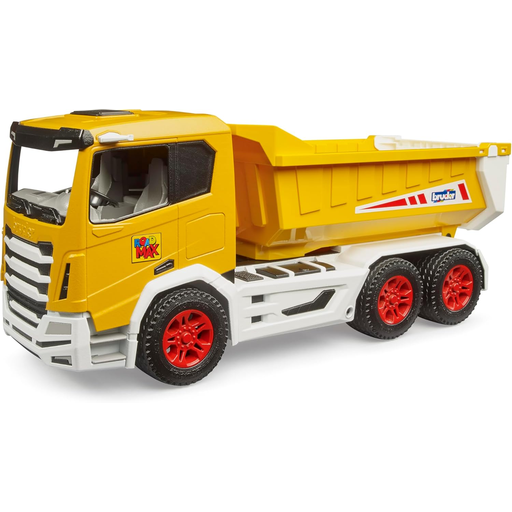
Why This Fits Their Persona: This model is specifically designed for the motor skills and play patterns of toddlers. It is extremely durable and has no small parts, making it an ideal first construction vehicle for the sandbox or playroom.
It avoids the "overloaded features" trap. The simple yet fully functional tipping trough focuses on a core play concept that toddlers can understand and master without frustration.
Made from high-quality ABS plastic and equipped with soft, treaded tires, it's built for heavy use both indoors and outdoors while being gentle on floors.
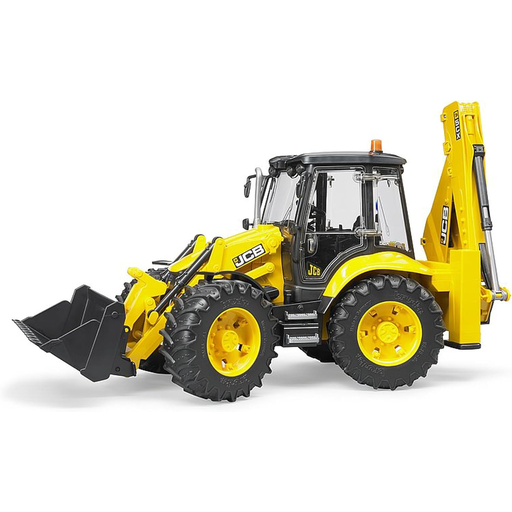
Why This Fits Their Persona: For children who love realistic play scenarios. This model offers a wealth of mechanical functions, from the front shovel to the rear backhoe, that replicate the operation of a real construction machine and promote fine motor skills.
It escapes the "material trap" because the mechanically stressed parts on Bruder vehicles are known for their durability. The functions are robust and designed for repeated play, not just for a display case.
The combination of a front loader and a backhoe in one vehicle, along with the 360-degree rotating driver's seat, offers enormous and long-lasting play value.
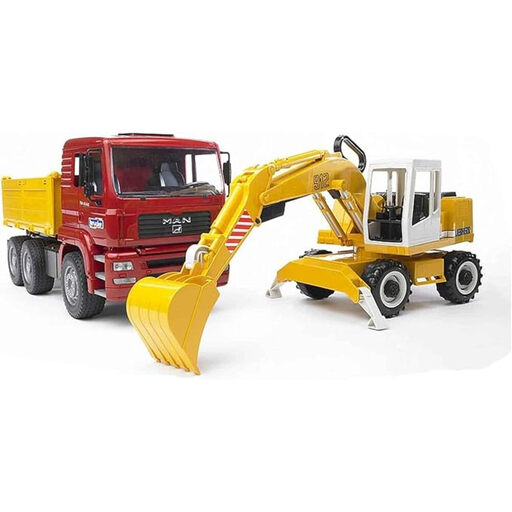
Why This Fits Their Persona: Ideal for anyone wanting to create a ready-to-play scenario right out of the box. This set includes two coordinated vehicles—a truck and an excavator—promoting cooperative play and complex workflows.
It solves the problem of incompatibility. Instead of buying individual vehicles that might not match in scale or style, this set provides a cohesive play world that works together instantly.
Two fully functional vehicles in one package. The MAN truck features a tipping trough and folding side panels, while the Liebherr excavator arm is fully articulated and can rotate 360°.
We have compiled a complete, up-to-date list of products that fully meet these strict selection criteria and EU/UK safety regulations.
For sandbox use, high-quality plastic like ABS (Acrylonitrile Butadiene Styrene) is often the more practical choice. It's rust-proof, easy to clean, and poses a lower risk of injury than metal if it breaks. While die-cast metal models are very sturdy, they can rust if the paint layer is damaged and are significantly heavier for young children to handle.
The scale indicates how many times smaller the toy is compared to the real vehicle. A 1:16 scale model is 16 times smaller than the original. This information is important for gauging the actual size of the toy and ensuring compatibility with other vehicles or figures. Models at 1:16 scale (e.g., from Bruder) are large and designed for active play, while models at 1:50 or 1:87 scale (e.g., from Siku) are smaller and better suited for collecting.
Always adhere to the manufacturer's age recommendation on the packaging. According to the EU Toy Safety Directive, toys with small parts that could be swallowed are generally not suitable for children under 36 months. For toddlers, you should choose models without any detachable small parts that are specifically designed for this age group.