
Lieferung heute & morgen

Qualitätsgarantie

Willkommens-Angebote freischalten: KOSTENLOSE Lieferung | Bis zu 80 % RABATT | Kostenlose 30-Tage-JoyPlus-Testphase
App herunterladen
The selection of toy construction vehicles is vast, ranging from simple plastic excavators to highly-detailed collector's models. However, the joy of a new toy can quickly fade if it doesn't meet expectations or breaks after a short time. Many buyers invest in products that look impressive at first glance but prove unsuitable in daily use. This guide will help you navigate the common pitfalls and make an informed decision.
The 3 Most Common Mistakes When Buying Toy Construction Vehicles:
To avoid buyer's remorse, you should check three core aspects before making a decision. These parameters are crucial in determining a model's durability, safety, and play value.
The robustness of a toy is directly linked to the material used. Pay attention to the following differences:
SIKU models have a higher weight, which provides a premium feel and adds stability. They are often popular with collectors and for detailed play.The label "Toy suitable for ages 3 and up" is more than a recommendation; it's an important safety notice. For children under 36 months, there is a choking hazard from small parts that can be swallowed.
toy excavator should have a movable bucket, and a toy truck should have a tipping bed. However, operation must be intuitive and possible without requiring delicate manoeuvres.building block kits (e.g., for military or technic models) challenge concentration and technical understanding.The scale indicates the size ratio of the model to the original vehicle. It is crucial if you want to build an expandable construction site playset.
Bruder vehicles are often compatible with the corresponding bworld figures, enabling realistic play scenarios.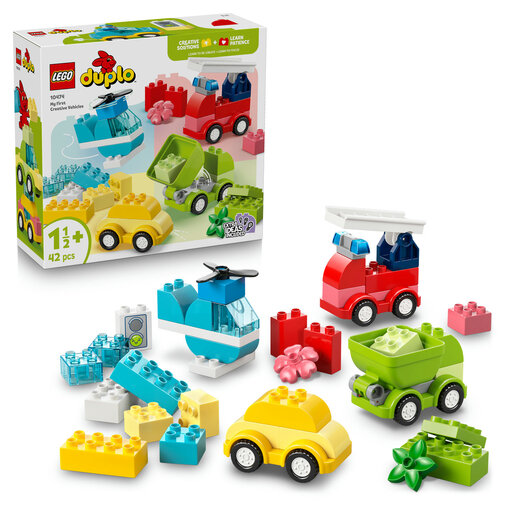
Why This Fits Their Persona: Ideal as a first vehicle set. The large, easy-to-grip bricks are specially designed for small hands and playfully promote fine motor skills and creativity without being overwhelming.
Avoids the pitfall of age-inappropriate complexity. There are no small parts that can be swallowed, and the functions are self-explanatory.
Promotes creativity and colour recognition; fully compatible with the entire LEGO DUPLO system for long-lasting play value.
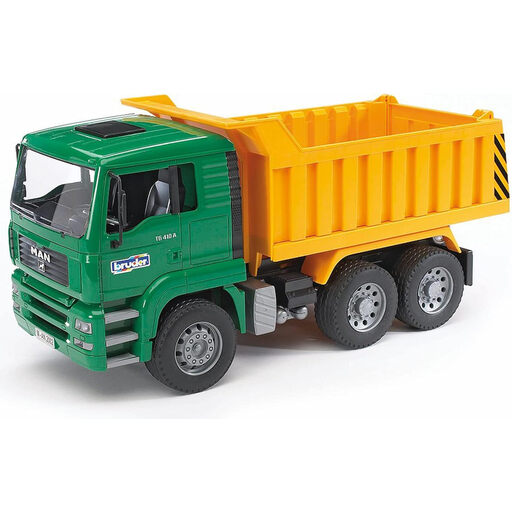
Why This Fits Their Persona: The perfect gift for boys and girls who love realistic role-playing. The large 1:16 scale and robust, functional parts like the tipping trough are ideal for use in the playroom and the sandbox.
Made from high-quality ABS plastic, thus avoiding the trap of brittle materials. The functions are robust and easy for children aged 3 and up to understand.
Detailed design with a tilting driver's cab; compatible with the entire Bruder world, allowing for expansion into a large construction site playset.

Why This Fits Their Persona: Appeals to adult collectors and older children who value detail and a high-quality feel. The 1:50 scale is ideal for display cases and model landscapes.
The robust construction of metal and plastic prevents material fatigue. The clearly defined 1:50 scale ensures compatibility within the SIKU world.
High level of detail with many moving parts like the front loader and backhoe; premium feel due to its substantial weight.
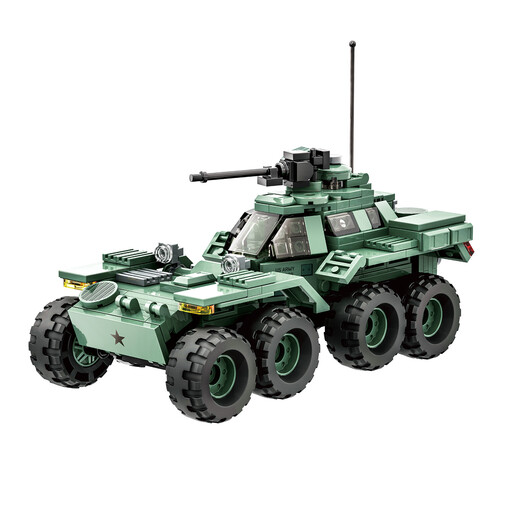
Why This Fits Their Persona: For older children and adults who appreciate the building process as much as the finished model. This 339-piece set challenges concentration and spatial reasoning, offering an alternative to classic pre-built models.
The focus is on the building experience. Here, complexity is not a drawback but the central feature. The finished model is robust and suitable as a display piece.
Educational value by promoting hand-eye coordination; high collector potential for fans of `military building block` models.
We've compiled a complete, up-to-date list of products that fully meet these strict selection criteria and UK safety regulations.
The main difference lies in the material and scale. Bruder vehicles are typically made in Germany in 1:16 scale from high-quality ABS plastic. They are larger, very robust, and designed for active, functional play. SIKU models are often smaller (e.g., 1:50 or 1:87) and consist of a metal-plastic combination. They are more detailed and very popular with collectors, but are also well-suited for play.
A remote-controlled dump truck is generally a good choice for children from around 6 to 8 years old. At this age, their motor coordination is developed enough to operate the controls precisely without becoming frustrated. For younger children, models with simple, manual functions like a tipping bed are often the better option for playfully discovering the basics of mechanics.
For most plastic and metal vehicles, a damp cloth is sufficient. For heavy soiling, such as after playing in the sand, the models (without electronics or stickers) can be cleaned under lukewarm water with a soft brush. Avoid aggressive cleaning agents, as they can damage the plastic or paint. Afterwards, let the toy air dry completely.