
Lieferung heute & morgen

Qualitätsgarantie

Willkommens-Angebote freischalten: KOSTENLOSE Lieferung | Bis zu 80 % RABATT | Kostenlose 30-Tage-JoyPlus-Testphase
App herunterladen
A toy crane truck should look impressive, but it also needs to work reliably in the playroom or sandpit. Parents, grandparents and other relatives have plenty of options to choose from: from small metal models and crane trucks with figures to comprehensive construction playsets.
However, three common buying pitfalls can push up the price unnecessarily:
For a toy crane for children, the age rating is an important starting point. Some models are listed as suitable from age 3, while others are recommended for children aged 4 or 6 and over. Always check the information on the packaging and in the product description.
Pay particular attention to:
A construction toy for children aged 3 and over should be easy to use. For younger children, manual features without batteries are often a better choice, provided loose small parts aren’t central to the play. A sorting box or separate storage container is useful for a construction playset with lots of accessories.
Not all crane trucks work in the same way. Check whether the boom:
Turning circle is another factor to consider with a toy construction crane or toy crane lorry. A 360-degree rotating crane arm offers more ways to play, but needs plenty of space. A model with folding side panels or a tipping loading platform adds transport and loading scenarios to imaginative play.
Metal models are often compact, making them suitable for collecting or smaller play areas. One example is the SIKU 2110 Mobile Crane in 1:55 scale, with a mainly metal construction, double telescopic boom, extendable metal supports and manual winch.
Larger construction vehicles for children are often made of plastic, such as ABS. This allows for more features, including doors, figures, loading platforms and moving attachments. A 1:16 model can, however, be around 50 to 60 centimetres long. Before buying, compare the product dimensions with the space available for playing and storage.
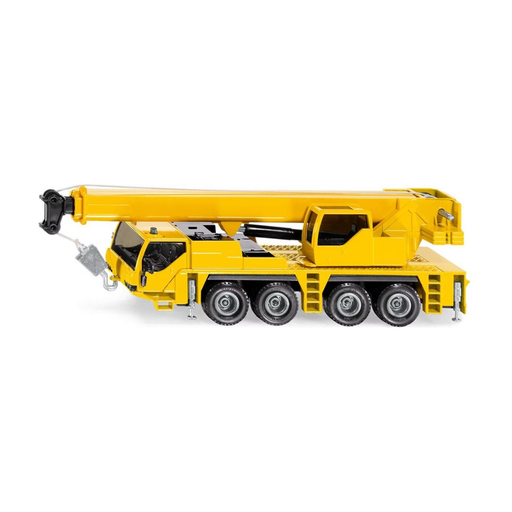
Why this product suits this profile: This compact SIKU model is a good choice for households short on storage space and for children who want to explore a classic crane truck without batteries.
The 1:55 scale and stated dimensions make it clear how much space the model needs. The metal supports and manual winch are specific features, rather than vague marketing claims.
Double telescopic boom, rotating cab, extendable metal supports and no batteries required.
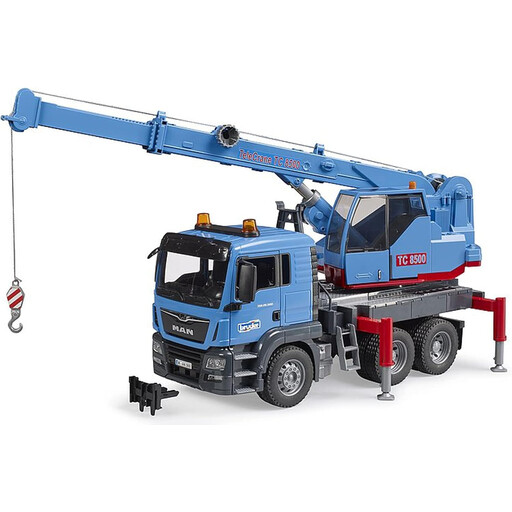
Why this product suits this profile: This 1:16 model is aimed at children aged 4 and over who want a larger vehicle with several mechanical features and realistic role play.
Four support legs help keep the vehicle stable. According to the product information, the crane arm rotates through 360 degrees, extends telescopically and locks into position.
1:16 scale, opening cab doors, a rotating, telescopic crane arm and a manual winch with overload protection, according to the product description.
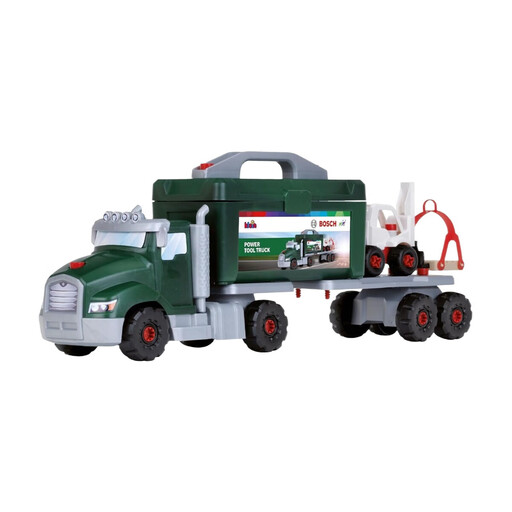
Why this product suits this profile: This set combines a crane and construction vehicle with tool play and building activities. It’s suitable for children aged 3 and over who enjoy taking vehicles apart, rebuilding them and playing with the accessories.
The features are clearly listed: screwdriver, tools, forklift, crane and removable toolboxes. This makes it easier to decide whether the accessories and storage needs will suit your household.
Manual play without batteries, several vehicle configurations and stated dimensions of 70 × 13,8 × 22,3 centimetres.
We’ve put together a complete, regularly updated list of products that meet these strict selection criteria and fully comply with the safety regulations in force in the EU.
It depends on the model. According to manufacturers, some products are suitable from age 3, while larger models with ropes, pallets or extra accessories are often recommended for children aged 4 and over. Before buying, check the age rating, warnings and small parts together.
Many models are entirely manual. According to the available product information, the SIKU 2110 Mobile Crane, Bruder MAN TGS Crane Truck and Theo Klein Screwdriver Truck don’t need batteries. Vehicles with lights or sound effects may need batteries, so check the power requirements section.
Operate moving parts without using excessive force, and check them regularly for loose or damaged components. Plastic models will stay in good working order for longer if you protect them from excessive heat, moisture and prolonged direct sunlight. After play, store them somewhere dry and keep the parts sorted—particularly for sets with hooks, tools and small accessories.