
Lieferung heute & morgen

Qualitätsgarantie

Willkommens-Angebote freischalten: KOSTENLOSE Lieferung | Bis zu 80 % RABATT | Kostenlose 30-Tage-JoyPlus-Testphase
App herunterladen
Choosing a toy excavator can quickly become more complicated than expected. The market is filled with models that appear robust and functional at first glance, but prove to be unsuitable after a short time. Many buyers invest in a construction vehicle toy only to find that it can't withstand the rigors of the sandbox or that playtime is spoiled by poor functionality. This guide will help you identify the crucial features and make an informed choice.
Before we look at recommended models, it's important to understand the typical problems that lead to disappointment.
To avoid the problems mentioned above, you should carefully examine three technical aspects. These define a model's durability and play value.
Material quality is crucial for robustness. Models made of ABS plastic (Acrylonitrile Butadiene Styrene) offer high impact and scratch resistance. This plastic is used, for example, in most Bruder excavators and is well-suited for outdoor use. For collectors or for indoor play, models with a high proportion of die-cast metal, like those from Siku, are a durable alternative. Look for a clean finish with no sharp edges.
The scale indicates the size ratio to the original vehicle. A common scale for larger toy models is 1:16. An excavator of this size is large enough for realistic play in the sand and is easy to operate by hand. Smaller scales are better suited for indoor play or as part of a collection. Also, distinguish between different types such as crawler excavators, mobile excavators, a toy wheel loader, or a combined toy backhoe loader, as each type enables different play scenarios.
A good toy excavator for ages 3 and up should have simple yet sturdy mechanics. Important features include a 360-degree rotating superstructure and a multi-jointed, fully articulated excavator arm. For models aimed at older children or adults, such as a Lego excavator from the Technic series, more complex features like pneumatic or electric drives are added, requiring a deeper technical understanding.
Here are some models that represent a considered choice for different user profiles and use cases, based on objective criteria.

Why This Fits Their Persona: This model is designed for children aged 2 and up and is streamlined to the essentials. The central handle operation is intuitive and promotes motor skills without being overwhelming. Ideal for a first experience with construction vehicles.
The excavator is made of high-quality plastic that can withstand sandbox play. The mechanics are simple and robust, preventing frustration from jamming parts.
The single-handle control of the excavator arm is optimized for small hands. The superstructure can rotate 360°, allowing for a wide range of motion.

Why This Fits Their Persona: For children aged 4 and up who love realistic play scenarios. This 1:16 scale model offers a multitude of functions, from the detachable bucket to the opening driver's cab, which is compatible with bworld figures.
The ABS plastic construction provides the necessary stability. The excavator arm is fully functional and can be controlled precisely, ensuring long-term play value.
The realistic crawler tracks provide stability even on uneven surfaces like in the garden or sandbox. The high level of detail encourages imaginative role-playing.
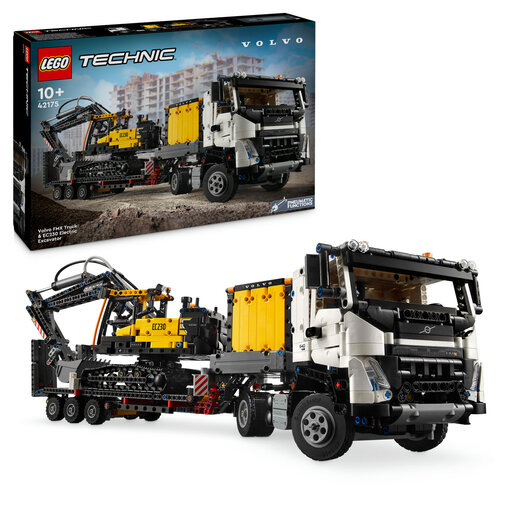
Why This Fits Their Persona: This set is aimed at older children (10+) and adults looking for a technical challenge. The building process itself is an experience and imparts knowledge about mechanics and pneumatics.
LEGO Technic is known for its precise and highly functional models. The pneumatic function for controlling the bucket is a technical highlight and a far cry from the stiff arms of simpler toys.
The set includes two vehicles (a truck and an excavator), offering twice the building and playing fun. The excavator's pneumatic function allows for realistic operation of the arm.
We have compiled a complete, up-to-date list of products that fully meet these strict selection criteria and safety regulations.
What material is suitable for a toy excavator for the sandbox? For use in the sandbox, a high-quality, UV-resistant plastic like ABS is the right choice. It's robust, doesn't become brittle in the sun, and is easy to clean with water. Metal models are less suitable, as parts can rust when exposed to moisture, which can impair function and lead to sharp edges.
What does the 1:16 scale on a Bruder excavator mean? The 1:16 scale means that the toy model is 16 times smaller than the original construction vehicle. This is a relatively large scale for toys, allowing for detailed and easily manageable models. For example, a real excavator that is 10 meters long would be an impressive toy model of about 63 cm in this scale.
From what age is a LEGO Technic excavator a good idea? The suitability of a LEGO Technic excavator depends heavily on the complexity of the specific set. Simpler models with fewer parts are often suitable for children as young as 7 or 8. Complex kits with pneumatic or electric functions and over a thousand pieces are aimed at more experienced builders aged 10 or 12 and up, as well as adult fans. Always check the manufacturer's age recommendation on the packaging.