
Lieferung heute & morgen

Qualitätsgarantie

Willkommens-Angebote freischalten: KOSTENLOSE Lieferung | Bis zu 80 % RABATT | Kostenlose 30-Tage-JoyPlus-Testphase
App herunterladen
A toy excavator fascinates children and adults alike. The complex movements and the power these machines exude make them a perennial favourite in the playroom and the sandbox. But the market is overwhelming, and not every model lives up to its promises. Many buyers discover only after a short time that their expensive toy has flaws that significantly spoil the fun. This guide will help you avoid common purchasing pitfalls and find a durable, functional model.
Before you make a purchasing decision, you should be aware of the most common weaknesses that often only become apparent with use.
To make an informed decision, focus on a few crucial technical features. These parameters are key determinants of a model's durability and play value.
The choice of material is critical for durability. High-quality ABS plastic, like that used in many Bruder excavator models, is impact-resistant and tough. It retains its shape and colour even with intensive use. For sandbox use or for collectors, a metal excavator can be a great choice. A high metal content, often combined with plastic parts, provides stability and a realistic weight. Look for clean craftsmanship with no sharp edges.
A good toy excavator is distinguished by its realistic functions. These include:
The scale (e.g., 1:16 or 1:50) indicates the size ratio to the original and is important for compatibility with other construction vehicle toy models in the same series. Larger scales like 1:16 often allow for a higher level of detail and more functions.
Consider where the toy will be used primarily. A ride-on excavator is designed for the sandbox and must be correspondingly robust. In contrast, a detailed LEGO excavator from the Technic series is intended for indoor use and for older children or adults. Always check the manufacturer's age recommendation. This not only provides information about safety (e.g., small parts that could be swallowed with a mini excavator for kids) but also about the complexity of operation, which is particularly relevant for a remote-controlled excavator.
Instead of making a one-size-fits-all recommendation, we have compiled models for different user profiles and requirements.
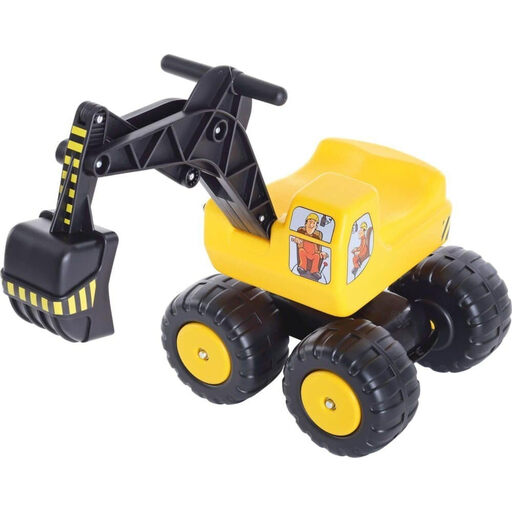
Why it's a great fit: This ride-on excavator is specifically designed for tough outdoor use. Children can actively dig along and experience the feeling of being a real excavator operator. Its high load capacity makes it exceptionally durable.
The robust plastic construction is designed for a load of up to 100 kg, thus resisting the pitfall of brittle parts. The simple yet effective mechanism is impervious to sand.
Promotes motor skills through active operation. The lateral rotation of the excavator body allows for realistic digging without constantly having to move the entire vehicle.
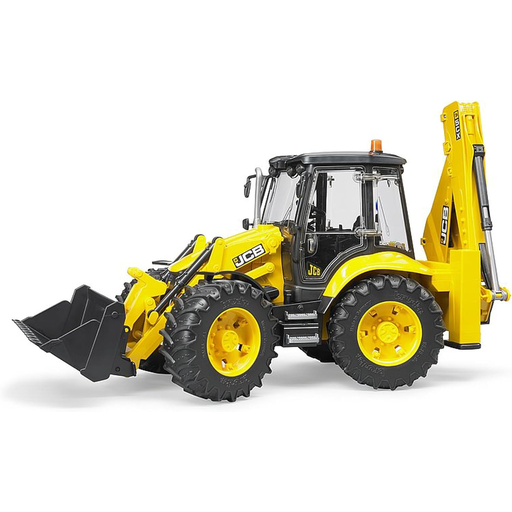
Why it's a great fit: For children who appreciate realistic functions. This model combines a front loader and a rear backhoe with numerous moving parts, including a rotating driver's seat and all-wheel steering.
The extensive, fully functional mechanics (rotating seat, rear backhoe, front loader) avoid the pitfall of limited functionality. The use of ABS plastic ensures the necessary stability.
The combination of a front loader and rear backhoe in one vehicle offers diverse play opportunities. The all-wheel steering provides excellent manoeuvrability in tight spaces.
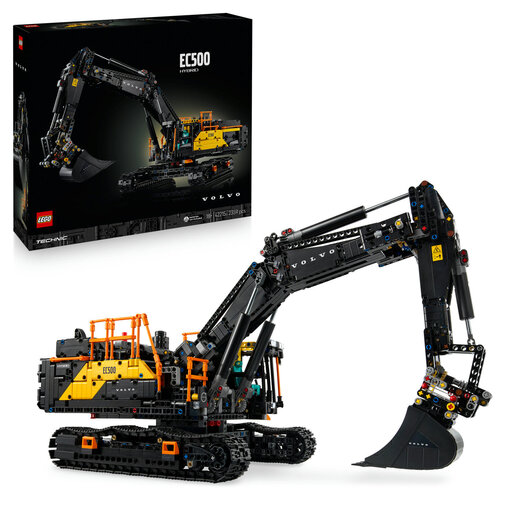
Why it's a great fit: This set is aimed at adult LEGO fans and technology enthusiasts. It offers a challenging building experience and impresses with electric functions that enable realistic movements of the boom, arm, and bucket.
The LEGO Technic system is known for its precise and stable mechanics, which avoids the pitfall of brittle parts. The electric functions offer a high degree of functionality that goes far beyond simple toy excavators.
Combines a challenging building experience with a functional, remote-controlled model. The interchangeable attachments (breaker, bucket) enhance its play and display value.
We have compiled a complete, up-to-date list of products that fully meet these strict selection criteria and all relevant safety regulations.
For use in the sandbox, models made of robust, UV-resistant plastic or powder-coated metal are ideal. Ride-on excavators are an excellent choice here, as they are built for this environment. Look for simple mechanics without delicate, open gears where sand can get stuck. Bruder models are also well-suited for outdoor use due to their high-quality ABS plastic, but they should be cleaned after play to keep the joints clear.
Simple remote-controlled models with limited functions are available for children from around four to five years old. More complex models with proportional controls and multiple channels for different functions (e.g., arm, bucket, rotation, driving) are generally recommended for children aged eight and older. These require greater fine motor coordination and a better understanding of mechanics. Always follow the manufacturer's age recommendation.
For most plastic models, it's sufficient to remove coarse dirt and sand with a soft brush and then wipe the toy with a damp cloth. For heavy soiling, you can use a mild soap solution. Rinse the toy well afterwards and let it dry completely. Models with electronics, like a remote-controlled excavator, must never be submerged in water. Cleaning should be done superficially with a slightly damp cloth only.