
Lieferung heute & morgen

Qualitätsgarantie

Willkommens-Angebote freischalten: KOSTENLOSE Lieferung | Bis zu 80 % RABATT | Kostenlose 30-Tage-JoyPlus-Testphase
App herunterladen
The selection of toy excavators is vast, ranging from simple models for the sandbox to complex construction kits for tech enthusiasts. But this great variety also has its pitfalls. Many buyers invest in products that either break after a short time or fail to meet their child's expectations. As a Joybuy Product Recommendation Officer, I'll help you avoid common purchasing traps and make an informed decision.
This guide focuses on the objective criteria that define a durable and suitable construction vehicle toy. We will analyse the three most common problems that lead to bad buys:
To avoid a purchase mistake, you should check three core aspects before making a decision. These parameters are key in determining the product's durability, play value, and safety.
The choice of material is critical, especially if the toy excavator is intended for outdoor use.
The functionality must match the child's age and motor skills.
For toys sold in the EU, the CE mark is mandatory. It confirms that the product meets the EU's basic safety and health requirements. For toys intended for children under 36 months, explicitly check for the warning regarding small parts that can be swallowed.
Instead of making a blanket recommendation, we have selected models tailored to specific requirement profiles.
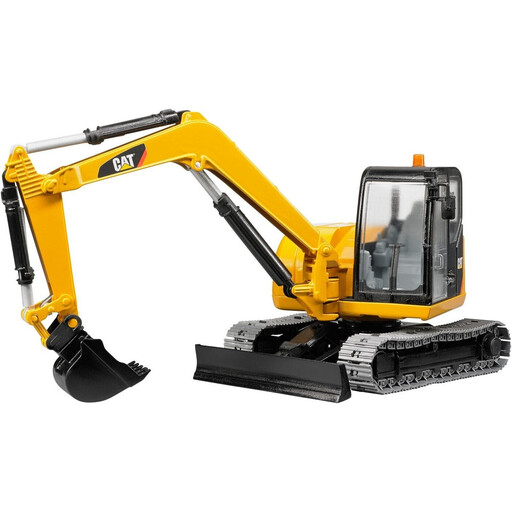
Why This Fits Their Persona: Ideal for toddlers having their first experiences with construction vehicles. The model is robust enough for the sandbox while offering realistic functions that promote motor skills without being overwhelming.
Made from high-quality ABS plastic, this model bypasses the cheap material trap. The functions are intuitive and robust, which avoids the complexity trap for young children.
The excavator arm is fully functional and can even dig below vehicle level. The cabin can rotate 360 degrees, which offers high play value.
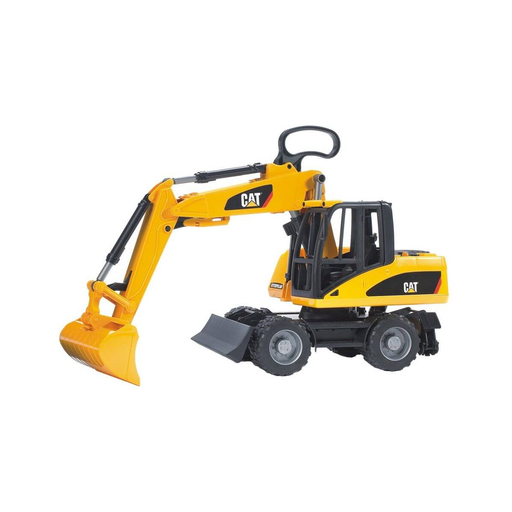
Why This Fits Their Persona: Perfect for children who love detailed role-playing. The large 1:16 scale and realistic functions like fold-out supports allow for an immersive play experience that is close to reality.
With a length of 44 cm, this model avoids the "size trap" and meets expectations for a large toy excavator. The mechanics are designed for durability and can withstand even intensive play.
The excavator body rotates 360°, and the arm is controlled by an ergonomic handle. The detachable shovel and compatibility with bworld figures expand the play possibilities.
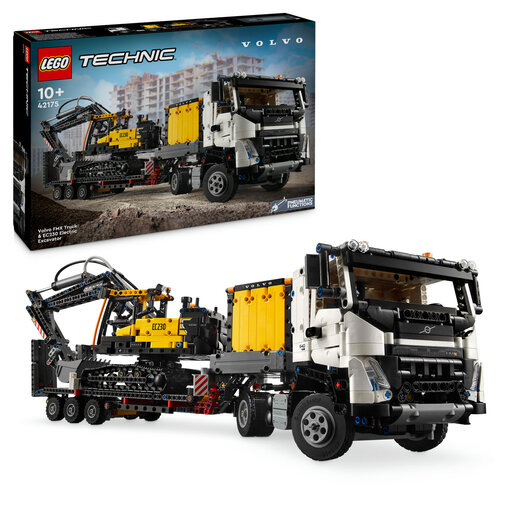
Why This Fits Their Persona: This set is aimed at older children and teenagers looking for a technical challenge. The building process with 2,274 pieces and the mechanical functions provide a deep understanding of engineering principles.
This set is the opposite of the complexity trap for younger kids—it is deliberately complex and rewards patience and technical interest. The quality of LEGO parts ensures a precise and stable construction.
The set includes two detailed models (truck and excavator) and uses a pneumatic function to move the shovel, creating an authentic engineering experience.
We have compiled a complete, up-to-date list of products that fully meet these strict selection criteria and German safety regulations.
For use in the sandbox, a toy excavator made of high-quality ABS plastic is an excellent choice. This material is robust, UV-resistant, and easy to clean. Models with metal parts, like those from Siku, are also very durable, but care should be taken to clean the joints after playing in the sand to maintain their mobility.
The scale indicates the size ratio of the model to the real vehicle. A scale of 1:16, common for many Bruder excavators, means the toy is 16 times smaller than the original. These models are relatively large and are excellent for active play. A scale of 1:50 or 1:87 results in smaller, often more detailed models that are popular with collectors.
The age recommendation for a LEGO Technic excavator varies greatly depending on the model. Simpler sets can be suitable for children as young as 7. However, complex models with several thousand parts and pneumatic or electric functions are aimed at experienced builders aged 10, 12, or even 18 and up. The manufacturer's specific age recommendation should always be followed due to the complexity and the small parts included.