
Lieferung heute & morgen

Qualitätsgarantie

Willkommens-Angebote freischalten: KOSTENLOSE Lieferung | Bis zu 80 % RABATT | Kostenlose 30-Tage-JoyPlus-Testphase
App herunterladen
A toy excavator should offer more than just yellow-and-black styling. For parents, grandparents and vehicle enthusiasts, practical features, suitable dimensions, safe materials and a clear age recommendation all matter. Yet product photos and marketing claims often leave out important details, leading to the wrong purchase.
A movable arm, rotating cab or tipping skip may look appealing. What matters, though, is whether children can operate the mechanisms themselves. Stiff joints, very small handles or an unstable chassis can limit play value. On a manually operated toy excavator, the arm should move without requiring excessive force.
A model excavator in 1:16 scale can be considerably larger than a SIKU excavator in 1:87 scale. The scale tells you how the model compares with the real vehicle; it doesn’t tell you whether it’s suitable for the sandpit. So check the product dimensions before buying. A vehicle measuring 44 centimetres long needs considerably more space than a small collector’s model.
Sand, moisture and rough stones put strain on joints and wheels. After playing in the sandpit, loose dirt should be removed from children’s construction vehicles. Models with metal parts may corrode if they remain damp for long periods; plastic parts shouldn’t be left exposed to intense heat or frost for extended periods.
The age recommendation on the product page and packaging is an important factor when choosing a toy. Several models in this selection are intended for children aged 3 and over, including the DOUBLE E Bagger, the SIKU Claas Torion and the BRUDER Volvo Compact Excavator. According to the product information, the BRUDER CAT Mobile Excavator 02445 is intended for children aged 4 and over.
Small parts can pose a choking hazard. Children below the stated age should therefore not use the vehicle. Supervision is also advisable for older children if the toy has detachable buckets, figures or moving metal parts.
For the sandpit, a movable excavator arm, a sturdy bucket and a stable base are particularly important. A cab that rotates 360° adds more ways to play, but doesn’t make up for an unstable construction. A toy wheel loader is better suited to loading and transport games, while a dumper with a tipping skip adds to construction-site play.
For indoor play, smaller toy construction vehicles with rubber tyres may be more practical. A remote-control excavator for children, on the other hand, needs batteries, plenty of clear space and regular charging. With a ride-on model, you’ll also need to consider the seating position, maximum user weight, speed and whether it will only be used on suitable, level surfaces.
Metal parts can make small collector’s models heavier. Plastic models, such as many BRUDER excavators, are often larger and designed for imaginative play indoors and out. Check the following:
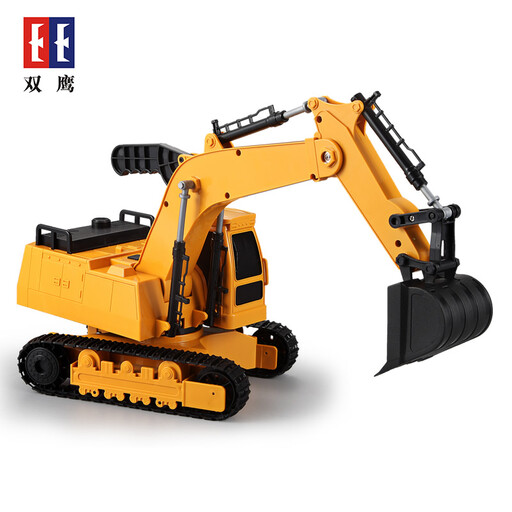
Why it suits this profile: This manually operated excavator is intended for children aged 3 and over. It has a movable arm, a bucket, rubber tracks and a cab that rotates 360° – with no batteries required.
The features are operated mechanically, so there’s no need to change batteries or wait for the toy to charge.
Manual operation, a rotating cab and rubber tracks for imaginative play on suitable surfaces.
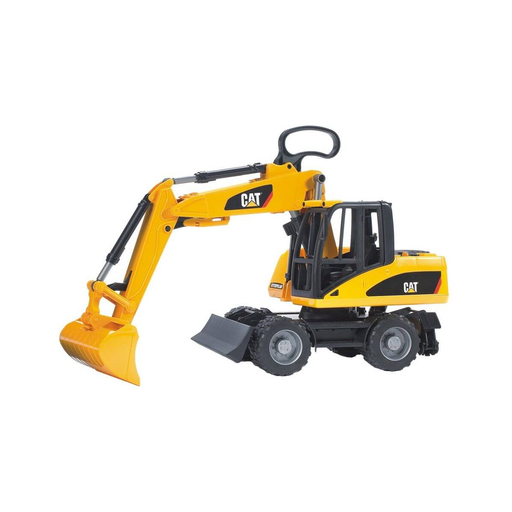
Why it suits this profile: This 1:16-scale excavator has a 360° rotating cab, a movable arm, support legs and a detachable bucket.
The product information lists specific features and dimensions, rather than relying on vague design claims.
ABS plastic, rubber tyres, support legs and a seat compatible with bworld figures.
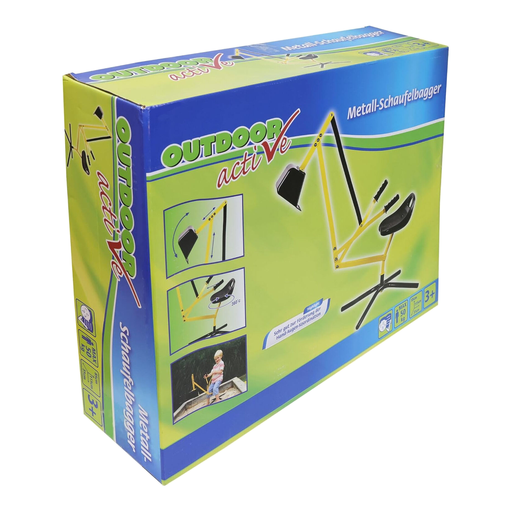
Why it suits this profile: This ride-on excavator is designed for children aged 3 and over, and specifically intended for use in the sandpit.
It’s described as a freestanding play vehicle with a metal frame that requires no assembly.
Rotating seat, working arm and metal construction for play on suitable outdoor surfaces.
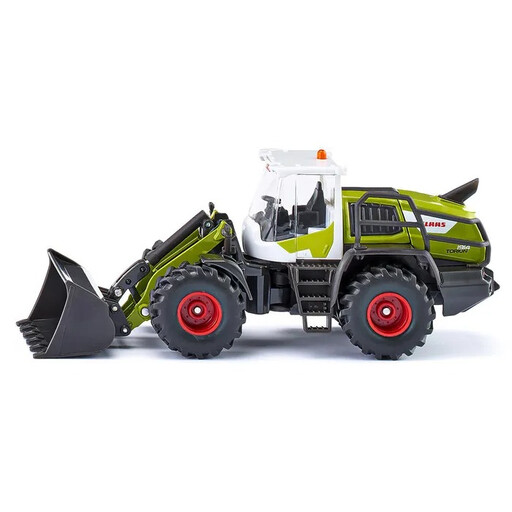
Why it suits this profile: This 1:50-scale model combines a movable loading bucket, articulated steering and an opening bonnet, with metal and plastic parts.
The scale and dimensions are provided, so you can get a clear idea of its size before buying.
1:50 scale, movable loading bucket, articulated steering and compatibility with the SIKU vehicle range.
We’ve put together a complete, regularly updated list of products that meet these strict selection criteria and fully comply with the safety regulations in force in the EU.
Look for models with an age recommendation that explicitly starts at age 3 or younger, and features suited to the child’s motor skills. Larger, manually operated vehicles without easily detached small parts are generally easier for younger children to handle. Always follow the warning information provided by the manufacturer.
That depends on the materials, construction and manufacturer’s guidance. Models with moving joints can collect sand, so they should be cleaned and dried afterwards. Collector’s models with small parts are better suited to supervised play. A ride-on excavator such as the The Toy Company Outdoor Active Metal Excavator, on the other hand, is specifically described as suitable for use on appropriate outdoor surfaces.
Manual excavators don’t need batteries and are ready to use straight away. They’re well suited to imaginative play and the sandpit, provided the vehicle is stable. Battery-powered and remote-control models offer extra control features, but they do require ongoing charging or battery maintenance. The best choice depends on the child’s age, the space available for play and the type of play they enjoy.