
Lieferung heute & morgen

Qualitätsgarantie

Willkommens-Angebote freischalten: KOSTENLOSE Lieferung | Bis zu 80 % RABATT | Kostenlose 30-Tage-JoyPlus-Testphase
App herunterladen
A sturdy toy excavator that can lift heavy loads in the sandpit or bring a construction site to life on the living room carpet is a real highlight for many children. But the selection is vast, and not every model delivers on its promises. As a Joybuy Product Recommendation Officer, I see daily which products bring joy and which ones quickly end up gathering dust. This guide will help you avoid the common pitfalls and find a durable, safe model.
Before you decide on a model, you should be aware of the most common problems that often only become apparent after unboxing.
To avoid these pitfalls, focus on three objective features that determine the quality and play value of a toy excavator.
The durability of a toy excavator depends directly on its material. High-quality ABS plastic, like that used in Bruder excavators, is impact-resistant, sturdy, and retains its shape even with intensive use. For continuous use in the sandpit, a metal excavator is often an even more resilient choice. Regardless of the material, look for a clean finish without sharp burrs and stable connections on all moving parts.
The complexity of the toy must match the child's developmental stage.
Look for recognised safety marks. The CE marking is mandatory in the EU and confirms that the product meets basic health and safety requirements. The voluntary GS mark ("Geprüfte Sicherheit" or "Tested Safety") goes a step further and is awarded by an independent testing body. It signals safety testing that exceeds the minimum legal requirements, which is a particularly important indicator for toys intended for young children.
Here are some recommendations tailored to different needs and age groups.
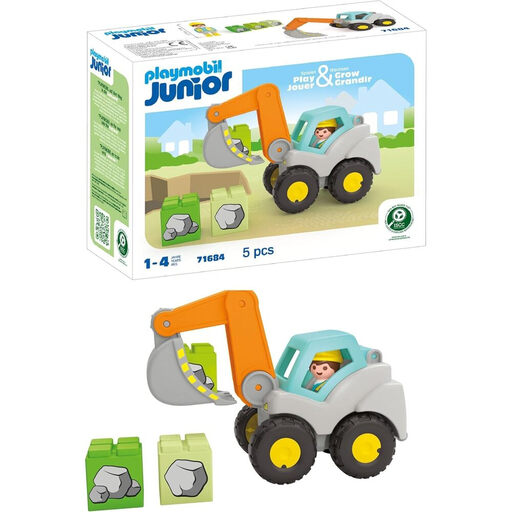
Why This Fits Their Persona: Ideal for toddlers from 12 months. The simple, intuitive shovel operation and robust construction are perfectly tailored to the motor skills of the youngest children.
The simple mechanism is resilient and avoids the frustration of overly complex functions. The rounded shapes and sturdy build minimise safety risks.
Made from 90% plant-based materials, according to the manufacturer. The size is optimised for small hands.
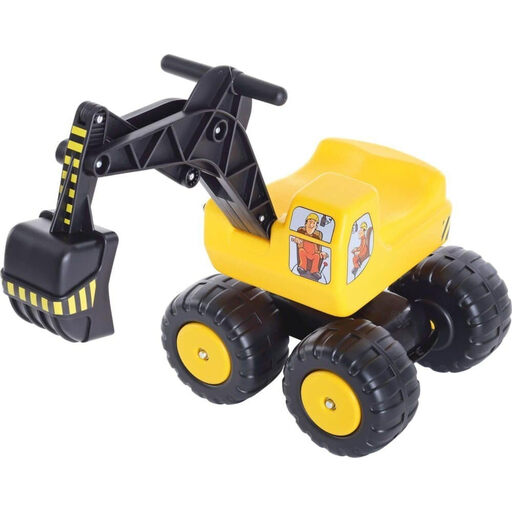
Why This Fits Their Persona: This ride-on excavator is designed for heavy-duty use. Children aged 3 and up can become excavator operators themselves, controlling the arm and shovel with two levers.
Its extremely robust construction, with a load capacity of up to 100 kg (according to the manufacturer), bypasses the pitfall of fragile mechanics. This toy is built to last.
Promotes full-body coordination and active outdoor play. The excavator attachment rotates for a wider range of action.
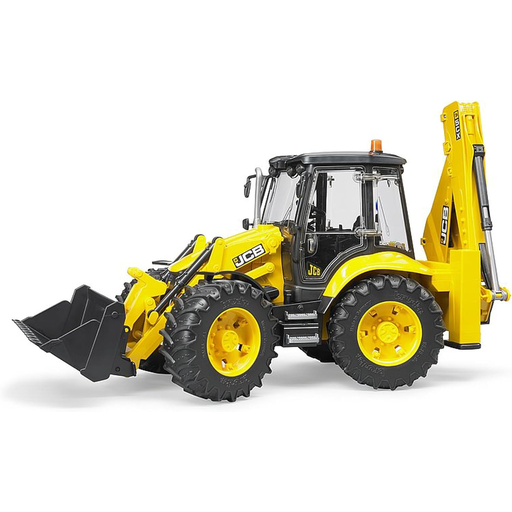
Why This Fits Their Persona: For children aged 4 and up who love realistic play scenarios. This 1:16 scale backhoe loader offers a wealth of features, from the rotating driver's seat to the fully functional front and rear shovels.
Here, complexity is an advantage, as it matches the child's age and desire for realistic play. The high-quality ABS plastic ensures the necessary stability for all functions.
A high level of detail and many moving parts promote fine motor skills and technical understanding. Compatible with bworld figures for expanded play worlds.
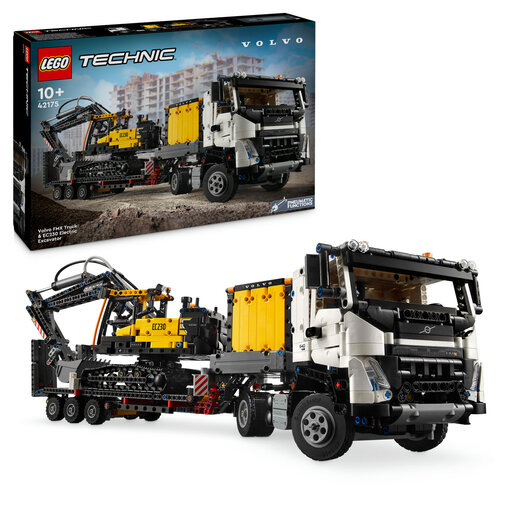
Why This Fits Their Persona: A challenging building project for teens aged 10+ and adult LEGO fans. This set combines the construction of a truck model with an electric crawler excavator.
Complexity is the key feature here and is perfectly tailored to the target audience. It's not a simple toy, but a detailed model-building experience.
Playfully introduces the world of engineering with moving pistons in the engine and pneumatic functions. The set consists of 2,274 pieces for long-lasting building fun.
We have compiled a complete, real-time list of products that fully satisfy these strict selection criteria and relevant EU safety regulations.
1. What is the most durable material for a toy excavator used in a sandpit? For intensive outdoor use, models made from metal or high-quality, UV-resistant ABS plastic are the most robust choice. They not only withstand the mechanical stress of digging and lifting but also resist weathering from sun and moisture without becoming brittle or fading.
2. How do I clean a toy excavator after playing outdoors? It's best to remove coarse dirt and sand with a soft brush. Afterwards, the toy can be wiped down with a damp cloth. Avoid using harsh cleaning agents. For models with complex mechanics, it's important to clear the joints and moving parts of any sand residue to maintain their function.
3. From what age is a ride-on excavator suitable? A ride-on excavator is generally suitable for children from 3 years of age. At this age, their motor skills and balance are usually sufficiently developed to operate the device safely. However, always observe the manufacturer's specific age recommendation and do not let your child play unsupervised, especially at the beginning.