
Lieferung heute & morgen

Qualitätsgarantie

Willkommens-Angebote freischalten: KOSTENLOSE Lieferung | Bis zu 80 % RABATT | Kostenlose 30-Tage-JoyPlus-Testphase
App herunterladen
A toy excavator for children should do more than simply look like a construction vehicle. What matters is whether the arm, bucket, slewing ring and undercarriage can withstand the intended play, and whether the model is suitable for the child’s age and surroundings. Parents, grandparents and relatives are faced with a wide choice: from a simple mini excavator toy and the detailed 1:16 scale model excavator to a ride-on excavator for the sandpit.
An excavator can look realistic without its arm being able to move usefully. For creative pretend play, however, a moving arm, bucket and rotating cab are more important than printed details. So check which components can actually be adjusted and whether the child can operate them independently.
The statement “from 3 years” is not a general benchmark of quality. Some models contain small parts or have several moving mechanisms that require supervision. When choosing a toy excavator for children aged 3 and over, consider the safety warnings, recommended age group and product dimensions together. A model designed for older children may be too complex for younger users or unsuitable because of its small accessories.
Not every toy excavator for the sandpit is designed for permanently damp sand or rough surfaces. Plastic models should be cleaned and dried after playing outdoors. A ride-on excavator also needs to withstand additional loads and should be checked for stability and moving metal parts. By contrast, a compact indoor model is not automatically suitable for a child’s body weight.
A toy excavator with a moving arm offers more play possibilities if the arm can be raised, lowered or moved from side to side. A 360-degree rotation of the upper structure makes different play scenarios easier, but it should operate smoothly and have no sharp edges. With manual models, it is also important to check whether they have a central handle or individual levers.
A remote-controlled excavator for children requires additional information about the battery type, range, charging time and remote control. If these details are missing, a manual children’s excavator is often easier to assess. A battery-powered model may be appealing for use in a child’s bedroom; for the sandpit, simple, washable mechanisms are often more practical.
ABS plastic is used in several detailed models. Look for neatly guided joints, a sturdy bucket mount and an undercarriage that does not jam when making a gentle turn. Metal models, such as ride-on excavators, may seem more durable for outdoor use, but they should be checked for rust, sharp edges and loose connections.
The 1:16 scale is common among many BRUDER models and is suitable for matching construction vehicles and figures. A model measuring around 40 centimetres in length requires significantly more space than a compact mini excavator. So measure the intended play area and check whether the excavator will fit through doors, into shelving compartments or inside the storage box.
For products with age recommendations, the manufacturer’s information is decisive. The recommendations below take the stated age limits and functions of each product into account.
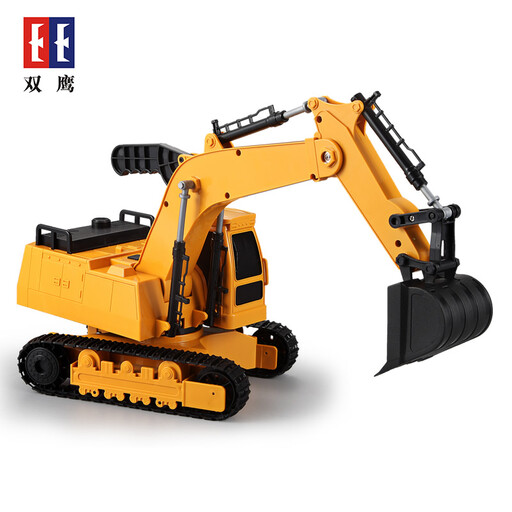
Why this product suits this profile: This manual model is aimed at families looking for a practical introduction without batteries. Its operation can be understood directly through the arm, bucket and upper structure.
The product description specifies manual operation, a moving arm, 360-degree rotation and rubber tracks, rather than unexplained sound or light effects.
No batteries required; 360-degree rotating cab and moving linkage between the arm and bucket.
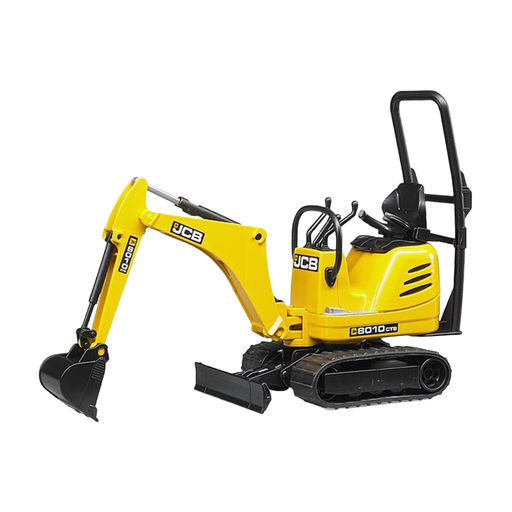
Why this product suits this profile: This 1:16 scale model combines compact dimensions with several manually moving elements and, according to the product information, is suitable for children aged 3 and over.
The product details specify a 360-degree rotating upper structure, a moving dozer blade and smooth-running tracks. This puts real functionality centre stage.
1:16 scale; ABS plastic; seat with safety bar and controls designed to suit BRUDER-bworld figures.
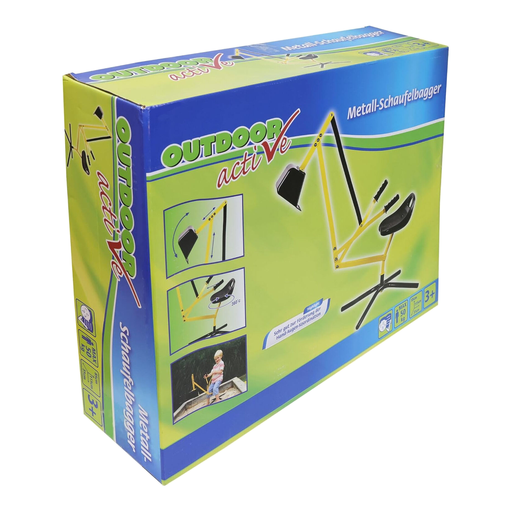
Why this product suits this profile: This ride-on excavator is designed for children aged 3 and over and for outdoor use. It is aimed at children who want to dig in the sandpit and turn the seat themselves.
According to the product information, the construction is made from metal and requires no assembly. Nevertheless, the seat, handles and moving parts should be checked regularly before use.
Rotating seat; made from metal; designed for active digging and moving sand outdoors.
We have put together a complete, regularly updated list of products that fully meet these strict selection criteria and the safety regulations applicable in the EU.
A suitable model is one whose manufacturer expressly states “from 3 years” and whose operation matches the child’s stage of development. With small parts, moving mechanisms or ride-on excavators, direct adult supervision is advisable. For younger children, the stated age approval should not be interpreted as applying to a lower age range.
That depends on the materials, construction and care instructions. A manual plastic model can be used in the sandpit if the manufacturer specifies indoor and outdoor use. Sand should be removed from the joints after playing. A model with electronic components, on the other hand, requires clear information confirming its suitability for damp or dusty environments.
A remote-controlled construction vehicle offers a different way to play from a manual children’s excavator. Before buying, check the batteries, charging time, range, controls and availability of spare parts. For pretend play involving direct handling and digging, a manual excavator may be the better choice; for driving and control-based play scenarios, an electric excavator may be worth considering.