
Lieferung heute & morgen

Qualitätsgarantie

Willkommens-Angebote freischalten: KOSTENLOSE Lieferung | Bis zu 80 % RABATT | Kostenlose 30-Tage-JoyPlus-Testphase
App herunterladen
An excavator is one of those toys that can be used both indoors and out. But not every model is right for every age or play area. When choosing toy excavators for children, three common buying mistakes can lead to disappointment:
That’s why it’s worth checking the age recommendation, dimensions, material and actual play features before buying, whether you’re a parent, grandparent or other family member. An excavator for the sandpit needs different features from a detailed model excavator for a child’s bedroom.
The manufacturer’s age recommendation is an important safety consideration. An excavator for children aged 2 and over should have a simple design and no small parts that can come loose easily. More detailed models are often recommended for children aged 3 or 4 and over.
For example, the product information for the BRUDER 02483 recommends it for children aged 4 and over. It also warns that the toy contains small parts and should be used under supervision. The BRUDER 03413 is recommended for children aged 24 months and over; for younger children, check the specific age marking on the packaging and product.
For children aged between 2 and 4, easy-to-reach controls, rounded parts and simple mechanisms are usually more practical than lots of detachable accessories.
ABS plastic is used for many children’s vehicles. However, the material alone doesn’t tell you how a model will stand up to everyday play. Also look for:
A metal excavator for the sandpit may be heavier because of its material. This can help with stability, but may make it harder to carry. The Toy Company 0013385 is listed as having a metal construction and rotating seat, and is suitable for children aged 3 and over.
A functional construction vehicle toy should have at least one or more practical play features. These might include a moving excavator arm, a tilting or detachable shovel, a rotating cab or an adjustable bulldozer blade.
A remote-controlled excavator without batteries is technically contradictory: a remote control normally needs a power source. If you’re looking for a model that doesn’t need batteries, you probably mean a manual excavator. These vehicles are ready to use straight out of the box and don’t come with ongoing battery costs.

Why it suits this type of play: According to the product information, this children’s excavator is around 35 cm long, suitable for children aged 2 and over, and can be used indoors or out without assembly.
Its reinforced plastic construction is designed for active play. The manual design means no battery costs or unnecessary electronics.
Suitable for children aged 2 and over according to the supplier; no assembly needed; moving boom and handle.
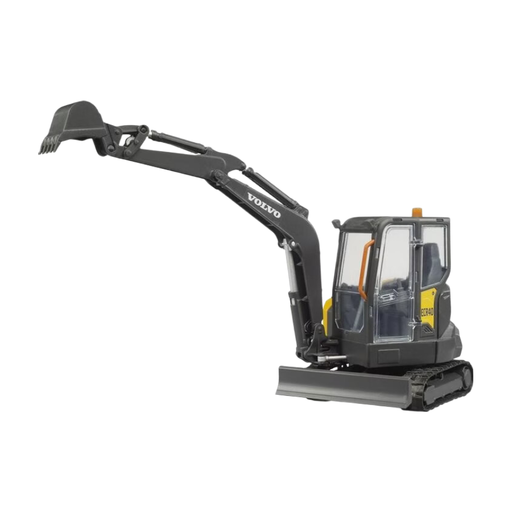
Why it suits this type of play: This 1:16 scale model combines a compact design with a rotating body, angled boom and adjustable bulldozer blade.
The product details clearly state that it works without batteries and is suitable for children aged 3 and over. This makes it easier to check whether the model is right for your child’s age.
1:16 scale; 360-degree rotation; adjustable, lockable blade; no batteries required.
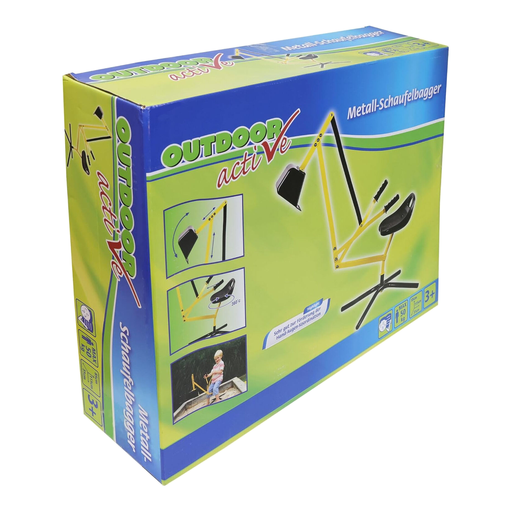
Why it suits this type of play: This ride-on excavator is designed for outdoor use and, according to the supplier, is suitable for children aged 3 and over.
This is more than a decorative vehicle. Its design combines a rotating seat with a working digging arm.
Metal construction; rotating seat; dimensions of approximately 57,61 × 45,21 × 14 cm; no batteries required.
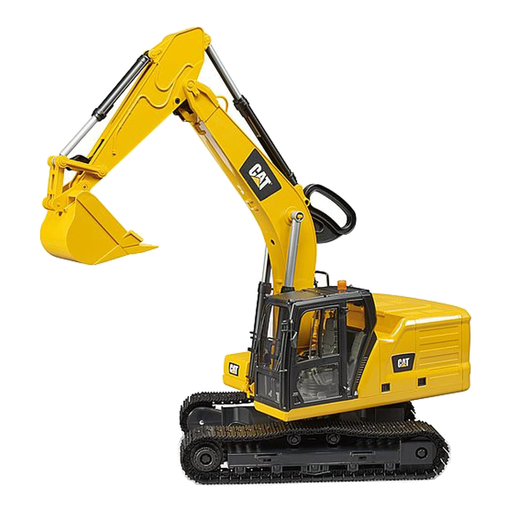
Why it suits this type of play: According to the product information, this 1:16 scale model is for children aged 4 and over. It features a 360-degree rotating cab and a moving boom.
The product description lists its dimensions, weight, material and care instructions. This lets buyers plan ahead for the space needed, around 63 × 20 × 28 cm.
ABS plastic; sturdy crawler tracks; detachable shovel; 360-degree rotation; manual operation with no batteries.
We’ve put together a complete, regularly updated list of products that meet these strict selection criteria and fully comply with the safety regulations in force in the EU.
After play in the sandpit, remove grains of sand from the joints, tracks and wheels. Depending on the manufacturer’s instructions, a dry or slightly damp cloth may be all you need. Many plastic models should not be submerged in water or cleaned with harsh products.
Store the vehicle somewhere dry and protected from frost. If it has a moving boom, it’s also a good idea to check it regularly: are the shovel, arm, cab and bulldozer blade still secure? If any parts become loose, stop using the vehicle until the issue has been resolved.
For children aged 2 and over, look for simple manual models with a sturdy construction and few detachable parts. Always check the age marking on the specific product. A detailed model excavator such as the BRUDER 02483 is recommended for children aged 4 and over, according to the product information.
Yes, provided the manufacturer says it is suitable for outdoor or sandpit use. Remove sand from moving joints after play. For vehicles with metal parts, also take care to protect them from moisture and rust.
A manual excavator has no battery costs during play. The purchase price depends mainly on the material, size, scale and range of features. With a battery-powered or remote-controlled model, you may also need to buy batteries, charging accessories or replacement parts.