
Lieferung heute & morgen

Qualitätsgarantie

Willkommens-Angebote freischalten: KOSTENLOSE Lieferung | Bis zu 80 % RABATT | Kostenlose 30-Tage-JoyPlus-Testphase
App herunterladen
For many children, an excavator is one of their favourite construction vehicles. But there’s a huge range to choose from, from small manual toy excavators to battery-powered ride-on models with remote controls. That means not every model is suitable for every age, home or surface.
As Joybuy Product Recommendation Officer, I’ve sifted through the key product details to show parents, grandparents and other family members what to look for when buying. This can help you avoid common buying mistakes and narrow down your options to suit your child’s age, where they’ll play and the features you’re looking for.
An excavator with a moving arm might seem versatile at first. What matters, though, is whether the bucket, boom or cab is easy to operate. For younger children, stiff joints or small controls can quickly make a toy less appealing to play with.
Simple manual models with easy-to-reach handles are often more practical for younger children. Older children may enjoy features such as a rotating cab, moving bucket or remote control.
The recommended age isn’t just a marketing detail. It takes into account factors such as small parts, moving mechanisms and how complex the toy is to operate. A toy excavator recommended for children aged 3 and over may not be suitable for a two-year-old, even if it looks sturdy.
Read all the warnings before you buy. Adult supervision is especially important for models with small figures, removable buckets or accessories.
A large toy excavator needs plenty of room to move around. Compact models may be better suited to a home or bedroom. A ride-on excavator also needs a clear, level area and won’t necessarily suit every type of sandpit.
The wheels or tracks should also be suited to the surface. Plastic wheels often work well on smooth floors, while wide tracks or a sturdy chassis can make it easier to move around on sand.
Start by checking the recommended age, what’s included and how the toy is operated. A manual toy excavator doesn’t need batteries and is ready to play with straight away. A remote-controlled excavator for children or a ride-on model, on the other hand, may need a remote control, battery, charging time and, in some cases, batteries.
Also look for:
Toy construction vehicles are often made from plastic, reinforced plastic or metal. Plastic models are usually lighter and easier to clean. Metal can give a sandpit ride-on excavator a sturdy build, though it may also make it heavier.
The material alone doesn’t tell you everything. Check the product dimensions and weight, and read the details about any moving parts. A large excavator with a long arm needs more storage space and may be put under greater strain during rough play.
A manual model doesn’t need batteries or charging during play. Electronic models, however, need batteries or a rechargeable battery. Before buying, check:
For a ride-on model, it’s also worth checking the seat width, seat belt, maximum load and whether it’s suitable for level surfaces.

Why it suits this profile: According to the product details, this manual toy excavator is suitable for children aged 2 and over, needs no batteries and can be used indoors or outdoors.
Its simple manual controls mean no charging or extra electronics to worry about. No assembly is required.
Reinforced plastic, a fully movable excavator arm and a length of around 35 cm, according to the product description.
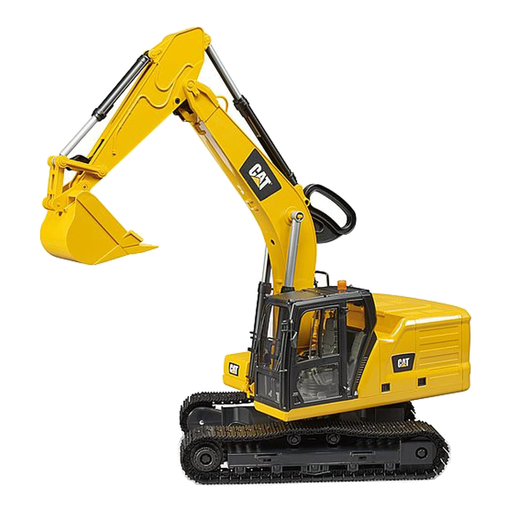
Why it suits this profile: According to the product details, this 1:16 scale model is suitable for children aged 4 and over, with several manual features for detailed pretend play.
Rather than making vague promises about play, the manufacturer lists specific features, including a 360° rotating body, a moving arm and a removable bucket.
ABS plastic, crawler tracks, a 360° rotating cab and manual operation with no batteries required.
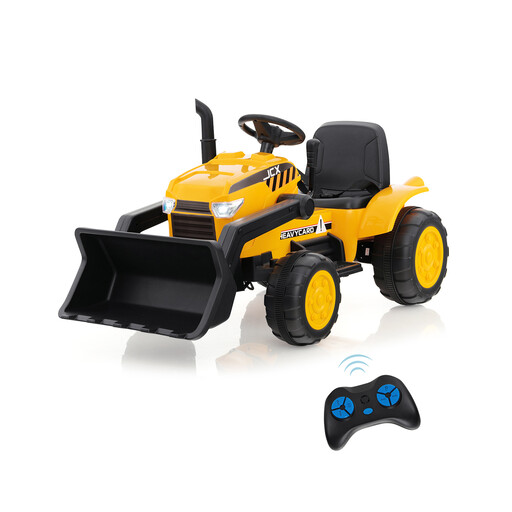
Why it suits this profile: According to the product details, this battery-powered ride-on model is designed for children aged 3 to 8 and combines driving with manual excavator controls.
The product details list a 2.4 GHz remote control, a slow-start function and three speed settings. This makes it easier to understand how the model works before you buy.
12 V drive, adjustable bucket, seat belt and a stated maximum load of 30 kg.
We’ve put together a complete, regularly updated list of products that meet these strict selection criteria and the safety requirements in force in the EU.
Look for a suitable age recommendation, large securely attached parts and simple manual controls. According to the product details, a model such as the lena 04151 Active Excavator is suitable from age 2. Even so, an adult should read the warnings and supervise play.
A remote-controlled model can be a good choice if your child understands how to use it and there’s enough clear space. Check the range, speed settings, remote control and charging time. For small homes or shorter play sessions, a manual toy excavator is often more straightforward.
Its lifespan depends on the materials, how often and how roughly it’s played with, the surface it’s used on and how well it’s cared for. Check moving parts regularly to make sure they’re secure and undamaged. Sand, moisture and hard knocks can put stress on the plastic, joints or electronics. After outdoor play, it’s a good idea to clean the toy while dry and store it somewhere sheltered.