
Lieferung heute & morgen

Qualitätsgarantie

Willkommens-Angebote freischalten: KOSTENLOSE Lieferung | Bis zu 80 % RABATT | Kostenlose 30-Tage-JoyPlus-Testphase
App herunterladen
A toy excavator for children should be able to dig in the sandbox, move easily around the nursery and continue to work reliably after frequent play. In practice, unclear age recommendations, delicate joints or unnecessary electronics often lead to disappointing purchases. Our selection and the checks below will help parents, grandparents and other family members find a suitable construction vehicle toy for children aged 3 and over.
A product may be described as suitable for toddlers, while the safety labelling on the packaging specifies a different age limit. The warnings for the specific product are always decisive. If a toy contains detachable small parts or moving components, it should not be given to younger children, even if the product page states a lower recommended age.
A remote-controlled excavator with lights, sounds and multiple channels may be appealing, but it requires batteries or a rechargeable battery. For younger children, a manually operated excavator with a movable arm is often easier to use. The key question is whether the child can operate the functions independently and whether the model is suitable for the intended play area.
A toy excavator is frequently pulled, turned and loaded with sand in the sandbox. Thin plastic parts, loose axles or hard-to-reach joints can therefore wear out more quickly. A robust construction toy should not only look realistic, but should also include clear information about its materials and construction.
For an excavator for children aged 3 and over, the statements ‘not suitable for children under 36 months’ and warnings about possible small parts are particularly relevant. For models with a movable arm, detachable bucket or accessories, supervised use is recommended. Even a seemingly simple children’s excavator should be checked for damaged or loose parts before first use.
A manual excavator is operated using levers, handles or the cab. This encourages direct, uncomplicated play and requires no power source. A remote-controlled excavator, on the other hand, offers several driving and additional functions, but requires a suitable hand size and regular charging.
For electric models, parents should check:
A remote-controlled dumper is not automatically an excavator either: with a dumper, the focus is usually on tipping the skip, whereas an excavator works with an arm and bucket.
An excavator for the sandbox should stand firmly and must not be too heavy for the child. Models with rubber tracks are often suitable for different surfaces, while a ride-on excavator requires more space in the sandbox and should only be used under direct supervision.
These questions can help with your selection:
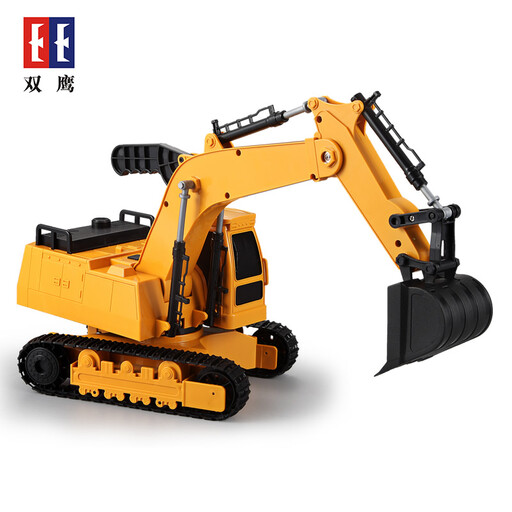
Why this product suits this profile: This manual toy excavator focuses on basic movements and, according to the product information, is suitable for children aged 3 and over. It is an option for families who would rather do without a rechargeable battery, charger and additional electronics.
It is operated manually, eliminating ongoing battery purchases and potential charging problems. The warning ‘not suitable for children under 3 years’ should be observed.
Movable arm with bucket, 360° rotating cab and rubber tracks, according to the product description.
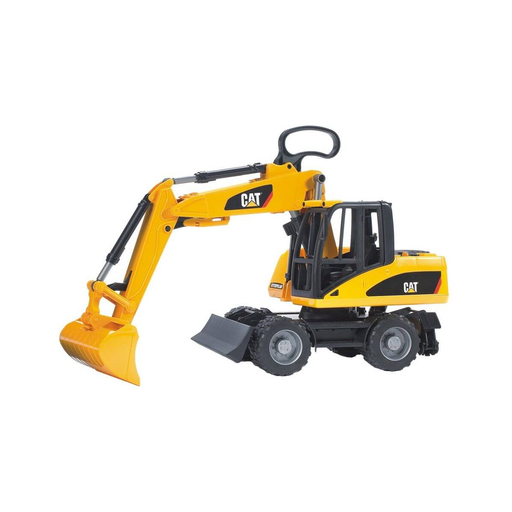
Why this product suits this profile: The Bruder excavator in 1:16 scale is aimed at children who appreciate realistic details and several manual functions. The product information gives a recommended age of 4 and over.
The product description gives specific dimensions, material information and functions rather than relying solely on general claims of robustness. The safety labelling applies because of the small parts.
360° rotating upper structure, movable excavator arm, detachable bucket and fold-out stabiliser legs, according to the product description.
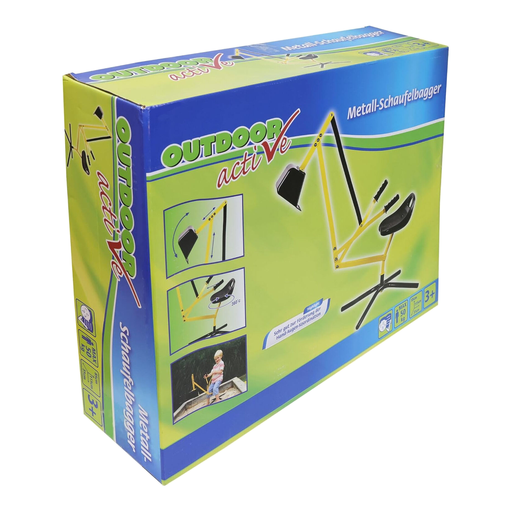
Why this product suits this profile: This ride-on excavator is designed for outdoor use and is aimed at children aged 3 and over. It is suitable for families with an appropriately sized sandbox and enough room to use it safely.
The product information specifies a metal construction and clearly states that it is intended for outdoor use. This makes it easier to see that it is not a compact indoor excavator.
Rotating seat, operable digging arm, metal construction and no assembly required, according to the product description.
We have put together a complete, regularly updated list of products that fully meet these strict selection criteria and the safety regulations applicable in the EU.
After playing in the sandbox, sand should be removed from the joints, tracks and bucket. A dry brush or slightly damp cloth is sufficient for many plastic models. Electric excavators must not be put in water; the rechargeable battery, charging port and remote control must be kept dry.
Parents should also regularly check whether:
A model is suitable if its manufacturer explicitly states that it can be used from the age of 3 and its warnings contain no conflicting restrictions. For younger children, manual toy excavators without loose small parts are generally easier to supervise. Adult supervision remains advisable when the toy has moving components.
That depends on the intended play experience. A toy excavator with a movable arm directly supports gripping, lifting and digging. Lights and sound can enhance a remote-controlled model, but they increase energy consumption and technical complexity. For use in the sandbox, ease of cleaning is also more important than additional effects.
Its lifespan depends on the material, level of use, storage and care. Reinforced plastic or metal may be suitable for frequent use, but it cannot prevent damage caused by falls, frost or excessive force. Cleaning the excavator after outdoor use, storing it in a dry place and regularly checking its moving parts can help reduce typical wear and tear.