
Lieferung heute & morgen

Qualitätsgarantie

Willkommens-Angebote freischalten: KOSTENLOSE Lieferung | Bis zu 80 % RABATT | Kostenlose 30-Tage-JoyPlus-Testphase
App herunterladen
A toy excavator for children should look like a real construction vehicle, but that is not all that matters. Movable functions, suitable dimensions, safe materials and an age recommendation appropriate for the child are all essential. However, eye-catching colours and numerous marketing claims do not automatically make a toy excavator a suitable choice.
A toy excavator with a movable arm may look interesting in product photos. In practice, however, it is important that the arm, bucket and cab move smoothly. Very small or delicate joints can quickly become blocked by grains of sand. You should therefore check whether the arm can be operated using a central handle or an easily accessible mechanism.
‘From 3 years’ does not mean that the model is suitable for every three-year-old to use without supervision. Small detachable parts, moving components and a high weight should all be taken into account. Information on the packaging may differ from that in the product description. The manufacturer’s current safety instructions are the decisive source.
A large toy excavator for the sandpit needs sufficient space and may be difficult for smaller children to move. A compact children’s excavator, on the other hand, is well suited to a child’s bedroom but holds less sand. Before buying, compare the available floor space, weight and intended use indoors or outdoors.
For plastic models, ABS plastic, polypropylene or reinforced plastic are commonly specified materials. You should look for smoothly finished edges and securely attached components. Metal models may be heavier and have a different feel. For use in the sandpit, it is also important to consider whether the toy can be cleaned easily after play.
Relevant features include:
A 360-degree rotation allows for a variety of play scenarios, but it is no substitute for a sturdy construction. With a remote-controlled excavator, you should also check the battery compartment, range and how easy the remote control is to operate. The models featured here are mostly operated manually and do not require batteries.
The 1:16 scale describes the model’s size in relation to the original, but on its own says nothing about whether it is suitable for a particular age group. A model more than 40 centimetres long requires considerably more storage space than a compact toy excavator. You should therefore compare the product dimensions with the available space and the route to the sandpit.
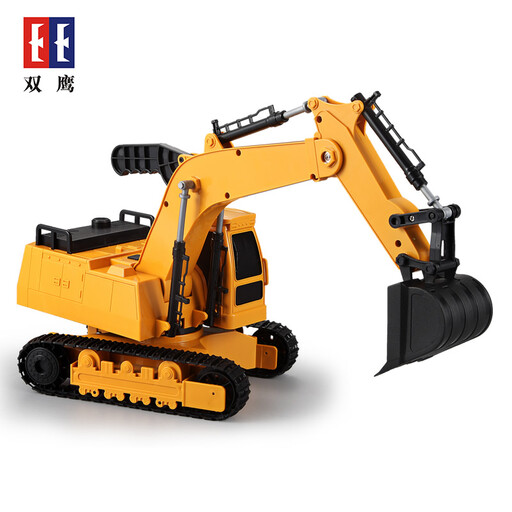
Why this product suits this profile: This manually operated toy excavator is aimed at families looking for an easy-to-use construction vehicle for children aged 3 and over. The excavator arm can be moved for digging and emptying, while the cab rotates through 360 degrees.
The functions are mechanical and do not require batteries. This removes the need for additional energy and battery purchases during ongoing use. Nevertheless, the age recommendation and supervision notice should still be observed.
Movable arm with bucket, 360-degree rotating cab and rubber tracks; according to the product information, intended for children aged 3 and over.
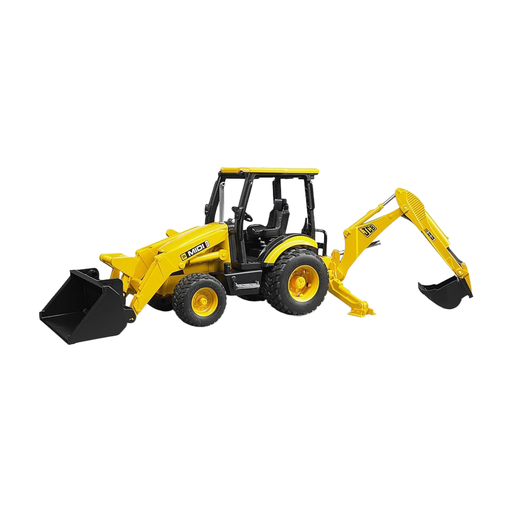
Why this product suits this profile: This construction vehicle toy combines a front loader and rear excavator in one model. It is suitable for children aged 3 and over who want to recreate a range of activities on a building site.
Rather than simply offering striking looks, this model has functional front and rear equipment. The description also lists fold-out supports, a swinging axle and all-terrain tyres.
Detachable front-loader bucket, functional rear excavator, rotating driver’s seat and 1:16 scale; no batteries required.
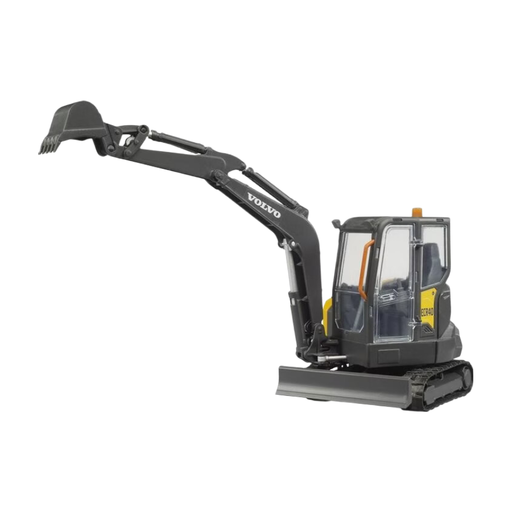
Why this product suits this profile: This compact Volvo excavator is designed for regular play in a child’s bedroom or sandpit. Its short swing radius makes it suitable for play situations where space is limited.
The product information specifies precise dimensions of 29.5 × 12.5 × 20.8 centimetres. This makes it easier to check before buying whether the excavator will fit the available play area.
360-degree rotating structure, angled excavator arm, adjustable dozer blade and tracked chassis; according to the product information, it can be used without batteries.
We have put together a complete, regularly updated list of products that fully meet these strict selection criteria and the safety regulations applicable in the EU.
After playing in the sandpit, remove grains of sand from the joints, tracks and bucket. A dry brush or slightly damp cloth is sufficient for many plastic models. Check regularly whether screws, axles or moving parts have become loose. If there is any visible damage, the toy should no longer be used.
A toy excavator as a gift for children should not be chosen based on the brand alone. A Bruder excavator may be suitable because of its scale and range of functions, while a smaller toy excavator may be easier for younger children to handle. Age, motor skills, intended location and the specific safety instructions remain the key considerations.
Models with an easy-to-move bucket, sturdy tracks or wide wheels and easily accessible handles are suitable for the sandpit. After use, the excavator should be cleaned and stored in a dry place. Direct supervision is particularly important when there are very small parts.
Yes. Many manual models are operated using the excavator arm, bucket, rotating cab or chassis. This reduces ongoing battery costs and allows children to play regardless of the charge level or remote control.
Its lifespan depends on the material, joint construction, use and care. Regular checks, removing sand from moving parts and storing the toy in a dry place can help extend its service life. Without specific warranty or manufacturer information, it is not possible to give a general durability estimate.