
Lieferung heute & morgen

Qualitätsgarantie

Willkommens-Angebote freischalten: KOSTENLOSE Lieferung | Bis zu 80 % RABATT | Kostenlose 30-Tage-JoyPlus-Testphase
App herunterladen
A toy excavator should not just look like a construction machine – it should also work reliably in everyday play. Parents, grandparents and other family members therefore often look for moving arms, realistic details and a robust build. However, some purchasing decisions can lead to disappointment: the excavator may be unsuitable for the sandpit, important functions may only work to a limited extent, or small parts may not be appropriate for the child’s age.
An excavator for children aged 3 and over may contain small parts or moving components that are unsuitable for younger children. The manufacturer’s specific age recommendation is the key consideration. Even if a product looks simple on the outside, warnings about the risk of swallowing and the need for supervision should be followed.
A toy excavator with a moving arm is designed for role play, not for lifting heavy objects. With small plastic models, sand, soil or building blocks can put considerable strain on the mechanism. Before buying, you should therefore establish whether the model is intended mainly for indoor use, light sand play or regular outdoor use.
A delicate 1:16-scale model offers plenty of detail, but requires sufficient space and should be cleaned after playing in the sand. A sandpit excavator with a seat, on the other hand, is considerably larger and intended for a different style of play. If these differences are overlooked, you may end up buying a vehicle that is too bulky for the child’s room or too delicate for the sandpit.
For children aged around 3 and over, models with a clear age recommendation and easily accessible functions are a sensible choice. Look out for:
The CE marking indicates that a toy is intended to meet the relevant EU requirements. However, it does not replace checking whether the model is suitable for the child’s stage of development and intended use.
With a toy excavator, the function should not merely be visible in the product image. Important practical features include:
Tracked models are often well suited to imaginative construction-site scenarios on carpets, play mats or firm ground. For sand and soil, large wheels or a ride-on vehicle designed for this purpose are often more practical.
ABS plastic is used in several toy construction machines and can generally be cleaned with a damp cloth. Metal models may be interesting for certain outdoor applications, but they should also be checked regularly for sharp edges, loose parts and damaged joints.
After playing in the sandpit, it is advisable to remove sand from the joints, wheels and bucket. Sand that gets into moving mechanisms can make them more difficult to operate. Dry, protected storage helps to extend the product’s service life.
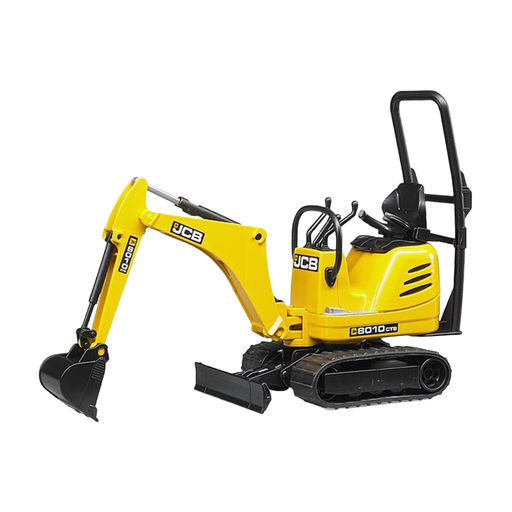
Why this product suits the profile: This compact 1:16-scale toy excavator is intended for children aged 3 and over and requires no batteries. It is suitable for first construction-site scenarios in the child’s room or in a sheltered outdoor area.
The arm, upper structure and dozer blade can all be moved manually. This means play does not depend on batteries or sound effects.
ABS plastic, rotating upper structure, tracked drive and a seat with retaining bar for compatible bworld figures.
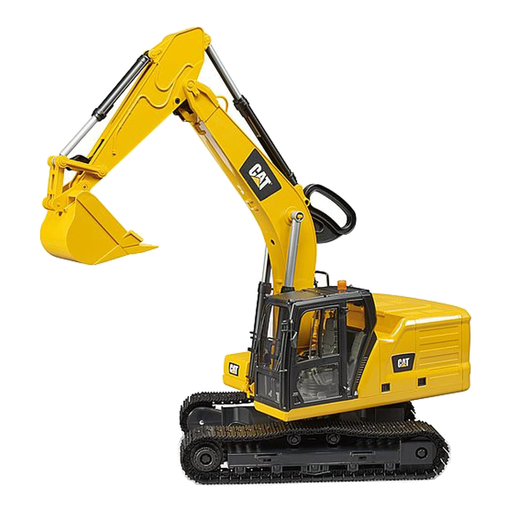
Why this product suits the profile: This model is aimed at children aged 4 and over who want to enjoy detailed toy construction machines with a wide range of moving functions.
The product details specify dimensions of approximately 63 × 20 × 28 cm and point out the presence of small parts and the need for supervision.
360° rotating cab, functional arm with detachable bucket and tracks for different surfaces.
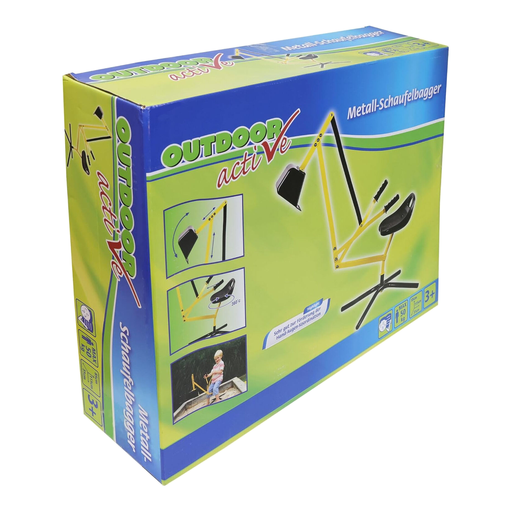
Why this product suits the profile: This ride-on excavator is intended for children aged 3 and over and for use in the sandpit. It offers a different play experience from a small toy vehicle and requires no assembly.
The metal construction and rotating seat are designed for active sand play. Adult supervision is still required, however.
Ride-on excavator with a 360° rotating seat, operable digging arm, dimensions of 57,61 × 45,21 × 14 cm and a weight of around 3,03 kg.
We have put together a complete, regularly updated list of products that fully meet these strict selection criteria and the safety regulations applicable in the EU.
Not every construction vehicle toy serves the same purpose. A classic children’s excavator focuses on digging and shovelling. A wheel loader such as the Bruder 03412 moves material with a tipping bucket and features articulated steering. In role play, a telehandler is better suited to lifting and transporting. For a varied construction site, excavators, dump trucks, wheel loaders and figures can be combined.
Search terms such as Bruder excavator or Playmobil excavator also often refer to different product concepts. Bruder models in 1:16 scale often focus on vehicle functions and compatibility with bworld figures. Playmobil sets generally combine the excavator with figures and accessories for themed construction play. The decisive factors are the child’s age, the space available and the preferred style of play.
Models are suitable if the manufacturer expressly states that they are approved for children aged 3 and over and their functions can be operated without complicated assembly. Warnings about small parts must still be observed. Models approved only for children aged 4 and over should not be used by younger children.
This depends on the manufacturer’s information and the material. Plastic models may be suitable for occasional sand play if they are cleaned and dried afterwards. A metal ride-on excavator is specifically designed for active outdoor play. Electronic components or unprotected mechanisms should not come into contact with water or wet sand.
Its lifespan depends on the material, level of use, care and storage. Moving arms, buckets, wheels and tracks should be checked regularly. Removing sand after play and storing the vehicle somewhere dry can help reduce wear and prevent joints from becoming blocked. Models with small accessories should also be stored complete.