
Lieferung heute & morgen

Qualitätsgarantie

Willkommens-Angebote freischalten: KOSTENLOSE Lieferung | Bis zu 80 % RABATT | Kostenlose 30-Tage-JoyPlus-Testphase
App herunterladen
The selection of toy helicopters is vast: from simple models for toddlers and true-to-life rescue helicopters to complex helicopter building kits for budding engineers. But not every model that makes big claims on the box actually delivers in the playroom. As a Joybuy Product Recommendation Officer, I see every day which products bring joy and which ones are quickly cast aside. This guide will help you navigate the common pitfalls and make an informed decision.
Before we dive into the key features, let's look at the three most common reasons for buyer's remorse. Knowing them will help you shop smarter.
The "Short Lifespan" Trap: Brittle Materials Especially on budget-friendly models, the rotor blades, landing gear, or winch are often made from thin, brittle plastic. One rough landing or a fall from a shelf can quickly lead to a break. The result: the toy becomes useless after a short time, causing frustration instead of fun.
The "Overwhelm" Trap: Mismatched Complexity A remote-controlled helicopter with precise controls sounds appealing, but it's often too complex for a five-year-old. Their fine motor skills and spatial awareness are not yet fully developed. The toy is perceived as too difficult and is quickly abandoned. The manufacturer's age rating is a crucial, yet often ignored, factor.
The "Style Over Substance" Trap: Unreliable Features Many models advertise "toys with lights and sound" or a working winch. In practice, the sound effects are often tinny, the lights are dim, and the winch barely has enough power to lift even a small action figure. These gimmicks drive up the price but offer no real added value if the quality is poor.
To avoid these traps, you should check three core aspects before buying. These objective parameters separate high-quality models from short-lived toys.
The durability of a toy helicopter depends directly on its materials. Look for the following:
The manufacturer's age rating is not a mere suggestion but an important safety guideline.
helicopter building kit with larger pieces (e.g., from LEGO City or PLAYMOBIL) promotes fine motor skills and technical understanding. A rescue helicopter toy or a police helicopter toy with figures and accessories encourages imaginative role-playing.remote-controlled helicopter can now be suitable. These require patience and a steady hand.Ask yourself how the child will play with the helicopter.
LEGO helicopter often offers the ability to rebuild the model or combine it with other sets. This ensures long-lasting play value.SIKU, appeal to collectors and look great on a shelf.Here are some models that, based on objective criteria, represent a smart choice for specific user profiles.
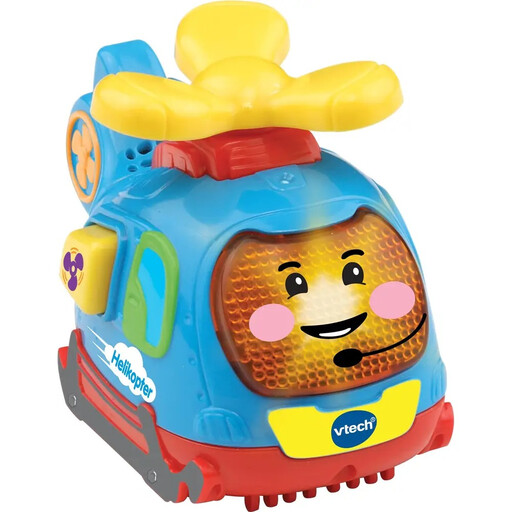
Why it's a great fit: Ideal for toddlers aged 1 and up. The design is extremely robust, has no small parts, and is tailored to the motor skills of the little ones. It combines tactile play with auditory stimuli.
The toy is specifically designed for rough handling by toddlers, thus avoiding the "short lifespan" trap. Its functions are simple and reliable.
It reacts to the movement of its wheels and is compatible with the "Magic Sensors" of the Tut Tut Baby Drivers playsets, which expands its play value.
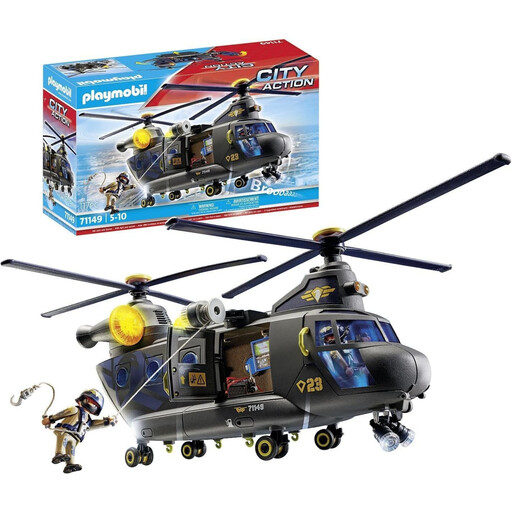
Why it's a great fit: Perfect for children aged 5 and up who love to create stories. The set encourages role-playing with a detailed police helicopter, figures, and accessories.
It sidesteps the "style over substance" trap. The winch and the light-and-sound module are robust and functionally integrated into the play concept, rather than just being gimmicks.
A spacious interior with room for several figures and even a small vehicle (sold separately). This allows for complex and long-lasting play scenarios.
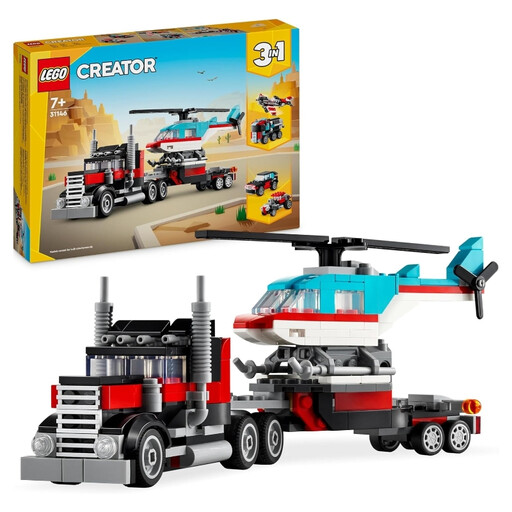
Why it's a great fit: For construction-loving kids aged 7 and up. The 3-in-1 concept offers three different build options from one set, including a LEGO helicopter, thus maximizing its play and construction value.
The high quality and precise fit of LEGO bricks prevent frustration during building. Its high rebuild value ensures the set doesn't lose its appeal after the first assembly.
It promotes technical understanding and creativity, as children can not only build according to the instructions but also design their own vehicles from the 270 pieces.
We have compiled a complete, up-to-date list of products that fully meet these strict selection criteria and European safety regulations.
A remote-controlled helicopter requires good hand-eye coordination and patience. For most children, simple entry-level models are suitable from around the age of 8 to 10. Younger children are often overwhelmed by the complex controls, leading to frequent crashes and damage. Start with a durable indoor model before moving on to more powerful outdoor helicopters.
Look for the CE mark, which indicates the manufacturer's declaration that the product meets EU requirements. Even more telling is compliance with the EN 71 standard, which specifies safety requirements for toys, including mechanical properties and the absence of harmful chemicals. For plastic parts, the mention of "ABS plastic" is an indicator of higher quality and stability.
Battery life depends heavily on the intensity of use and the type of features. Constantly flashing lights or continuously repeating sounds consume more power than functions activated only by a button press. It is advisable to use high-quality alkaline batteries or, for frequent use, rechargeable batteries to save money and be more environmentally friendly. Check before purchasing whether batteries are included.