
Lieferung heute & morgen

Qualitätsgarantie

Willkommens-Angebote freischalten: KOSTENLOSE Lieferung | Bis zu 80 % RABATT | Kostenlose 30-Tage-JoyPlus-Testphase
App herunterladen
A toy mobile excavator is high on many wish lists. The fascination with large construction machines is as strong as ever among children. However, the selection is vast, and not every model delivers on its promises. Many parents know the problem: an expensive toy breaks after a short time, or its play functions are so limited that interest quickly fades. This guide will show you which objective criteria to look for to find a durable and functional construction vehicle toy that truly enriches playtime.
Before we turn to recommended models, it's important to understand the typical weaknesses that often lead to disappointment.
To avoid these pitfalls, you should check three central product features before buying. These are the main determinants of durability and fun.
The quality of the material is the most crucial factor for a long-lasting construction vehicle for kids. High-quality ABS plastic (Acrylonitrile Butadiene Styrene) is an excellent choice. It is impact-resistant, durable, and used by manufacturers like Bruder. For models with metal components, as often found in SIKU models, look for a robust die-cast construction. This provides more weight and better stability, which is especially important for a toy crane. For use in the sandbox, UV-resistant plastic is essential to minimise material fatigue from sun exposure.
A good kids' excavator is characterised by its realistic functions. Pay attention to the following features:
The scale indicates the size ratio of the model to the original. A 1:16 scale (as seen in many Bruder excavators) means the toy is 16 times smaller than the real machine. Such models are relatively large, robust, and well-suited for younger children. Smaller scales like 1:55 or 1:87 (typical for SIKU) result in more detailed but smaller models, often aimed at older children or collectors. Always note the manufacturer's age rating. It provides an important clue not only for safety reasons (small parts that can be swallowed) but also regarding the motor skill requirements for the child.
Based on these objective criteria, we have identified several models that are suitable for different requirement profiles.

Why it's a great fit: Ideal for toddlers from 2 years old who need a robust and easy-to-use toy for indoors and outdoors. Its size and straightforward controls are perfectly matched to the motor skills of this age group.
According to the manufacturer, the excavator is made of high-quality ABS plastic, making it resistant to breakage. The control of the entire arm via a central handle is a robust and simple solution that doesn't jam easily. It is explicitly suitable for the sandbox.
Fully functional excavator arm with an articulated bucket, 360° rotating superstructure, and a height-adjustable dozer blade. The 1:16 scale ensures an impressive size.
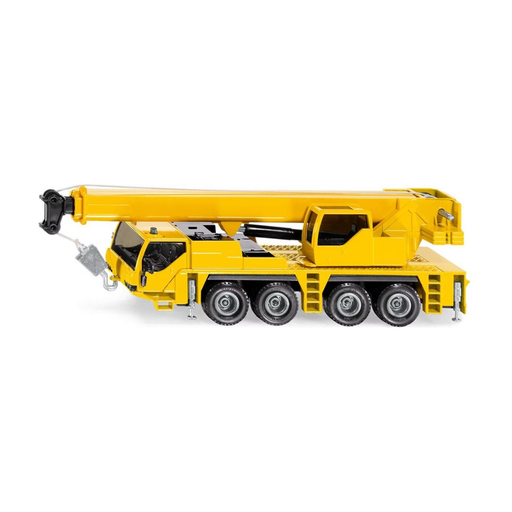
Why it's a great fit: For children aged 3-4 and up who appreciate more complex play sequences and realistic functions. The combination of metal and plastic offers a premium feel and stability for demanding lifting jobs in the playroom.
The construction is predominantly metal, which ensures high stability and prevents breakage. It offers numerous realistic functions, including a telescopic arm and extendable supports, which elevates its play value far above simpler models.
Double-telescoping boom, extendable metal support legs for a firm stance, rotating cabin, and a manually operated cable winch. The crane hook is also made of metal.
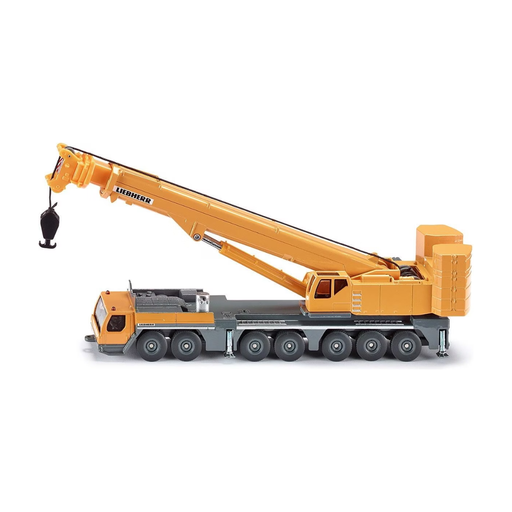
Why it's a great fit: Perfect for older children and collectors who value attention to detail and a well-known brand name (Liebherr). The 1:87 scale (H0) makes it compatible with standard model railway layouts.
The body is mostly made of metal, which ensures high durability despite its small size. Despite the small scale, all essential functions like rotating, lifting, and telescoping are present, guaranteeing high play and display value.
Highly detailed Liebherr model in the 1:87 collector's scale. Features extendable supports, a functional cable winch, and a telescoping crane arm. The rubberised tyres ensure quiet running.
We have compiled a complete, up-to-date list of products that fully meet these strict selection criteria and safety regulations.
Look for robust, UV-resistant materials like ABS plastic. Metal parts should be rust-proof or only used in areas that do not come into constant contact with moisture. A simple design without delicate, open mechanisms is advantageous, as sand can get stuck and block the function. Models that are easy to clean under running water are particularly practical.
The scale describes the size ratio of the toy to the real vehicle. A model in 1:16 scale is 16 times smaller than the original. A smaller number after the colon (e.g., 1:16) means a larger toy. Larger models are often more robust and easier for younger children to handle. Smaller scales (e.g., 1:87) allow for a higher level of detail in a small space and are popular with collectors and for model railway worlds.
Simple models with a central lever control for the arm and bucket, as some Bruder excavators offer, are often suitable for children as young as 2 years old. They promote hand-eye coordination. More complex models with multiple levers, cable winches, or more advanced functions, like a SIKU crane, are generally suitable for children aged 4 and up, as they require finer motor skills and more patience. Always refer to the manufacturer's age recommendation.