
Lieferung heute & morgen

Qualitätsgarantie

Willkommens-Angebote freischalten: KOSTENLOSE Lieferung | Bis zu 80 % RABATT | Kostenlose 30-Tage-JoyPlus-Testphase
App herunterladen
Whether you are looking for baby toys, educational toys or a birthday present for a child, there is a huge choice available, and product descriptions often sound very similar. Parents, grandparents and other family members therefore need to look more closely before buying. An appealing design or a long list of features alone says little about whether a toy is suitable for a child’s age, home environment and way of playing.
Lights, sounds, sensors and remote controls can be interesting. However, they are not automatically an educational benefit. What matters is whether the child becomes actively involved – for example, by pressing, sorting, building, controlling or engaging in role play. A toy that only plays sounds when a button is pressed can quickly lose its appeal.
With interactive toys, it is therefore worth asking: What does the child actually do, and how many different ways of playing are there in practice?
“From 3 years” is not merely a marketing statement. Small parts can pose a swallowing or choking risk to children under three. Even for older children, the age recommendation should match their stage of development. A complex construction kit for children may be interesting for a six-year-old, while a younger child may need help putting it together.
For products with batteries, magnets or moving parts, you should also follow the warnings and recommended supervision requirements.
Electronic toys often require batteries, which are not included in the box. An RC dinosaur, for example, may need several AA or AAA batteries. Replacement parts, charging times and volume levels can also affect everyday use. Before buying, check whether batteries are included, whether the product has a rechargeable battery and whether the volume can be adjusted.
For babies aged around six to 18 months, products with easy-to-grip surfaces, clear responses and a stable base are suitable. A baby activity table can combine several play areas, but it should be sufficiently stable and resistant to tipping. Rolling toys can be interesting for tummy time or early crawling movements, provided they are not used unsupervised near stairs or small objects.
From the age of three, role play, simple toy cars, musical instruments and introductory construction activities become suitable options. From the age of six, magic sets, more advanced construction kits and remote-controlled vehicles may be appropriate.
According to the product information, many of the products featured here are made from ABS plastic. For baby products, BPA-free materials and rounded edges are sometimes specified. These details should be checked directly on the product page. Look for:
The CE marking indicates that the supplier has declared the product’s compliance with the relevant EU requirements. It is not an independent quality seal. The EN 71 series covers various toy safety requirements, such as mechanical and physical properties or flammability. Even when the appropriate marking is present, age recommendations and supervision remain important.
Musical instruments for toddlers, drums and electronic dinosaurs can quickly become loud in a flat. A volume control or quiet mode is therefore useful. For a children’s scooter, handlebar height, deck width, brake, weight and maximum load are all relevant. The specified model is expressly not intended for use in road traffic; protective equipment should be worn.
Cleaning should also be considered when choosing a toy: baby toys should be easy to clean with a suitable cloth, while complex construction kits should preferably be stored dry and sorted.
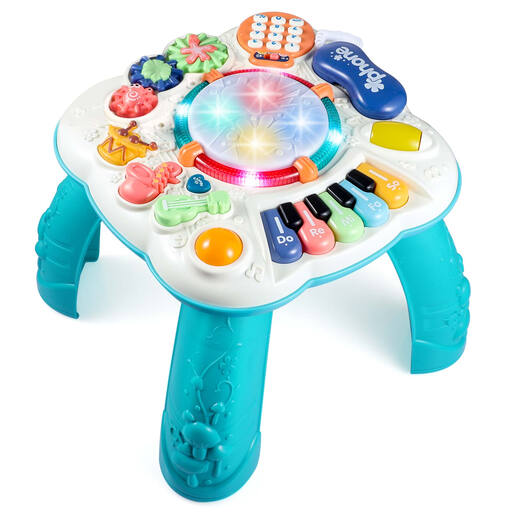
Why this product suits the profile: According to the supplier, the table combines several activities, including piano keys, a drum, gears and a telephone game, in one product and is designed for children aged 6 to 36 months.
The six play areas make the functions easy to understand. According to the description, the detachable legs allow it to be used either as a floor play board or as a table.
The product information states that it features ABS material, rounded edges, volume control and battery operation, with batteries not included.
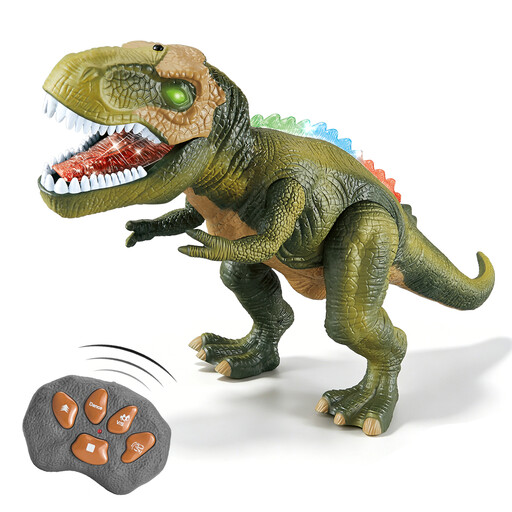
Why this product suits the profile: According to the supplier, this model is aimed at children aged three and over. It offers forward, reverse and turning movements, as well as an automatic dance mode.
The required batteries and the warning about small parts are stated in the product information. This makes it easier to plan ongoing costs and supervision.
According to the product description, it features a 2.4 GHz remote control, a moving head, light functions and hidden wheels. The dinosaur and remote control each require batteries.
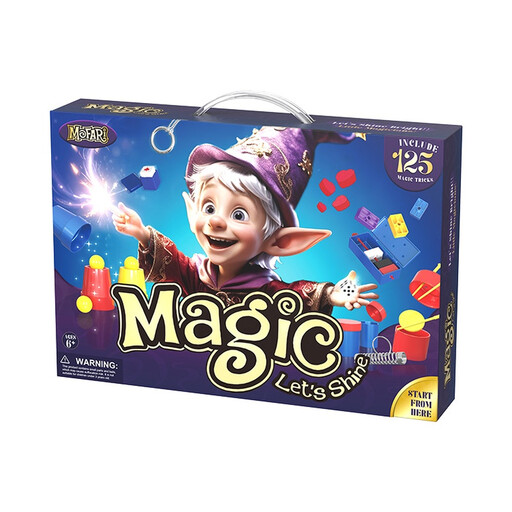
Why this product suits the profile: This magic set for children aged six and over is ideal for families looking for a shared hobby that requires no batteries and takes up little space.
The handbook and video guides explain how to use the set in detail. The age recommendation of six and over distinguishes it from products intended for toddlers.
According to the product name, the set contains twelve tricks and 125 effects, as well as ABS props. It is portable and requires no batteries.
For children who prefer vehicles, a friction-powered police off-road car for ages six and over may be a good option. Those who enjoy building and collecting could consider the CAYI M4 Sherman construction kit with 740 pieces; because of its small components, it is not suitable for children under three. The Volkswagen T1 model in 1:36 scale, with a metal body and an age recommendation of 14 and over, is intended for teenagers and adult collectors.
For younger children, a baby drum, an activity table or a rolling penguin may be possible options. Particular attention should be paid to volume, batteries and direct supervision. A children’s scooter is only suitable once the child’s balance, height and ability to use the rear brake are all appropriate.
We have put together a complete, regularly updated list of products that fully meet these strict selection criteria and the safety regulations applicable in the EU.
Simple sensory and grasping toys, rolling baby toys and activity features with large, easy-to-reach controls may be suitable. Check the specific age rating, sturdy materials and that there are no small detachable parts. Electronic products should only be used with appropriate supervision.
Its lifespan depends on the material, construction, use and care. Toys with few moving parts are often easier to maintain. For RC models and electronic toys, the battery compartment, remote control and moving wheels are typical points to check. With construction kits, all pieces should be sorted thoroughly and stored in a dry place after play.
In addition to the purchase price, you may need to buy batteries or charging accessories. Before placing your order, check the required battery size and quantity. Products with a volume control or quiet mode may be better suited to flats with shared living spaces.