
Lieferung heute & morgen

Qualitätsgarantie

Willkommens-Angebote freischalten: KOSTENLOSE Lieferung | Bis zu 80 % RABATT | Kostenlose 30-Tage-JoyPlus-Testphase
App herunterladen
Toys should be fun, support your child’s development and work reliably in everyday life. But when choosing toys for babies, toddlers or older children, bright colours, lots of features and advertising claims don’t automatically add up to a good buying decision. What matters is clear information about age suitability, materials, dimensions, power supply and any small parts.
Music, lights, sensors and moving parts can all look appealing. But a toy with several buttons can quickly overwhelm a baby. When choosing toys for babies, it should be clear what your child can do with the toy: grasp, press, turn, listen or crawl. A few easy-to-reach features are often more practical than an overloaded control panel.
An age label such as ‘for toddlers’ is no substitute for checking the details. A toy with small figures, magnets or detachable accessories isn’t automatically suitable for every child aged three and over. For toys for children aged 3 and over, check the warnings about small parts. For younger children, parts that could be swallowed and accessible magnets are particular concerns.
Musical toys can quickly become disruptive at home or when you’re out and about. A volume control, quiet mode and clear information about batteries or rechargeable batteries are therefore useful things to look for. It’s also worth considering ongoing costs: batteries, replacement parts, cleaning and storage can all affect how much effort a toy involves in practice.
The recommended age is a starting point, but it shouldn’t be your only guide. Also check:
Take particular care with magnetic building blocks. The product information for the XINQIYUAN sets specifically warns about small, strong magnets and the risk of serious injury if swallowed. Don’t continue using damaged pieces.
Many products are described as being made from ABS plastic, with rounded edges and BPA-free materials. Check these details against the product information and warnings on the packaging. A CE marking indicates that the manufacturer declares the product meets the relevant EU requirements; it isn’t an independent quality mark. Toys are also often described as meeting EN 71 requirements. The specific product details, manufacturer’s information and intended use remain key.
For toy drums and activity tables, consider the footprint, adjustable parts and detachable legs. For ride-on toys and other vehicles for children, check for moving parts, wheels and any potential small parts. For construction toys, consider the number of pieces, connection system, storage and compatibility with sets you already own.
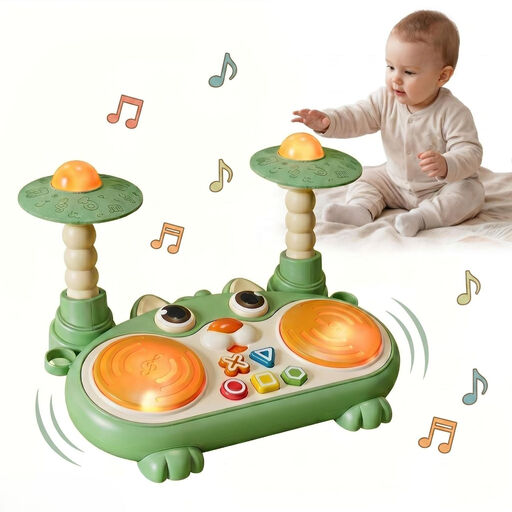
Why this product suits this profile: This compact educational toy combines drum pads, lights, animal sounds, and shape and colour matching in one product for the stated age range of 6 to 36 months.
The features are built into the toy itself. According to the product description, there are no loose parts; remember to buy batteries separately.
ABS plastic, rounded edges, anti-slip base and several manual play modes.
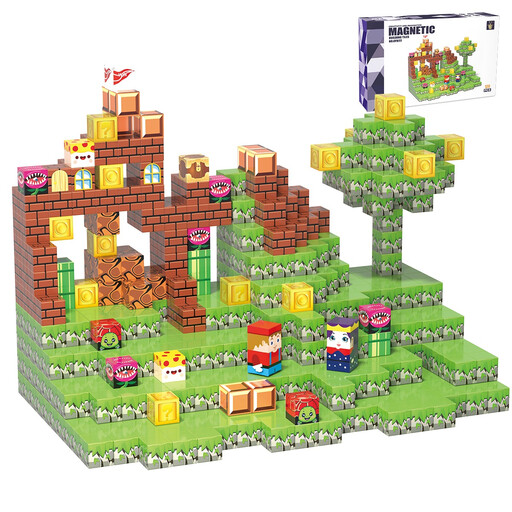
Why this product suits this profile: This set is designed for children aged three and over who enjoy building, sorting and creating their own shapes. Its 120 pieces are ideal for trying out different construction ideas again and again.
The product information states the minimum age, includes warnings about magnets and advises checking regularly for cracks and exposed magnets.
120 pieces, a storage container, no batteries required and nature-inspired designs for open-ended play.
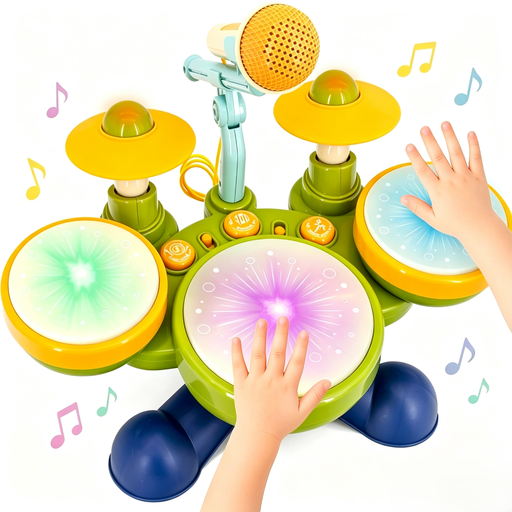
Why this product suits this profile: For children aged 1 to 3 who enjoy musical toys with drums, a microphone and several sound modes.
The built-in volume control lets you adjust the sound to suit your surroundings. The detachable stand can also be used as a flat play surface.
Three illuminated drum pads, two adjustable cymbals, a microphone and an anti-slip base.
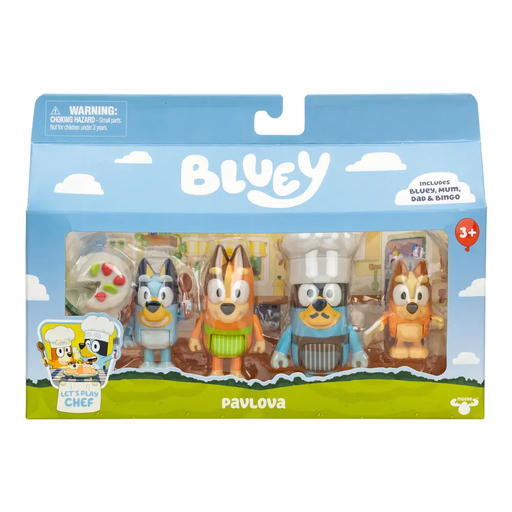
Why this product suits this profile: These four figures make a great birthday present for children or an addition to existing BLUEY playsets for children aged three and over.
The warning about small parts is clearly stated. Before buying, check that your child can already handle small accessories safely.
Four poseable figures, detachable accessories, no batteries required and compatibility with BLUEY sets.
Check children’s toys regularly for cracks, loose parts, sharp edges or damaged magnets. Plastic can usually be cleaned with a soft, slightly damp cloth. For electronic toys, keep liquids away from the battery compartment and speaker. Store small parts in a sealed box after playtime. This helps keep sensory toys, figures and construction toys tidy and complete.
Batteries are often not included with electronic products. Before buying one as a Christmas present or gift for a child, check the battery type, how many are needed and the potential cost of replacements. Vehicles, building sets and collectible figures can also be suitable for older children, as long as they’re right for their age, interests and the relevant safety guidance.
We’ve put together a complete, regularly updated list of products that meet these strict selection criteria and fully comply with the safety regulations in force in the EU.
Choose age-appropriate toys with large, easy-to-grasp features, rounded edges and few or no loose parts. Toys for babies with lights, music or movement should have adjustable volume and be used in accordance with the manufacturer’s instructions.
How long a toy lasts depends on its materials, construction, how often it’s used and how well it’s cared for. Regular checks, dry storage, and repairing or removing damaged parts can help extend its safe useful life. There’s no set lifespan that applies to every product in a particular toy category.
Batteries are the main potential ongoing cost of musical toys. Before you buy, check whether batteries are included, which type is needed and whether the toy has a volume control. Manual construction toys and figures, on the other hand, generally don’t need a power source.