For individual figures and small groups, a mirrorless camera kit with a zoom lens is a flexible choice. If you want close-ups without changing lenses, consider a compact camera with a documented close-up mode. For fine painted details, the lens itself, its magnification ratio and working distance all matter – not just the camera body. If several figures are lined up one behind another, focus bracketing followed by image stacking can help, but it requires a stable set-up and extra steps.
Who photographs toy soldiers?
Photographers who focus on painted details
If you want to show faces, insignia or brushstrokes in close-up, consider magnification, working distance and depth of field together. Canon Academy, Sony Deutschland and Nikon Deutschland explain aspects of close-up photography and their respective macro lenses.
Photographers capturing whole scenes
When photographing complete figures and small set-ups, a suitable composition and a practical camera position at the table are key. A zoom lens lets you frame your subject in different ways; Canon Deutschland describes the EOS R50 kit’s vari-angle screen.
Photographers capturing deeper set-ups
If several soldiers are lined up one behind another, a single plane of focus may not be enough to keep the whole scene sharp. Canon Academy describes focus bracketing as a way to capture different focus planes and combine them.
What should you look for when buying?
Compact camera with a close-up mode
A good fit if: You want to photograph individual figures or details without changing lenses. According to OM SYSTEM, the OM SYSTEM Tough TG-7 offers a microscope mode that can focus from 1 cm; the PENTAX WG-8 has a 1-cm macro mode.
The trade-off: Both cameras have a fixed lens. When the subject is very close, it can be harder to position additional lighting effectively.
Mirrorless camera with a standard zoom
A good fit if: You mainly want to frame whole figures or groups of different sizes, and may want to use another lens later. According to Canon Deutschland, the Canon EOS R50 kit includes an RF-S 18–45 mm zoom lens.
The trade-off: According to Canon, the kit lens offers a maximum magnification of 0.25x, so it is not equivalent to a 1:1 macro lens.
Mirrorless camera with a macro lens
A good fit if: You regularly want to capture tiny painted details at large magnifications and can choose the camera, a compatible lens and lighting together. Sony and Nikon specify a 1:1 magnification ratio for the macro lenses described here.
The trade-off: Macro lenses are not automatically included in a camera kit. The distance between the lens and subject can also limit the room available for lighting on a small table.
| Priority |
What to check before buying |
Who it matters to |
| Fine painted details |
The magnification ratio and mount of the specific lens; also allow for lighting when planning the working distance. |
If I want to show faces or insignia in close-up, I compare the lens rather than just the camera. Around 33% of consumers are likely to prioritise details as their main buying consideration. |
| Whole figures and scenes |
Check whether you can get the framing you want from the available distance, and which zoom lens is included. |
A variable composition is useful for complete figures or groups of different sizes. Around 27% of consumers are likely to put this scenario first. |
| Multiple planes in focus |
Check whether the specific model offers focus bracketing; plan for a stable set-up when taking a series of shots. |
If figures are lined up one behind another, I want more than a narrow plane in focus. Around 20% of consumers are likely to prioritise sharpness throughout the scene. |
| Lighting and space |
Compare working distances rather than just minimum focus distances; allow room for the camera, tripod, background and lighting. |
On a small table, there needs to be space for lighting alongside the camera and subject. Around 20% of consumers are likely to see their lighting and camera set-up as their main consideration. |
Common buying mistakes
-
Assuming that more megapixels mean suitable macro magnification
The specific lens also matters if you want to capture fine details at large magnifications. According to Canon, the RF-S 18–45 mm lens in the Canon EOS R50 kit offers a maximum magnification of 0.25x.
First decide whether you want to fill the frame with whole figures or tiny details, then check what’s included in the kit and review the lens specifications.
You may need an additional compatible macro lens to capture very small details.
-
Confusing minimum focus distance with working distance
Minimum focus distance doesn’t automatically tell you how much clear space there is in front of the lens. For the SEL30M35 at maximum magnification, Sony specifies a distance of about 2.4 cm between the lens and subject.
Plan where to position the camera, figure and lighting based on the working distance of the specific lens.
Depending on your set-up, you may need to reposition the lighting or choose a different lens.
-
Stopping down more and more to increase depth of field
At high magnifications, depth of field remains limited. According to Canon Academy, stopping down too far can increase diffraction blur.
For figures that aren’t moving, check whether focus bracketing is available and use a stable set-up, rather than relying on a smaller aperture alone.
Brands to consider
Canon
The EOS R50 with a kit zoom is suited to varied scenes; RF macro lenses are a separate option.
- Canon lists a vari-angle screen, focus bracketing and in-camera depth compositing for the EOS R50.
- According to Canon, the RF-S 18–45 mm offers a maximum magnification of 0.25x. This figure does not apply to a separate macro lens.
OM SYSTEM
The Tough TG-7 has a fixed lens; the OM-5 Mark II is a separate interchangeable-lens camera range.
- OM SYSTEM specifies a microscope mode for the TG-7 that can focus from 1 cm.
- The separately available LG-1 light guide accessory is only included in bundles that specifically list it; details about the OM-5 Mark II do not automatically apply to the TG-7.
PENTAX
The WG-8 is a compact camera with a fixed lens, designed for close-up subjects.
- PENTAX specifies a 1-cm macro mode, a ring light and 5x optical zoom.
- Weather resistance isn’t a reason in itself to buy a camera for a tabletop set-up. Check whether the ring light gives the painted details the effect you want.
Sony
Sony E-mount APS-C cameras can be paired with the separately available SEL30M35 for macro photography.
- Sony specifies a 1:1 magnification ratio and a minimum focus distance of 0.095 m for the SEL30M35.
- At maximum magnification, the distance in front of the lens is about 2.4 cm, according to Sony. The lens is not automatically included with a camera body.
Nikon
The NIKKOR Z MC 50 mm 1:2.8 is available as a separate macro lens for the Z system.
- Nikon specifies a 1:1 magnification ratio for this lens.
- At the minimum focus distance, there are about 5 cm between the lens and subject, according to Nikon. Lens specifications do not apply to every Z camera kit.
Joybuy products
The following Joybuy products are digital cameras for taking photos. Before buying one for toy soldiers on a small table, check that its framing, close-focus capability and lighting set-up work for your subject.
 No image available
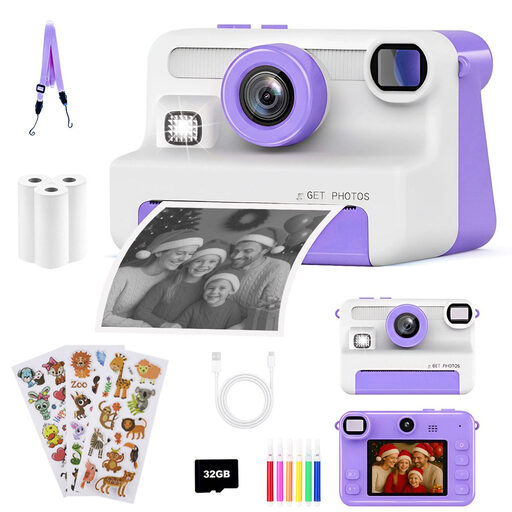
Fosmet instant camera for children, 1080P, 30MP, 8x zoom
For taking photos with adjustable framing; check whether you can capture your subject from the camera position you have in mind.
The product name lists 1080P, 30MP, a 2.4-inch screen, 8x zoom, three rolls of instant film and a 32GB card.
View at Joybuy
 No image available
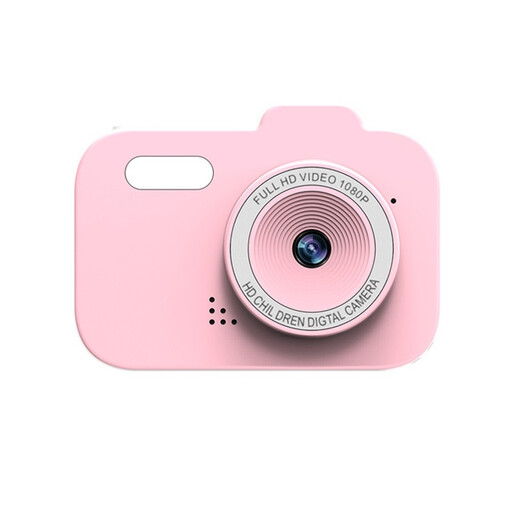
Digital camera with a 2.0-inch screen and 1080p video
The screen can help you check your composition; make sure the subject size you want works with the space available on your table.
The product details list a fixed-focus lens, automatic exposure and a built-in flash. According to the product description, children should use it under adult supervision.
View at Joybuy
 No image available
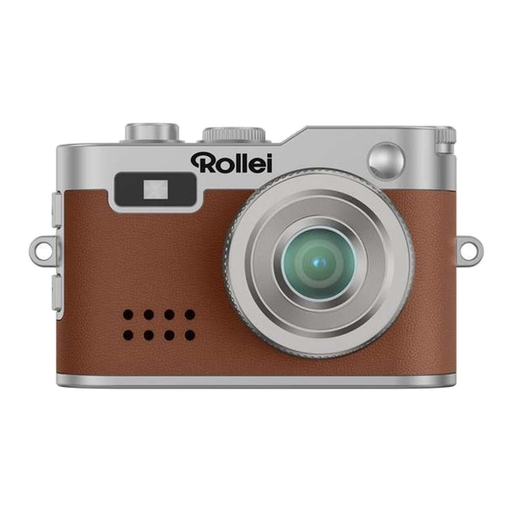
Rollei mini digital camera, brown
Its compact design could suit a cramped tabletop set-up; check beforehand that there’s room for the camera and lighting together.
The product details list dimensions of 31 × 20 × 54 mm, a weight of 18 g, 2 MP and an integrated LED light with flash and continuous-light modes.
View at Joybuy
Frequently asked questions
Is a standard kit lens a macro lens for tiny painted details?
Not necessarily. Canon specifies a maximum magnification of 0.25x for the RF-S 18–45 mm. For close-ups of fine details, compare the magnification ratio of the lens you’ll actually use with the size of the subject you want to capture.
How can I get several figures lined up one behind another in focus?
Keep the camera and figures steady, and check whether your camera model supports focus bracketing. This takes a series of shots at different focus planes, which can then be combined; Canon describes these features for the EOS R50.
What settings should I use when photographing painted figures repeatedly?
Aim for consistent lighting and adjust the white balance to suit. Canon Academy also recommends a stable set-up or tripod for sharp close-ups.
What rights apply when buying a camera from a retailer in Germany?
For online purchases, you generally have 14 days from receiving the goods to cancel your order, although exceptions apply. The Verbraucherzentrale explains this period in its article dated 13 August 2026. If a product is faulty, statutory consumer rights against the seller are different from a voluntary manufacturer’s warranty; EU consumer information states that the minimum legal guarantee is two years from receipt of the goods.


