Figure painters who care about colour
You want to show paintwork and uniform colours accurately, and you’re happy to set the light colour and white balance deliberately. Nikon explains how white balance affects the overall colour cast of an image.


For individual toy soldiers on a small photo table, a compact, dimmable light that’s easy to position is a sensible place to start. For several figures, a larger panel may be a better fit if you have enough room for the light and its mount. Affinity describes continuous LED lighting as a way to illuminate miniature scenes consistently; Nikon and ERCO show that white balance and colour rendering need to be considered separately. Check for reflections in a test shot of any shiny details: the LED point-light effect described by digitalkamera.de relates to the Rollei Lumen Panel 900 Bi-Color and shouldn’t be applied generally to other models.
You want to show paintwork and uniform colours accurately, and you’re happy to set the light colour and white balance deliberately. Nikon explains how white balance affects the overall colour cast of an image.
You light several figures along with a backdrop, so you need enough room to set up the light in a similar position for repeat shots. Affinity describes continuous LED lighting as a way to photograph miniature scenes consistently.
You often change your viewpoint and need to fit the light and its mount between the camera and the figures. With compact lights, mounting options and available space are important things to check.
A good fit if: You photograph individual figures in a confined space and want to reposition the light frequently.
The trade-off: A small light won’t necessarily cover an entire diorama.
A good fit if: You can light several figures or a larger scene and have room for the panel and its mount.
The trade-off: Setup and what’s included vary by model and version.
| What matters when buying | What to look for | Who it matters most to |
|---|---|---|
| Shadows and details | Check that the light is dimmable and easy to position; assess reflections in a test shot using the specific diffuser. Affinity and digitalkamera.de discuss lighting techniques and visible LED reflections. | If I want to control shadows and keep details on a figure or its equipment visible, I test the light direction and diffusion with my own setup. Around 33% of consumers put shadows and surface details first. |
| Paint colours | Check the colour temperature range and the documented colour rendering of the exact model separately; photograph a neutral reference under the actual artificial lighting. Nikon and ERCO explain white balance and the limitations of the general CRI. | If accurate colours in painted uniforms matter to me, I match the light colour and white balance to my setup. Around 27% of consumers prioritise colour accuracy for painted figures. |
| Scene size | Compare the dimensions and mounting options with your own framing; compare lux figures only at similar distances and settings. Aputure gives a maximum of 5070 lux at 1 m and 5600 K for the amaran P60x. | If I want to include several figures or a diorama in the shot, I check that the panel and its positioning suit the scene. Around 20% of consumers prioritise the area they need to light. |
| Space and power | Check your table space, mounting options and cable routing; only plan for a power adapter, stand or batteries if they’re included with the specific version. Neewer and Rollei give different details about what’s included. | If there’s little room between the camera, figures and light, I need mounting and power options that suit my setup. Around 20% of consumers prioritise space requirements and flexible positioning. |
Colour temperature alone doesn’t tell you how colours will be rendered. ERCO points out that the general CRI doesn’t fully account for saturated colours; white balance also affects the photo.
Check the specifications for the exact model separately, then take a test shot of your painted figure under the artificial lighting you actually use. Nikon describes white balance as part of adjusting the light.
In an independent test of the Rollei Lumen Panel 900 Bi-Color, individual LEDs were visible in reflective areas of the subject. This finding applies to that model, not to all panels in general.
Check shiny helmets or equipment in a test shot and adjust the diffusion if individual points of light are distracting.
Manufacturer figures apply at specific distances and settings. On their own, they don’t tell you whether the light’s coverage and positioning will suit your diorama.
Compare measurements only when the conditions are known and comparable, and check your own framing too.
What’s included can vary between versions, especially when it comes to stands and batteries. Neewer offers NL660 versions with and without a stand; Rollei lists batteries for the LUMIS as optional.
Before buying, check the parts list, mount and power supply for the exact version.
The Godox manual also lists the LEDP260C for macro and product photography.
The NL660 is a larger bi-colour panel for a setup where the light is positioned separately.
The LUMIS LED Panel Bi-Color has a larger light-emitting surface for stationary figure scenes.
The P60x is a bi-colour photography panel for a setup where the light is positioned separately.
The VL81 is a compact, dimmable light with a shoe mount and 1/4-inch thread, suited to confined or frequently rearranged setups.
The Joybuy products below include photo boxes for tabletop photography and compact lights that can be positioned separately. They aren’t all LED panels, so check that each format suits your setup.
 No image available
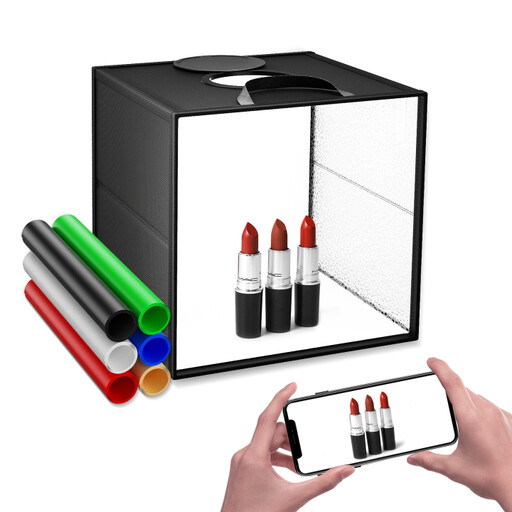
For individual figures on a photo table, an enclosed photo box can provide a compact space for your shots.
Foldable mini photo studio with six coloured backgrounds and dimmable lighting. A photo box rather than a separately positioned LED panel.
 No image available
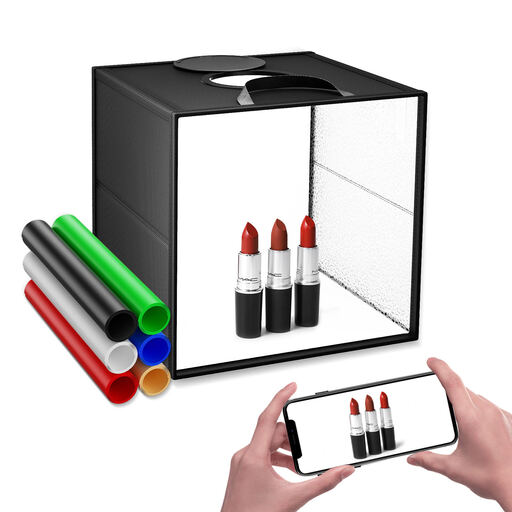
For small figures or a compact scene, this photo box provides a dedicated, foldable space for your shots.
The product name specifies 120 dimmable LEDs, six coloured backgrounds and diffusion fabrics. A photo box rather than a separately positioned LED panel.
 No image available
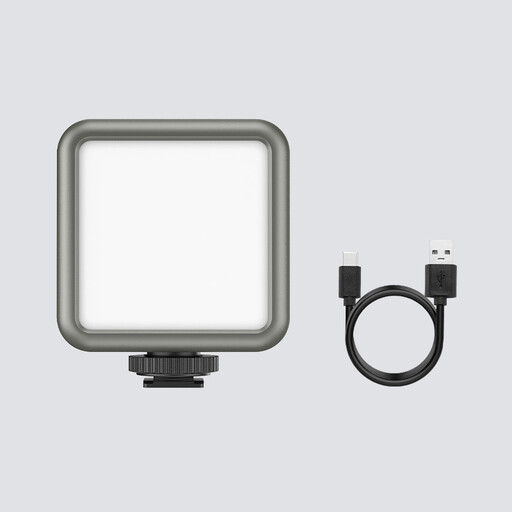
For a confined or flexible setup, this compact light could be an alternative to a larger panel.
The product name specifies a 2000-mAh battery, dimming and a colour temperature range of 2500–9500 K. A rear magnetic mount is listed for this model; it isn’t a large panel.
 No image available
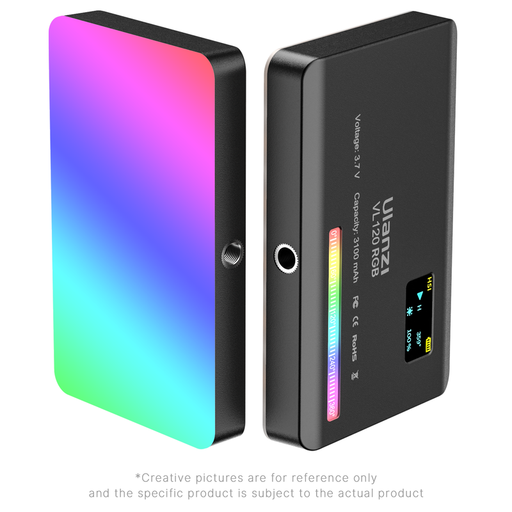
This compact RGB light may suit a setup where you’re looking for a small light source instead of a larger panel.
The product name specifies an RGB light. Before buying, check that the mounting options and what’s included are right for your planned position.
 No image available
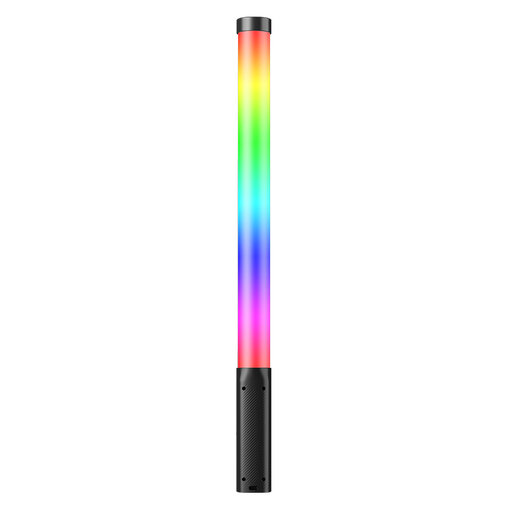
The handheld design may be useful for mobile product photography; it’s a different option from a separately mounted panel.
The product name specifies a 3300-mAh battery and an adjustable range of 2500–9000 K. It’s also rated at 360 lux at 0.5 m.
Start by placing a light source to one side, then take test shots from different angles and at different brightness levels. Check that painted details remain visible and that shiny parts aren’t reflecting individual LEDs. A tripod can allow longer exposures for a stationary figure; Affinity, digitalkamera.de and Canon offer advice on miniature and macro photography.
No. A high CRI alone doesn’t guarantee accurate reproduction of every uniform colour. ERCO highlights the limitations of the general CRI; mixed lighting and white balance also affect the result. Photograph a neutral reference under your actual setup and assess the colours in the test shot.
No, what’s included depends on the model and version. Neewer says the NL660 includes a power adapter but not NP-F batteries; whether a stand is included depends on the version. Rollei lists batteries for the LUMIS as optional. So check the parts list for the specific offer.
Check the product labelling, manufacturer’s information, German instructions with any required warnings, and the product’s declaration of conformity. Germany’s Federal Network Agency lists these as part of its market surveillance of electrical and electronic products; this doesn’t amount to individual confirmation for a particular offer.
For an eligible distance contract, you generally have a 14-day right to cancel from the date of delivery; exceptions and possible return costs may apply. Faulty goods are generally covered by a statutory guarantee of at least two years against the seller. This is separate from any voluntary manufacturer’s warranty. This information is based on guidance from Your Europe, the European Union’s portal.