Toy-figure detail photographers
If you want to capture paintwork, faces or equipment in close-up, the specific lens and its magnification ratio matter. Canon UK points out that close-up photography calls for particularly precise focusing.


A suitable standard zoom lens may be enough for photographing whole figures; for small details that fill the frame, the magnification ratio of the specific lens is what matters. If you want a figure to appear sharp from front to back, check focus bracketing and in-camera focus stacking separately, including lens compatibility. For consistent colours under artificial light, keeping the lighting constant and setting the white balance appropriately are important parts of your setup.
If you want to capture paintwork, faces or equipment in close-up, the specific lens and its magnification ratio matter. Canon UK points out that close-up photography calls for particularly precise focusing.
If you want to show a static figure in sharp focus from front to back, check whether the camera can shoot focus-bracketed images or combine multiple focus planes in-camera. OM SYSTEM lists compatible lenses for this, while Canon Academy explains how to set up your camera securely to keep shots aligned.
When photographing several figures under artificial lighting, keeping your composition consistent and controlling the white balance can help you achieve comparable colours. Canon UK explains how to adjust the white balance for challenging lighting conditions.
| What you need | What to check before buying | Who is it important to? |
|---|---|---|
| Capture small details in close-up | Compare the magnification ratio of the specific lens, the mount and the working distance for your lighting. | If I want paintwork or equipment to fill the frame, I pay particular attention to the lens rather than just the megapixel count. Around 36% of consumers prioritise detail. |
| Show the whole figure in sharp focus | Distinguish between focus bracketing and in-camera focus stacking; check that the feature and lens are compatible with the exact model. | When photographing a figure with depth, I want to capture several focus planes without movement in the subject or camera. Around 29% of consumers prioritise sharpness throughout the image. |
| Control colours under artificial light | Check the white balance and RAW support; keep the lighting as consistent as possible for comparable shots. | When I photograph painted colours under artificial light repeatedly, I want to control colour casts and keep the lighting conditions consistent. Around 21% of consumers prioritise colour accuracy. |
| Assess the complete setup | Check the kit name and what’s included, particularly the lens, power supply and memory card. | I want to know what else I’ll need for my planned setup before choosing a camera body or kit. Around 14% of consumers prioritise having a complete setup. |
How large a small detail appears in an image also depends on the specific lens and its magnification ratio; sensor resolution cannot replace this feature.
First decide how tightly you want to frame your subject, then check the lens’s magnification ratio, mount and what’s included.
For small details, you may need a suitable lens in addition to the camera body.
Focus bracketing captures images at different focus distances; combining them into one image is a separate step. In-camera focus stacking on the OM-5 Mark II requires a compatible lens.
Check the capture function, image-combining process and lens compatibility separately for the exact camera model.
Depending on the workflow you choose, you may also need a compatible lens or image-editing software.
When focus bracketing static figures, the shots need to stay aligned. Canon Academy recommends keeping the camera stable; an image stabilisation rating alone won’t guarantee this.
For repeatable sequences, plan a secure setup and keep the figure still while you take the shots.
The EOS R50 is worth considering if you plan to start by photographing whole figures and add an RF macro lens later.
The OM-5 Mark II suits a setup where you want to combine several focus planes in-camera using a specifically compatible lens.
The Alpha 6700 can be paired with the separately available E 30 mm F3,5 Macro for close-up photography.
If you need one, the Z50II can be paired with the separately available NIKKOR Z MC 50mm f/2.8 for close-up photography.
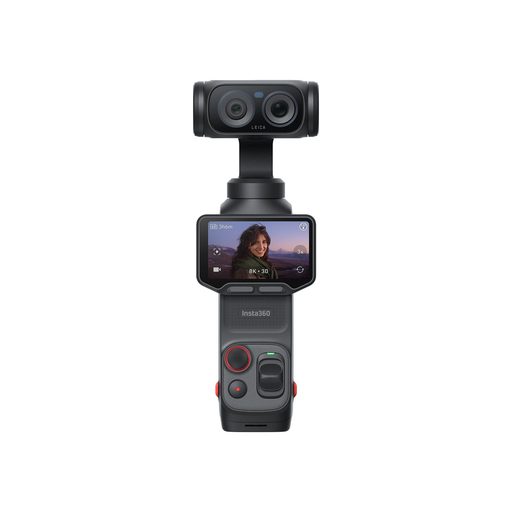
Here’s a Joybuy product related to this topic. Check the specific product details to see whether it suits your needs for close-up toy soldier photography.
 No image available
The product name describes a standard bundle in Cosmic Black. Before buying, compare the specific product details with your needs for close-up photography and focus bracketing.
No. What matters is how large you want the figure or detail to appear in the image. A suitable zoom lens may be enough for whole scenes; for small details that fill the frame, it’s worth comparing the maximum magnification ratio of the specific lens.
Set up the static figure and camera securely, then capture images at different focus distances. First, check whether the camera combines these focus planes itself or whether you’ll need additional software. For the OM-5 Mark II, the lens must also be compatible with focus stacking mode.
Adjust the white balance to suit your lighting and keep the light as consistent as possible between comparable shots. If you want to edit colours later, check that your chosen model supports RAW.