Which type of lighting is right for you?

Figure photographers dealing with dark shadows

If you’re photographing by a window, you can place a white card opposite it to brighten the side facing away from the window without changing the direction of the light. Canon Europe suggests using a reflector or a large white card when one side of a product is too dark.

Collectors who want consistent colours

When photographing painted figures and uniforms, the colour of the light and the white balance work together. Canon Europe notes that natural light can look warmer or cooler depending on the conditions.

Photographers who regularly rearrange their miniature set

On a small table or when you frequently change your set-up, the light’s design, mounting and power supply all affect your choice. SmallRig describes the P96 as a compact light with a camera shoe mount; NEEWER notes that the NL660 comes with different tripod options and optional batteries.

What should you look for?

Window light with a white card

A good fit if: you mainly want to brighten the dark side of the figures facing away from the window, and the available daylight is enough for your shot.

Trade-off: The card doesn’t provide its own adjustable light, and the window light and its colour change with the conditions.

Compact, battery-powered bi-colour panel

A good fit if: you want to brighten individual figures on a small table and often move your set-up around.

Trade-off: A smaller light isn’t automatically equivalent to a larger panel. Compare illumination figures only when the measurements were taken under comparable conditions.

Larger panel positioned separately

A good fit if: you want to add light to several figures or a larger area of your shot, and have room to position the panel separately.

Trade-off: Check the mounting, power supply and accessories for the specific version you choose.

Indirect-lighting panel

A good fit if: you can position a panel to provide the softer additional light described by the manufacturer for your figure set.

Trade-off: The manufacturer’s description alone doesn’t tell you how soft the shadows will be in your own set-up.

What matters What to check before buying Who will find this most important?
Shadows and details Try a white card as an alternative; with a panel, check that it’s dimmable and diffused, and that you have room to position it. If the side facing away from the window looks too dark, I want to bring out the details without losing the direction of the light. Around 36% of consumers put shadow control first.
Paint colours Check the adjustable Kelvin range and the colour-rendering information for the specific model; set the white balance for the scene you’re lighting. When photographing painted uniforms in changing daylight, I want to match the colour of the light to the white balance. Colour control is the top priority for around 29% of consumers.
Light output Compare lux figures only when the measurement distance and settings are the same; consider the area in shot, panel size and space available for positioning. If I want to include several figures or a larger area in the shot, I need lighting that suits the set. Light output comes first for around 21% of consumers.
Flexible set-up Check the mounting, power supply, battery type and what’s actually included with the version you’ve chosen. On a small table or when I often rearrange my set-up, I want to be able to reposition the light easily. Around 14% of consumers prioritise a flexible set-up.

Buying and comparison pitfalls

  • Comparing lux figures taken at different distances

    Illumination figures are only useful to compare when the measurement distance and settings are similar. For example, SmallRig gives a figure of 150 lux at 1 m for the P96; figures for other models may be based on different distances.

    Compare figures only when the measurement conditions match, and also consider light distribution and diffusion.

  • Assuming every package includes a battery and tripod

    According to the manufacturer, the NEEWER NL660 is available with or without a tripod; NP-F batteries are optional and aren’t included.

    Check what’s included and how the specific version is mounted before buying. Depending on the package you choose, you may need to buy a battery or tripod separately.

  • Expecting a panel to fix inaccurate colours on its own

    Window light changes colour. So an adjustable colour temperature on a panel doesn’t remove the need to set the right white balance for your shot.

    Match the colour of the light and the white balance to the figure you’re actually lighting.

Key brands to consider

The information applies to the specific models and versions mentioned, not necessarily to a brand’s entire range.

Godox

Godox describes the LEDP260C as suitable for uses such as macro and product photography.

  • Godox gives the model a colour temperature range of 3300–5600 K and says it can be powered from the mains or by an NP-F970 battery, sold separately.
  • According to the manufacturer, the dimming range is limited at colour temperatures between the two extremes.

NEEWER

NEEWER describes the NL660 as a larger bi-colour panel; versions with and without a tripod are available.

  • NEEWER EU gives the NL660 a colour temperature range of 3200–5600 K and says it can be powered from the mains or by optional NP-F batteries.
  • According to the manufacturer, the battery isn’t included; a tripod is only included with the relevant version.

SmallRig

The P96 is a compact light for mobile use or tightly arranged scenes.

  • SmallRig gives the P96 a colour temperature range of 2700–6500 K, a camera shoe mount and an output of 150 lux at 1 m.
  • Its compact design makes it easier to position, but doesn’t guarantee the same kind of illumination as a larger panel.

Jinbei

Jinbei describes the P30Bi as an indirect-lighting bi-colour panel.

  • The manufacturer gives it a colour temperature range of 2700–7500 K and says it can be powered from the mains or by battery.
  • The claim about softer shadows comes from the manufacturer and isn’t based on an independent test with your own figure set-up.

amaran

The P60x is a bi-colour panel that can be positioned separately.

  • Aputure gives the P60x a colour temperature range of 3200–6500 K and says it has active cooling.
  • Manufacturer measurements should be considered alongside the stated distances and colour temperatures, not treated as an independent comparison with other panels.

Compact lights for a window-side set-up

This Joybuy selection includes a compact video light for additional macro and product photography; it isn’t listed as a larger LED panel.
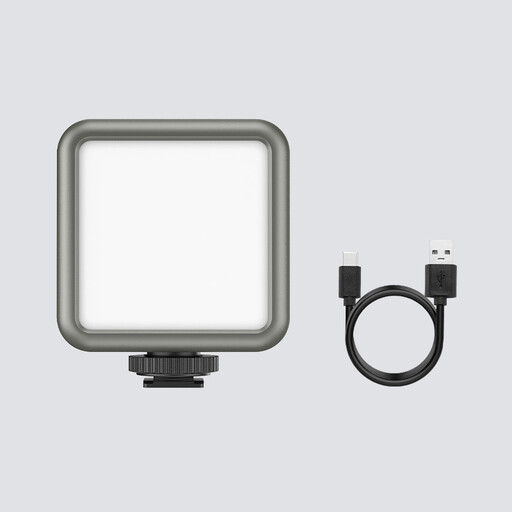
ULANZI VL49 RGB LED video light

ULANZI VL49 RGB LED video light

This compact light is worth considering if you’re looking for an easy-to-move option for macro or product photography; it won’t necessarily replace a larger panel.

  • Built-in 2000-mAh battery
  • Adjustable colour temperature: 2500–9500 K
  • RGB and dimmable light
  • Magnets on the back
View at Joybuy

Frequently asked questions

Do I need to buy an LED panel straight away if I’m using window light?

No. If the side of the figures facing away from the window is simply too dark, Canon Europe recommends trying a reflector or a large white card opposite the window first. Consider a panel if you want more control over your additional lighting.

How should I handle changing daylight and the colours of painted figures?

Set the colour temperature of a suitable bi-colour panel to suit the scene, then check the white balance on the figure you’re actually lighting. Canon Europe notes that natural light can look warmer or cooler depending on the conditions.

Does the panel come with a battery, power supply and tripod?

That depends on the exact model and package. For the NEEWER NL660, the manufacturer lists optional NP-F batteries and versions with or without a tripod; the SmallRig P96 has a built-in battery. Check what’s included with the specific version.

Where should I take a worn-out LED panel and removable batteries in Germany?

According to the German Environment Agency, electrical waste must not go in household rubbish. If removable batteries can be taken out easily, remove them before returning the device and dispose of them separately at a suitable collection point.

Is the CE mark an independent quality certification for the light?

No. The European Union describes CE marking as the manufacturer’s declaration that a product meets the relevant EU requirements; it isn’t an independent comparison of light quality or suitability for your figures.