
Lieferung heute & morgen

Qualitätsgarantie

Willkommens-Angebote freischalten: KOSTENLOSE Lieferung | Bis zu 80 % RABATT | Kostenlose 30-Tage-JoyPlus-Testphase
App herunterladen
A toy transporter for children combines a vehicle, a load and imaginative play. But not every model is right for every age or play space. Some toy lorries look versatile in product photos but offer little storage space. Others contain lots of small parts, need batteries or aren’t suitable for younger children.
Lights, sounds and buttons can be appealing at first. What matters, though, is whether the vehicle is still fun to play with without batteries. A toy car transporter with a loading ramp, doors or removable vehicles usually offers several ways to play by hand. For electronic models, check the battery type, what’s included and whether the features can be switched off.
The label ‘ages 3+’ isn’t a blanket recommendation for every child. Mini cars, figures or accessories may include small parts that could be swallowed. If a product carries the warning ‘Not suitable for children under 36 months’, follow the age guidance and always ensure younger children are supervised by an adult.
A large toy lorry needs room to turn, open its ramps and set up its accessories. Before you buy, compare the product’s length, width, height and play area when fully opened. This is particularly important for a transporter with cars or a toy race track that can unfold to twice its length.
ABS plastic is often used to make sturdy vehicle models. Metal and plastic models, such as the SIKU lorry, feel different from vehicles made entirely of plastic. Specific details matter more than a general description of the material:
If the model has moving parts such as winches, cranes or loading ramps, parents should regularly check the hinges and fixings for damage.
A toy vehicle for children can meet different play needs. A toy fire engine is ideal for emergency scenarios, while a toy horse transporter lends itself to stories about animals, farms and riding. With a toy lorry and race track, the fun centres on setting it up, storing it away and racing.
Models that let you store the accessories inside the vehicle are practical. This helps prevent parts from getting lost and makes tidying up easier. For sets with several vehicles, check whether they all actually fit inside the transporter or are simply shown alongside it in the product photo.
Battery-powered models need additional LR44 or AA batteries. The container truck with race track, for example, requires two AA batteries, which are not included. A battery-free model such as the SIKU lorry, on the other hand, is ready to use straight away.
The recommended age ranges vary considerably:
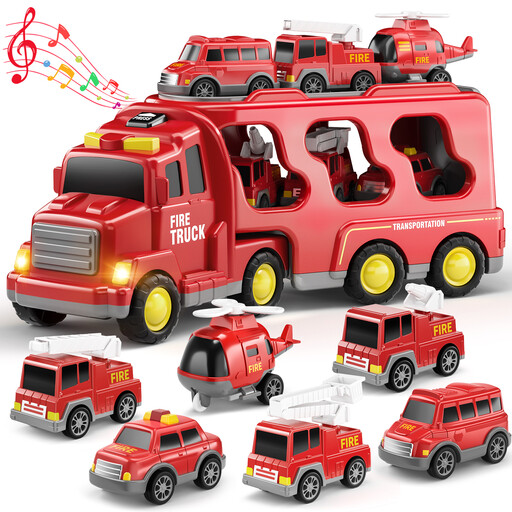
Why this product suits this profile: This 7-in-1 set combines a large transporter with five smaller vehicles. It’s ideal for children aged 3+ who enjoy fire engines and emergency scenarios.
The five smaller vehicles can be stored in the transporter and taken out through the rear door. Remember to observe the age warning about small parts.
Five additional vehicles, friction-powered drive, plus light and sound effects; suitable for indoor and outdoor play.

Why this product suits this profile: The 1:16 scale, fold-out ramp and included horse make this a great choice for families who enjoy detailed animal and farm play.
Play doesn’t rely on sounds alone: the doors, partition, water troughs and guide ramps let children act out scenes by hand. According to the product information, it’s suitable for ages 4+.
51 × 26 × 19 cm, ABS plastic, space for up to two horses and no batteries required.

Why this product suits this profile: This model is designed for children aged 4+ who want to load and tow vehicles, and combine different transport scenarios.
The loading ramp, winch and wheel chocks offer practical, hands-on features. The light and sound module adds to the play, but isn’t the only way to use the toy.
1:16 scale, Roadster included, extendable ramp and three LR44 batteries included.
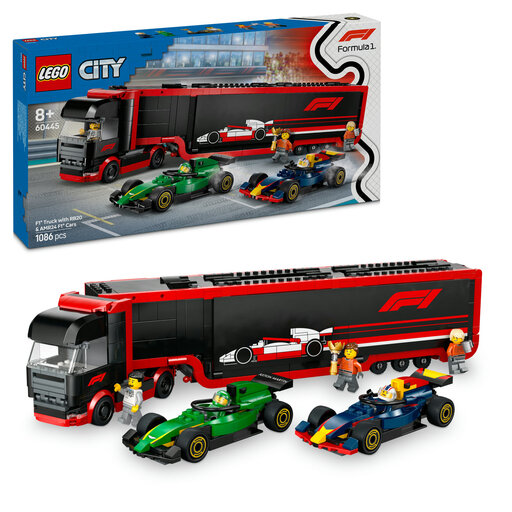
Why this product suits this profile: This building set is designed for children aged 8+ who want to combine building, motor racing and imaginative play.
The contents are clearly listed: 1,086 pieces, two F1 cars, five minifigures and digital building instructions. This helps you judge how much building is involved before you buy.
Double loading area, fold-out side panels and two F1 models included; suitable for ages 8+.
We’ve put together a complete, regularly updated list of products that meet these strict selection criteria and the safety regulations in force across the EU.
Choose models with a clear age recommendation of 3+ and a manageable number of accessories. Remember to check the warnings about small parts. For children aged 4+, detailed BRUDER models with ramps, doors and winches are an option. According to the product information, LEGO transporters with lots of building pieces are better suited to older children aged 7 or 8+.
How long it lasts depends on the materials, construction and play environment. Metal and plastic models or sturdy ABS vehicles can last a long time if used as intended. Ramps, doors, tow hitches and winches are common wear points. Regular checks and cleaning with a slightly damp cloth can help keep the toy in good condition.
Battery-free models don’t have regular running costs after purchase. For light and sound features, you’ll need to buy replacement batteries. Before you buy, check whether batteries are included, which type is needed and whether the toy can also be used without its electronic features.