
Lieferung heute & morgen

Qualitätsgarantie

Willkommens-Angebote freischalten: KOSTENLOSE Lieferung | Bis zu 80 % RABATT | Kostenlose 30-Tage-JoyPlus-Testphase
App herunterladen
Toy vehicles for children can look much the same in product photos, but they often differ considerably in everyday use. A small toy car for playing indoors has different requirements from a large toy lorry for the sandpit. The recommended age, moving parts, scale and power source can all affect whether a vehicle gets played with for years or is quickly forgotten in the toy box.
A vehicle may be advertised as a gift for children, even though small components mean it is only suitable from age 3, 4 or 6. LEGO Technic vehicles often have a higher age recommendation because they involve lots of small parts. The LEGO Technic Ford Bronco SUV, for example, is designed for children aged 9 and over and contains 943 pieces.
The age recommendation is therefore more than a minor detail. It should match the child’s stage of development and how the vehicle is intended to be used. For toy vehicles for children aged 3 and over, you should also consider the risk of small parts being swallowed and whether adult supervision is needed.
A plastic model with lots of features may be intended for indoor use. For sand, soil and damp conditions, sturdy axles, grippy tyres and a hard-wearing build are important. Some BRUDER vehicles made from ABS plastic are listed as suitable for both indoor and outdoor use. Even so, moving joints should be cleaned and dried after playing in the sand.
Metal models such as some SIKU toy cars can be compact and hard-wearing, but they usually have fewer moving features than larger construction toy vehicles.
Remote-controlled cars for children need batteries or a rechargeable battery. Before you buy, check:
Depending on the model, an RC vehicle with 4WD and a lithium battery may offer around 20 to 40 minutes of play per charge. Light and sound features can also mean extra battery costs if there’s no rechargeable system.
The scale affects compatibility with figures, trailers and other accessories. BRUDER models in 1:16 scale are ideal for extended imaginative play and can be combined with other products in the range. A smaller toy car in 1:64 scale, on the other hand, takes up less space and is easier to take with you.
Check the dimensions, too: a 63.5 cm-long refuse lorry needs considerably more storage space than a compact SIKU model. Easy-to-reach handles and simple moving features are useful for little hands.
Look out for details such as:
A toy tipper with a tipping skip helps bring play scenarios to life. A toy lorry with a trailer adds more ways to play, but takes up extra space. Check that the trailer connects securely to the towing vehicle.
Lots of features are only useful if they match your child’s interests. Children who are interested in farming can act out different tasks with a tractor and construction vehicle set. For children who love technology, LEGO Technic models offer a building experience with functions such as steering, a motor or pneumatics. If they mainly want to race, a remote-controlled car is likely to be a better choice than a detailed model lorry.
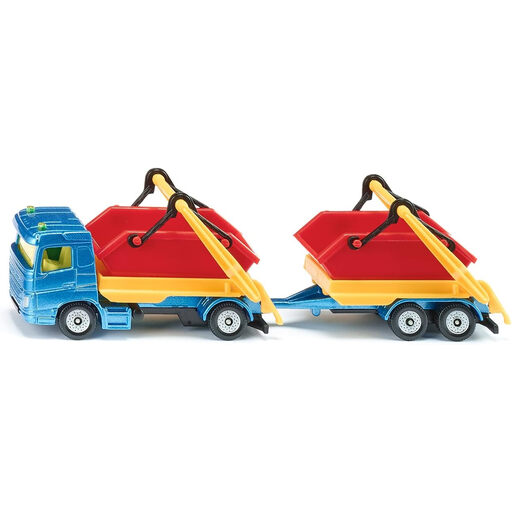
Why it’s a good match: Designed for children aged 3 and over, this model needs no batteries and combines a metal body with a moving container system.
The age recommendation, manual operation and compact dimensions help keep hidden battery and ongoing costs to a minimum.
Metal and plastic construction, moving tipper and trailer; measures approx. 15,2 × 3,5 × 4,7 cm.
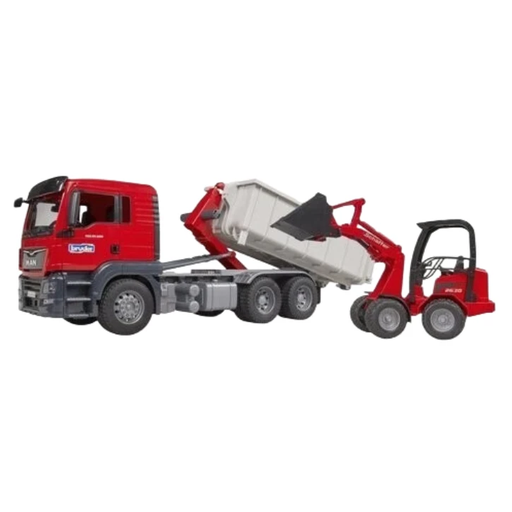
Why it’s a good match: This 1:16 scale set is designed for children aged 4 and over. It combines a MAN TGS with a container and a Schäffer Hoflader 2630 wheel loader.
The product details clearly show which parts move: the rotating cab, crane arm, bucket and adjustable blade.
ABS plastic, 1:16 scale and a combination of transport and loading vehicles; optional light and sound modules are available separately.
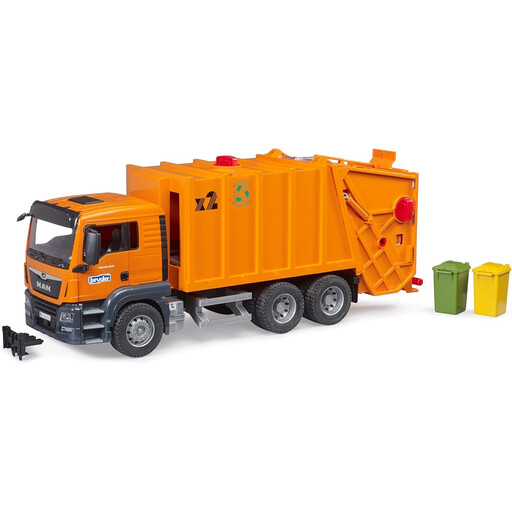
Why it’s a good match: This toy refuse lorry is suitable for children aged 4 and over, with a focused role-play theme centred on collecting and emptying rubbish.
The features are operated mechanically and don’t rely on batteries. The rotating mechanism and emptying action are controlled directly on the model.
1:16 scale, opening cab doors, rotating mechanism and manual emptying function; according to the product details, no batteries are needed.
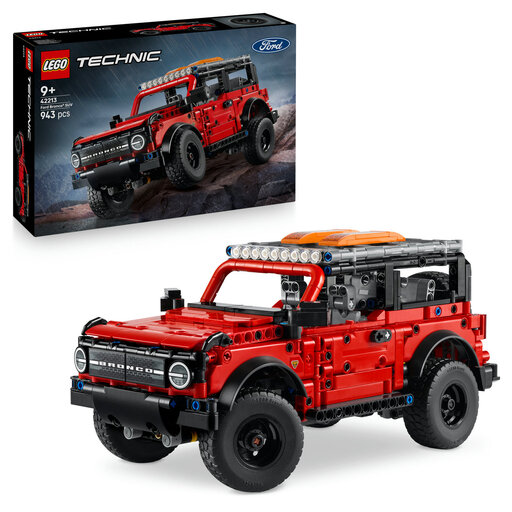
Why it’s a good match: Designed for fans aged 9 and over, this building set combines the building experience with technical play features such as suspension, a V6 engine and steering via the spare wheel.
The product description clearly sets out the piece count, age recommendation, dimensions and features. This makes it easier to judge the time and effort involved before you buy.
943 pieces, approx. 28 cm long, 13 cm high and 13 cm wide, plus digital building instructions via the LEGO Builder app.
We’ve put together a complete, regularly updated list of products that meet these strict selection criteria and fully comply with the safety regulations in force in the EU.
Look for models clearly recommended for ages 3 and over, with simple features and as few loose small parts as possible. A manual toy car, a compact tipper or a simple toy fire engine could be a good fit for this age group. Always follow the manufacturer’s age guidance on the product page and packaging.
Check the drive system, range, rechargeable battery or battery type, and the surface the car is designed for. A 4WD model with a 7,4-volt lithium battery is designed for certain outdoor surfaces, while smaller RC vehicles are better suited to flat floors. Children should use the vehicle in line with its age recommendation and under supervision.
Brush off sand and dirt after play, dry the vehicle thoroughly and store it somewhere dry. Check moving parts regularly to make sure they’re secure and undamaged. For electronic models, remember to remove the batteries if the toy won’t be used for a long time, and charge the rechargeable battery according to the manufacturer’s instructions.