
Lieferung heute & morgen

Qualitätsgarantie

Willkommens-Angebote freischalten: KOSTENLOSE Lieferung | Bis zu 80 % RABATT | Kostenlose 30-Tage-JoyPlus-Testphase
App herunterladen
Toy vehicles for children are among the most versatile gift ideas for young ones. They can inspire role play, make technical concepts easier to understand or serve as collectors’ items. At the same time, toy cars, construction vehicles and LEGO models vary considerably in terms of recommended age, materials, size and features.
The Joybuy Product Recommendation Officer filters the relevant product information and highlights what parents, grandparents and vehicle enthusiasts should look out for when buying.
A vehicle may look suitable for younger children, yet still contain small parts. Many building sets and highly detailed model vehicles are therefore intended for ages 6, 7, 10 or 18 and over. The age recommendation is not simply a marketing detail; it should match the child’s abilities and the intended use.
This is especially important for vehicles for children aged 3 and over: before buying, check the warnings, any parts that could be swallowed and whether supervision may be required.
Lights, sounds, remote control and numerous accessories can all be appealing. However, they also increase maintenance requirements and may require batteries or an app. A simple vehicle without electronics can be more practical for the sandpit, bedroom or use on the go than a technically complex model.
It is therefore worth considering whether the features fit into everyday life. A remote-controlled toy car, for example, needs enough open space, batteries or a rechargeable battery, as well as a child who can operate the controls.
A large toy lorry with a moving crane needs plenty of storage and play space. A small metal vehicle, on the other hand, fits into a bag but usually offers fewer moving features. For the sandpit, washable surfaces and sturdy joints are important, while a display model is judged mainly by its scale, level of detail and stability.
Before buying, check:
The CE mark indicates compliance with the statutory conformity requirements. However, it does not replace checking the specific age recommendation. With building sets such as LEGO Technic vehicles or LEGO NINJAGO vehicles, small components may make them unsuitable for younger children even when the construction is sturdy.
For construction vehicle toys, pay attention to the materials and mechanical connections. ABS plastic is often used for robust toy models. Metal bodies can offer a different feel and greater weight in smaller vehicles. What matters is whether the wheels, tipping bodies, crane booms or grabbers work securely and have no sharp edges.
After buying, regular checks are recommended:
A toy tractor, toy excavator or toy crane lorry may use moving components without requiring batteries. Light and sound modules, by contrast, need batteries. For app-controlled models, check compatible devices, charging times and whether the app is still available.
For a motorcycle building set or a large vehicle model, the number of parts is also relevant. It provides an indication of how much assembly is involved, but on its own it does not show whether the model is right for the child.
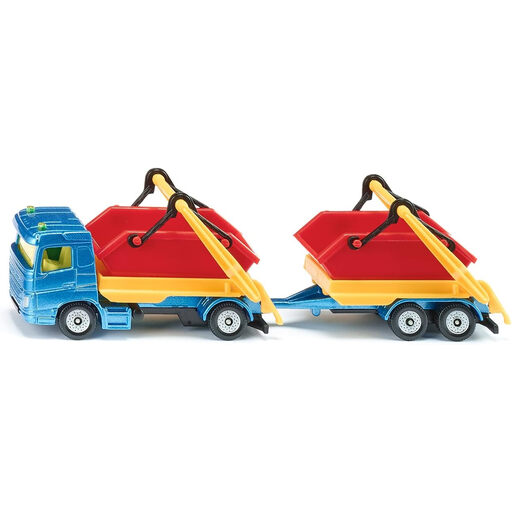
Why this product suits this profile: This toy lorry is intended for children aged 3 and over and does not require batteries. With a metal body, plastic tyres and a moving tipping mechanism, it is ideal for simple play scenarios in the bedroom.
The straightforward design keeps battery costs and potential technical faults to a minimum. The product information states that it is suitable for ages 3 and over and includes a warning about small parts.
15.2 cm long, metal and plastic construction, moving container system and no batteries required.
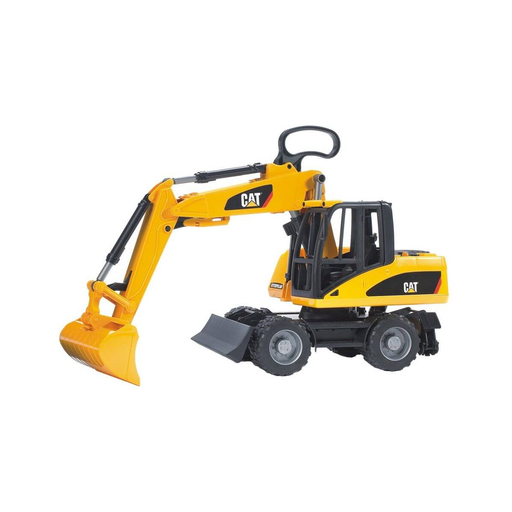
Why this product suits this profile: This 1:16 scale model is aimed at children aged 4 and over and offers mechanical features without batteries. The rotating cab, movable boom and support legs help create realistic construction-site play scenarios.
The product description gives precise measurements of 44 × 17 × 27 cm and explains the mechanical functions. This makes it possible to check before buying whether the size is suitable for the available play space.
360-degree rotating cab, movable excavator arm, detachable bucket and rubber tyres for indoor and outdoor play.
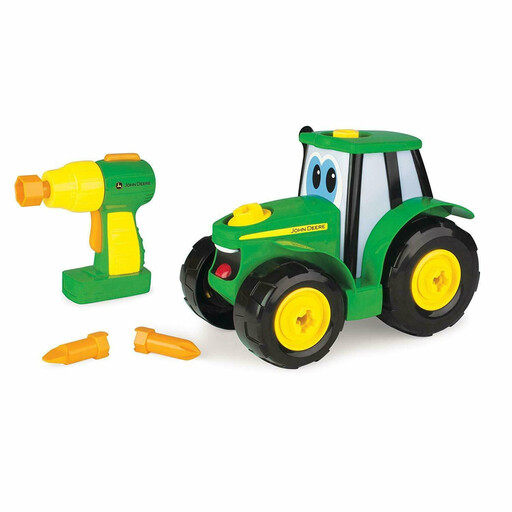
Why this product suits this profile: This interactive tractor is intended for children aged 3 and over. Using a battery-powered tool, it can be taken apart into 16 individual pieces and assembled again. It is ideal for children who want to do more than simply drive and enjoy building things themselves.
The instructions, included tools and number of individual pieces make the assembly requirements clear. Adult assistance is recommended during assembly.
16 detachable parts, child-friendly assembly tools and repeatable dismantling and reassembly.
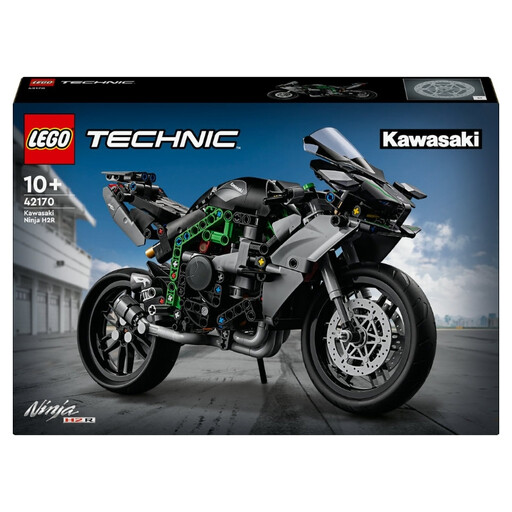
Why this product suits this profile: This LEGO Technic motorcycle building set is aimed at fans aged 10 and over and contains 643 pieces. It is ideal for longer building projects, followed by displaying the finished model on the supplied stand.
The product data states the number of pieces, 1:8 scale, dimensions and age rating. This makes it clear that it is a detailed building set rather than a straightforward toy for young children.
Steering, shock absorbers, two-speed gearbox, four-cylinder in-line engine and a model length of 31 cm.
We have put together a complete, regularly updated list of products that fully meet these strict selection criteria and the safety regulations applicable in the EU.
Depending on the child’s interests, different categories may be worth considering:
Models with a clear age rating of 3 and over, few loose small parts and easy-to-use features are an obvious choice. Larger vehicles without complex assembly are often suitable for younger children. Read all warnings carefully before buying.
Their lifespan depends on the materials, construction, how they are used and how well they are cared for. Vehicles used outdoors should be cleared of sand and moisture after playtime. With building sets, it is advisable to check loose connections and moving parts regularly. Electronic models may also have a limited lifespan due to batteries and rechargeable batteries.
In addition to the purchase price, you may need to pay for batteries, rechargeable batteries or a separate charger. Check whether batteries are included, which type of rechargeable battery is used and whether replacement parts are available. With mechanical toy vehicles without electronics, there are no ongoing electricity or battery costs.