
Lieferung heute & morgen

Qualitätsgarantie

Willkommens-Angebote freischalten: KOSTENLOSE Lieferung | Bis zu 80 % RABATT | Kostenlose 30-Tage-JoyPlus-Testphase
App herunterladen
Toy vehicles for children range from simple push-along cars to remote-controlled off-roaders and electric ride-on vehicles. The wide choice does not always make it easy to compare them: product images often show off lots of features, while important details about age suitability, space requirements, batteries and small parts can be less prominent.
Before buying, parents, grandparents and anyone looking for a gift should keep three common pitfalls in mind:
For vehicles for children aged 3 and over, check the age recommendation against the product’s safety warnings. Small accessories can pose a choking risk. The products in this selection are marked as unsuitable for children under 3.
Manually operated models such as construction vehicles, toy fire engines and toy tractors are often a good choice for younger children. They can be used without a remote control and encourage imaginative role play. RC cars for children and remote-controlled toy cars, on the other hand, require an understanding of direction, speed and distance.
Material details and moving parts are especially important for toys that will be played with regularly. ABS plastic, metal axles and reinforced wheels are useful features to look out for, but they do not replace regular checks for cracks, loose parts or sharp edges.
One example is the Bruder Scania Super 560R. This 1:16 scale model features a rotating, extendable crane arm, support legs and accessories. When buying a toy crane lorry, it is also worth checking whether the crane is purely decorative or can actually be moved and locked into position.
Some models do not need batteries. The flexible racing track with four friction-powered cars, for example, works without a power supply and can be set up indoors or outdoors. The 4.5-metre, two-lane track can be rolled up for storage.
For electronic models, check whether they use disposable batteries, a rechargeable battery or mains power or charging accessories. The RC Fighter Jet toy comes with a rechargeable 3.7-volt battery and USB charging cable; the remote control also needs three AAA batteries. A 4WD RC off-road truck uses a 7.4-volt battery, while its remote control needs three AA batteries.
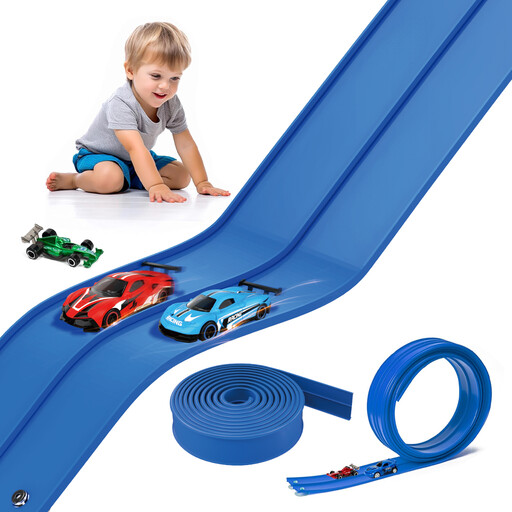
Why this product is a good match: This flexible, two-lane racing track for children needs no batteries and can be set up in different places. According to the product details, it is suitable for children aged 3 and over.
No ongoing battery costs; the track rolls up for storage and can be secured with suction cups.
4.5 metres long, with a two-lane layout, four friction-powered cars and flexible bends and loop sections.

Why this product is a good match: Its 1:16 scale, ABS construction and many moving features make it a good choice for children who enjoy realistic construction site play.
The features are clearly described: a rotating, extendable crane, support legs, a pallet fork and a grabber.
No batteries required; designed for indoor and outdoor use, with two pallets included.
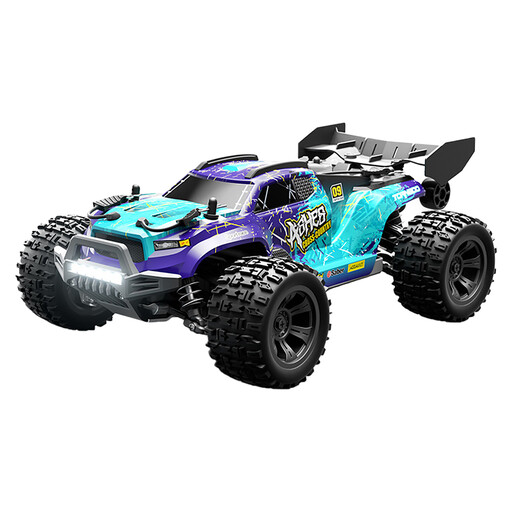
Why this product is a good match: This remote-controlled off-road truck is for users who want to drive RC vehicles on sand, grass or uneven ground. The product details state that direct adult supervision is required.
The product details specify where it can be used, its power supply and the batteries needed for the remote control.
Four-wheel drive, aluminium chassis, shock absorbers, LED headlights and a 7.4-volt battery, according to the product description.
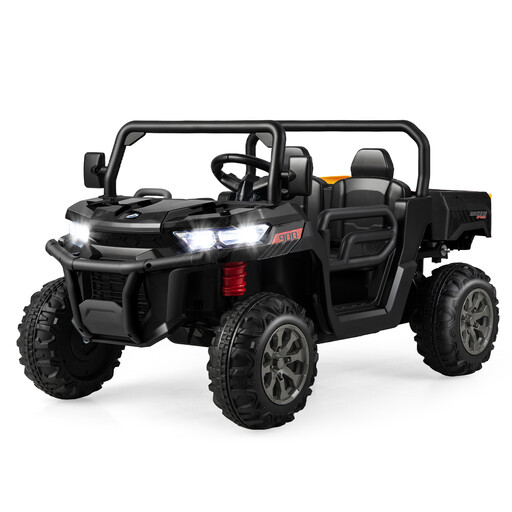
Why this product is a good match: This electric vehicle for children has two seats and is listed as suitable for children aged 3 to 8. It is designed for flat outdoor surfaces and needs storage space and time to charge.
The speed range of 3 to 8 km/h, seat belt, soft-start function and remote control are all clearly specified.
12-volt battery, two seats, stated load capacity of 50 kilograms and a 2.4 GHz remote control.
We’ve put together a complete, regularly updated list of products that meet these strict selection criteria and the safety regulations in force in the EU.
Simple push-along, friction-powered and wheeled vehicles, as well as clearly labelled play sets, can be suitable for children aged 3 and over. Check the safety warnings, small parts and how the toy is actually operated before buying. For RC vehicles, choose a remote control suited to the child’s age and consider adult supervision.
How long a toy lasts depends on its materials, mechanism, how often it is used and how well it is cared for. Check moving parts regularly for looseness. Store electric models somewhere dry and charge batteries according to the manufacturer’s instructions. After outdoor play on sand, grass or damp ground, clean vehicles designed for outdoor use.
Depending on the model, RC cars may need AA or AAA batteries and possibly replacement rechargeable batteries. Electric vehicles for children need regular charging, and the battery and charge level should be checked after each use. Battery-free models, such as many construction vehicles, toy tractors and racing tracks, have no ongoing energy costs.