
Lieferung heute & morgen

Qualitätsgarantie

Willkommens-Angebote freischalten: KOSTENLOSE Lieferung | Bis zu 80 % RABATT | Kostenlose 30-Tage-JoyPlus-Testphase
App herunterladen
A toy wheel loader is at the top of many wish lists. The fascination with large construction machines is timeless for children. However, the selection is vast, and not every model that looks impressive at first glance can withstand the rigours of play in the playroom or sandbox. Many parents know the problem: a promising toy turns out to be flimsy or unsuitable for the child's age.
Before you make a decision, it's important to understand the common pitfalls. Three widespread issues often lead to disappointment:
This guide will help you navigate these challenges and find a suitable and durable toy wheel loader.
To make an informed choice, you should examine three core aspects. These largely determine the vehicle's play value and durability.
The choice of material is fundamental to the intended use. Most high-quality construction vehicle toys are made from either durable plastic or a metal-plastic combination.
A wheel loader comes to life through its movement. Two functions are crucial here:
The scale indicates the size ratio to the original vehicle. A model in 1:16 scale is 16 times smaller than the real machine. Common scales include:
A wheel loader for ages 3 and up should have few small, swallowable parts and offer straightforward operation.
Based on the criteria mentioned, we have put together a selection of models for different needs and age groups.
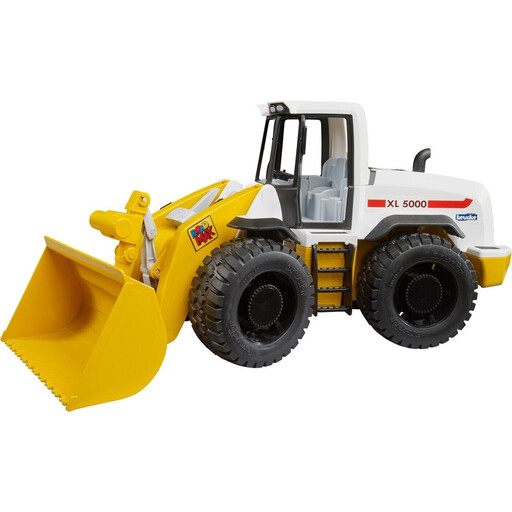
Why This Fits Their Persona: This model is specifically designed for the needs of toddlers. It's robust, has no small swallowable parts, and operating the shovel arm via a central handle is intuitive and requires little force.
Avoids the pitfall of over-complexity. The simple yet fully functional mechanics prevent frustration and encourage fun for children from 2 years old.
Made from durable ABS plastic, ideal for indoor and outdoor use. Carries the "spiel gut" seal, which stands for high play value and safety.
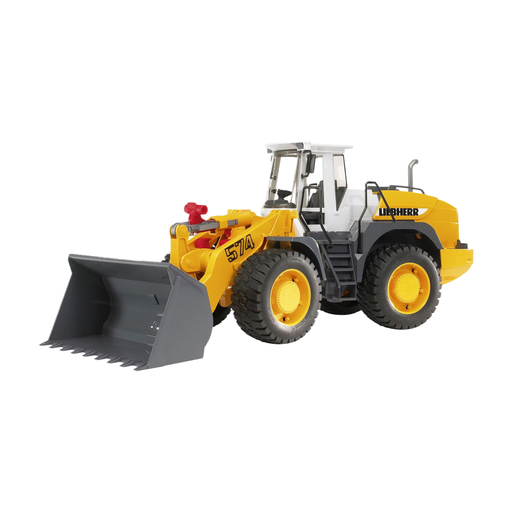
Why This Fits Their Persona: For children who want to re-enact realistic scenarios. The large 1:16 scale, one-handed shovel operation, and opening engine bonnet offer a high level of detail and play value for more demanding little construction managers.
Escapes the trap of flimsy mechanics. The shovel mechanism developed by Bruder is designed for continuous play and can withstand the load of sand.
Fully functional articulated steering and an all-terrain rear axle for high manoeuvrability. Compatible with bworld figures for expanded play worlds.
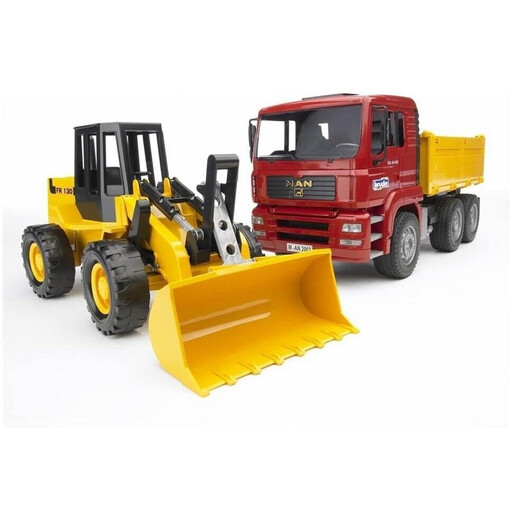
Why This Fits Their Persona: Perfect for anyone who wants to create a complete construction site scene right away. This set combines a toy truck with a wheel loader, enabling more complex play sequences like loading and transporting from the get-go.
Solves the problem of incompatible toys. Both vehicles are in 1:16 scale and from the same brand, ensuring seamless interaction and a cohesive look.
High play value thanks to two fully functional vehicles. The truck features a tipping and lockable trough and fold-down side panels.
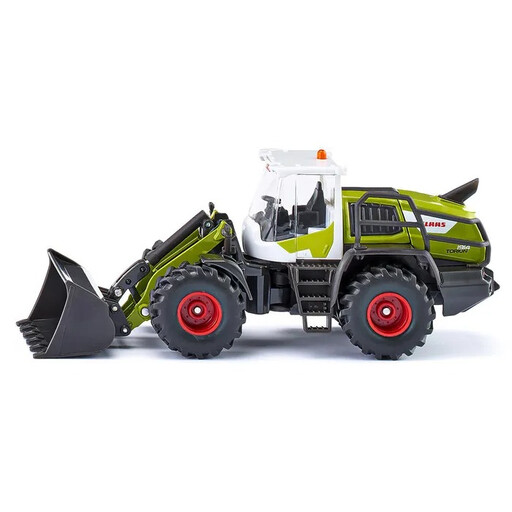
Why This Fits Their Persona: This 1:50 scale model is ideal for collectors and older children who value a detailed replica and high-quality materials. The metal content provides an authentic weight and high stability.
Avoids the trap of misleading sizes. As a Siku model with a clear 1:50 scale, it is positioned as a detailed but compact model, not a large sandbox wheel loader.
Robust construction of metal and plastic. Fully movable loader arm and articulated joint. Fits perfectly into the SIKU Farmer 1:50 scale play world.
We have compiled a complete, real-time list of products that fully satisfy these strict selection criteria and UK safety regulations.
For sandbox use, models made of high-quality, colour-infused ABS plastic are the top choice. They are weather-resistant, robust against sand and impacts, and easy to clean. Ensure the model has no electronics or small metal parts like screws that could rust. Models from the Bruder brand are explicitly designed for outdoor play.
The scale describes the size ratio of the toy to the real vehicle. A scale of 1:16 means the model is 16 times smaller than the original. A smaller number after the colon (e.g., 1:16) indicates a larger toy model, while a larger number (e.g., 1:50) denotes a smaller model. The scale is important for compatibility with other vehicles and figures in a play world.
After playing in the sand, you should clean the vehicle thoroughly to extend the life of its mechanical parts. Rinse off coarse dirt and sand with clean water, focusing particularly on joints and moving parts like the shovel arm and the articulated steering. Then, let the toy air dry completely before it is used indoors again. Avoid aggressive cleaning agents, as they can damage the plastic or decals.