
Lieferung heute & morgen

Qualitätsgarantie

Willkommens-Angebote freischalten: KOSTENLOSE Lieferung | Bis zu 80 % RABATT | Kostenlose 30-Tage-JoyPlus-Testphase
App herunterladen
Toys for children aged 3+ should be suitable for their age, offer plenty of ways to play and stand up to everyday use. But with magnetic building blocks, vehicles, construction toys and electronic figures to choose from, finding the right one isn’t always easy. Product images and advertising often highlight a wealth of features, while important details about small parts, magnets, batteries and material checks can be less easy to spot.
The ‘3+’ label is a guide, but it doesn’t replace checks by an adult. Children develop their motor skills at different rates. If a set contains small parts or strong magnets, they need particularly close supervision. With magnetic building blocks, it’s also important to check that the magnets are securely enclosed in the plastic and that the pieces can’t come apart if damaged.
Lights, sounds and remote controls can make a strong first impression. But everyday practicality also depends on how easy a toy is to use, how it’s powered, how much room it needs and how easy it is to look after. A battery-powered remote-control toy can have ongoing costs. With building blocks, the number of pieces alone isn’t enough to help you choose: the shapes, connecting system and storage all affect how versatile a set really is.
Descriptions such as STEM learning toy, ‘creative’ or ‘supports development’ suggest possible ways to play, but don’t guarantee any particular outcome. More objective details include the number of pieces, design, material, age recommendation and any warnings provided. Building with magnetic sets can encourage spatial awareness, fine motor skills and recognition of geometric shapes. However, the results depend on how the set is used and whether an adult joins in.
With magnetic building blocks for children, small parts and magnets are among the most important things to check. Swallowing more than one magnet can cause serious injuries, as the magnets can attract one another inside the body. Children should therefore never play unsupervised with loose magnetic balls or damaged magnetic tiles.
Look for:
Labels such as CPC, ASTM, EN71 and CE shouldn’t be treated as interchangeable. CPC and ASTM, for example, relate to US requirements or testing frameworks. When buying in Germany, you should also check the EU conformity information, the details of the responsible person in the EU and the German-language safety instructions.
ABS plastic is used in many sets and vehicles. As well as the material itself, smooth, burr-free edges, sturdy connections and easy cleaning are important when choosing a toy. On vehicles, check moving parts such as tipping skips, cranes and ramps regularly for cracks or loose connections.
Electronic toys such as an RC dinosaur toy need batteries or a rechargeable battery. Before you buy, check:
For a child’s bedroom, a manually operated vehicle or classic construction toy may be more practical than a noisy model. For outdoor play, large wheels and a sturdy design may matter more than extra light effects.

Why this product suits these needs: This set offers a manageable introduction to magnetic building and doesn’t need batteries. According to the product details, each piece measures 5.5 cm.
The product description explicitly warns about small parts and strong magnets. Damaged pieces should be discarded, and children should be supervised while playing.
28 pieces, a storage bag, rounded edges according to the supplier, and manual play with no batteries needed.

Why this product suits these needs: Transparent pieces, marble-run elements and a light-up feature make this magnetic building block set a good choice for families looking for several ways to play in one set.
The product details mention rounded edges, strong magnetic connections and specific warnings about small parts. The light-up track needs 3 AA batteries, which aren’t included.
126 pieces, 2D and 3D building options, plus marble-run and light-up components. The set is designed to be stored in its gift box.
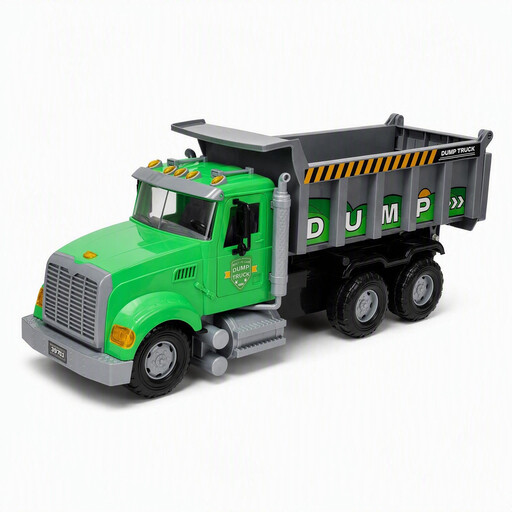
Why this product suits these needs: This vehicle is designed for rolling play and sandpit adventures. The tipping skip moves by hand, while the friction drive works without batteries.
There are no hidden battery costs. Before each use, check the tipping mechanism, wheels and plastic for damage, and remove any sand.
Large dimensions of around 59.69 × 17.27 × 25.40 cm, a tipping function and large wheels for indoor use and flat outdoor surfaces.
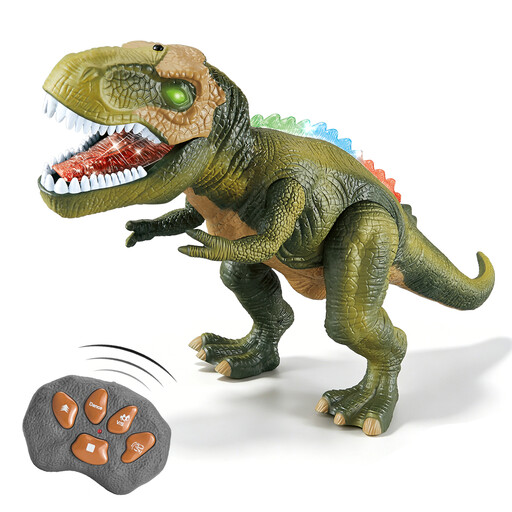
Why this product suits these needs: Movement, lights and sounds bring active imaginative play to life. The remote offers forward, reverse and directional controls, as well as a dance mode.
Remember to factor in the power supply before you buy: the dinosaur needs 3 AA batteries and the remote needs 2 AA batteries. The product details say these aren’t included.
2.4 GHz remote control, built-in light effects, a moving head and wheels under the feet, according to the product description.
For simple vehicle play with smaller toys, toy cars for children that don’t need batteries are a good choice. According to the supplier, the PAW Patrol Basic Vehicle Rex is suitable from age 3, has moving parts and needs neither batteries nor assembly. For children aged 4+, the Bruder Scania Super 560R offers a larger build, with a rotating, extendable crane, supports, pallets and accessories. If you’re looking for a creative construction toy for an older child, check the age recommendation: the 289-piece Hot Wheels building set is only suitable from age 10, so it isn’t right for three-year-olds.
We’ve put together a complete, regularly updated list of products that meet these strict selection criteria and fully comply with the safety regulations in force in the EU.
Choose products with a clear age recommendation, easy-to-understand warnings and a design that doesn’t leave small parts easily accessible. Close adult supervision is particularly important with magnetic sets and electronic toys.
Their lifespan depends on the material, how they’re used and how they’re stored. Magnetic tiles shouldn’t be thrown, bent or cleaned with liquid. Check the edges, joins and magnet casings regularly. Damaged pieces should no longer be used for play.
RC toys and light-up features may need batteries. Check the required number and size before you buy. Manual building toys, friction-powered vehicles and many construction vehicle toys, on the other hand, work without batteries.