
Lieferung heute & morgen

Qualitätsgarantie

Willkommens-Angebote freischalten: KOSTENLOSE Lieferung | Bis zu 80 % RABATT | Kostenlose 30-Tage-JoyPlus-Testphase
App herunterladen
Toys for children aged 3 and over should be fun, safe to use and suited to your child’s stage of development. There’s plenty to choose from, too: vehicle toys, construction toys, magnetic building blocks, drawing boards, musical instruments for children and remote-controlled toys all differ in their materials, care requirements, noise levels and supervision needs.
That’s why the product description alone may not tell you everything you need to know. The key is choosing a toy that suits your home, your child’s age and how they’ll use it.
A label such as ‘for ages 3 and up’ doesn’t automatically mean a child should play without supervision. Small parts, strong magnets, battery compartments or moving components may need extra attention. With magnetic building blocks, it’s especially important to check that no parts are damaged and that no magnets are exposed.
A product with a wide age range may also be more challenging for a three-year-old than for a school-age child. Take your child’s fine motor skills and understanding into account when choosing.
Lights, sounds and remote controls may seem versatile at first. In everyday use, however, battery consumption, high volume or complicated controls can take away from the fun. When choosing vehicle toys, it’s worth checking the power source, controls and the amount of space needed to play.
A simple vehicle that doesn’t need batteries may be more practical for younger children, while older children may get more enjoyment from an RC model or a transformable race track.
A large fire engine playset with a play mat or an extensive building set needs much more storage space than a drawing board for children. Without somewhere to put everything away, small parts can go missing more easily. This can limit how much the toy gets used and may pose a safety risk with magnetic or small components.
Check the age guidance, warnings and supervision information. For products with small parts, the guidance is clear: keep them away from children under three and out of reach of children who often put objects in their mouths.
Magnetic building blocks need particular care. Swallowing strong magnets can cause serious injuries. Damaged parts should be removed immediately. The supplier of the 28-piece magnetic building blocks specifically warns about small parts and strong magnets, and recommends supervision.
Useful things to check include:
CE is not an independent quality mark; it is a declaration by the responsible economic operator that certain EU requirements have been met. So consider the marking alongside the warnings, manufacturer information and specific product description.
For a musical instrument for children or an electronic toy, the volume should be adjustable. According to the product description, the drum set in our selection has a volume control, illuminated surfaces, two cymbals and a microphone. Batteries are not included.
For RC toys, also check the remote control, battery type and whether batteries are included. A model with a rechargeable battery may be more practical to use; for other products, you’ll need to buy batteries separately. Only take claims about actual play time into account when specific information is provided.
The products below are matched to different everyday situations. These recommendations are based on the product features listed, rather than general claims about quality.
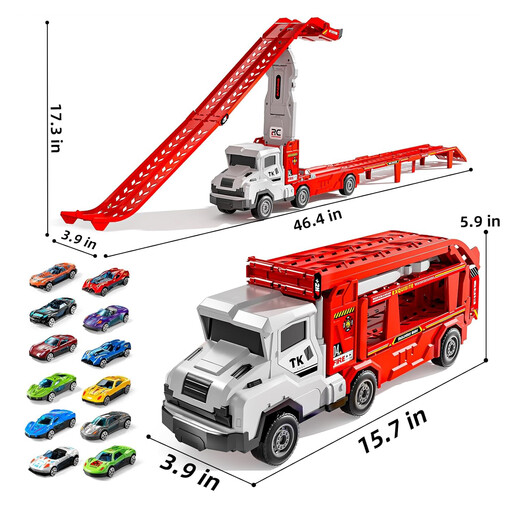
Why this product suits this profile: This transporter combines storage, a push-along vehicle and a fold-out race track. It gives children several ways to play without needing extra batteries.
The race track folds away, and the small cars can be stored inside the transporter. That means you need less separate storage space.
Includes 12 die-cast cars and two race lanes; suitable for playing alone or together.

Why this product suits this profile: According to the supplier, the 5.5 cm components are made from ABS plastic and designed for building in two and three dimensions.
The product information mentions smooth edges, sealed components and a storage bag. However, the magnets still need to be checked and children must be supervised.
28 pieces, no batteries needed, storage bag included; recommended for ages 3 and up.

Why this product suits this profile: This lightweight LCD tablet is designed for drawing, taking notes and use on the go. It’s a handy choice for journeys, waiting times or use at home.
According to the description, it doesn’t need drawing pads or liquid paints. That means fewer consumables and less mess day to day.
26.5 × 20.3 × 1 cm, weighs 178 g, one-button erase function and ABS casing.
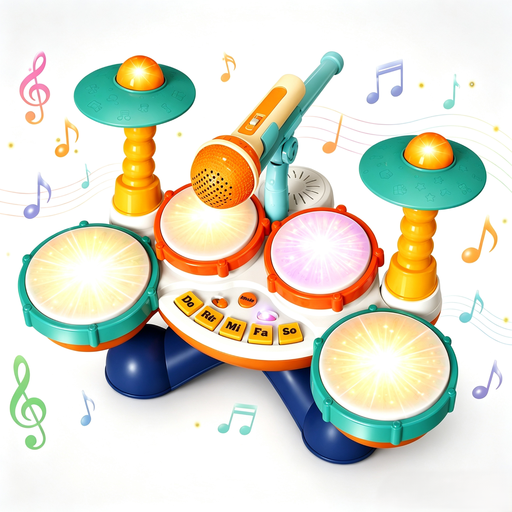
Why this product suits this profile: According to the supplier, this set is aimed at children aged 1 to 4 and includes drum pads, cymbals, a microphone, melodies and animal sounds for making music together.
The volume control lets you adjust the sound to suit the room. Before buying, check that the stated age range is right for your child’s age and behaviour.
Four illuminated drum pads, two cymbals, ten built-in melodies and three play modes; batteries not included.
We’ve put together a complete, regularly updated list of products that meet these strict selection criteria and fully comply with the safety regulations in force in the EU.
Compact products without lots of separate parts are usually handy for journeys. An LCD drawing tablet doesn’t need paper or pens. A foldable transporter can also work well, provided all the small vehicles can be stored inside it.
Lifespan depends on the material, how the toy is used and how it’s stored. Regularly check wheels, joints, edges, battery compartments and magnetic connections. Don’t continue using damaged parts. For toys with rechargeable batteries or standard batteries, make sure you store them correctly and follow the manufacturer’s instructions.
As well as the purchase price, you may need to pay for batteries, chargers or replacement rechargeable batteries. Batteries are often not included with musical instruments for children. Before buying, check the power source, charging time and availability of replacement parts. For regular play, construction toys, toy cars or simple vehicle models that don’t need batteries can help reduce ongoing costs.