
Lieferung heute & morgen

Qualitätsgarantie

Willkommens-Angebote freischalten: KOSTENLOSE Lieferung | Bis zu 80 % RABATT | Kostenlose 30-Tage-JoyPlus-Testphase
App herunterladen
Toys should bring joy, support children’s abilities and fit into family life. There’s plenty to choose from, including baby toys, educational toys, construction toys, scooters and musical instruments for children. The sheer variety can make it harder to compare your options: eye-catching designs don’t tell you whether a toy is genuinely suitable, and a long list of features may go unused in everyday life.
The label ‘3 years and over’ isn’t a general measure of quality. It’s an important safety and suitability guide. Small parts can pose a choking risk for younger children, while a toy may not offer enough of a challenge for an older child. So it’s important to consider your child’s age, motor skills and how they’ll use the toy.
Lights, sounds, tunes and remote controls can look appealing in product photos. But if only a few buttons get used, or the volume can’t be adjusted, a toy can quickly become impractical at home. When choosing electronic baby toys, check the battery type, volume controls and how easy the toy is to clean.
A race track, ride-on toy or large play table needs plenty of room. If it can’t be folded away or stored compactly, or its construction isn’t sturdy, it may not get much use in everyday life. Foldable, rollable or easy-to-store, multi-part designs are often a better choice for smaller homes.
Check the age recommendation on the product page and packaging. Products with small vehicles, magnets or detachable parts are generally unsuitable for children under three, unless the manufacturer specifically states otherwise. Supervision is also advisable for toys marked as suitable for children aged 3 and over, particularly construction toys with lots of individual pieces.
Also look out for:
Material descriptions such as ABS, PVC or metal tell you what a product is made from. Additional details such as BPA-free, rounded edges or sturdy construction can help you make your choice. The CE marking is a manufacturer’s declaration that the product meets relevant EU requirements; it doesn’t replace checking the product yourself.
The EN 71 series of standards is also relevant to toys. Check the specific details in the product description and safety information rather than relying on general marketing claims. For inflatable ride-on toys and electric vehicles, it’s especially important to check the weight limit, supervision requirements and where the product can be used.
Musical instruments for children and electronic educational toys often need batteries. Check whether batteries are included, which type you need and whether the volume can be adjusted. Toys that don’t need power, such as a flexible race track or a crane vehicle, won’t have any battery costs.
Simple care instructions can help your toy last longer. Many plastic toys can be cleaned with a damp cloth. Check inflatable products regularly for air leaks, cracks and the condition of the valve. Before using a ride-on toy, check its wheels, brakes, handlebars and fixings.
The recommendations below group products by everyday needs and features. Check details such as age suitability, dimensions and functions on the relevant product page before you buy.
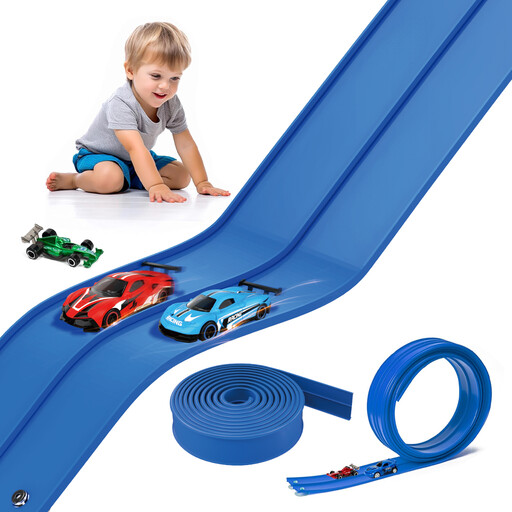
Why it’s a good fit: The flexible 4.5 m dual-lane track can be set up in different rooms and used for all kinds of play. According to the product details, it comes with four mini friction-powered vehicles and doesn’t need batteries.
The rollable material helps avoid having a large track permanently set up. Bear in mind the warning about small parts and the 3+ age recommendation.
Flexible track layouts, indoor and outdoor use according to the product description, and no power supply needed.
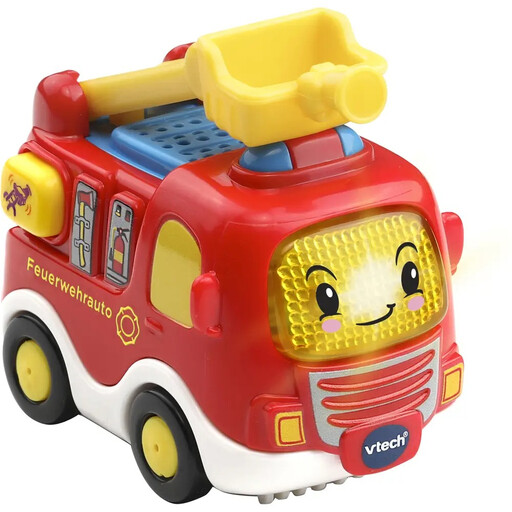
Why it’s a good fit: According to the manufacturer, this baby toy is suitable from 1 year old. It combines moving parts with lights, sounds, three songs and six melodies.
The specific age recommendation, 162 g weight and information about the two AAA batteries make it easier to plan for everyday use.
A moving fire engine ladder, interactive sensors and compatibility with other Tut Tut Baby Flitzer playsets, according to the product description.
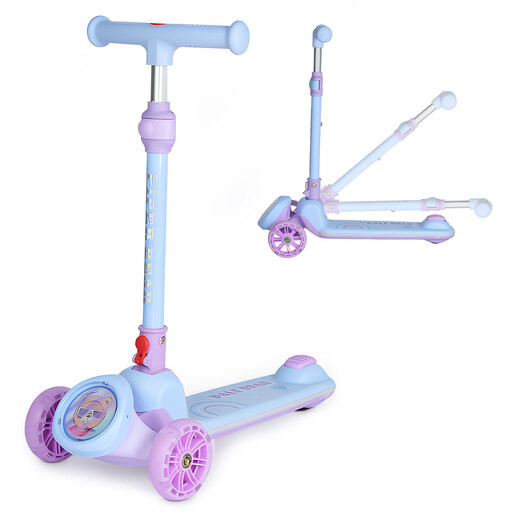
Why it’s a good fit: According to the product details, this three-wheeled scooter is designed for children aged 3 to 10. It has adjustable parts and light-up wheels.
The age and use information makes clear that the scooter isn’t designed for use on public roads. Protective clothing and supervision are still essential.
Three wheels, a lean-to-steer system and adjustable height make it suitable for use in a sheltered outdoor area.
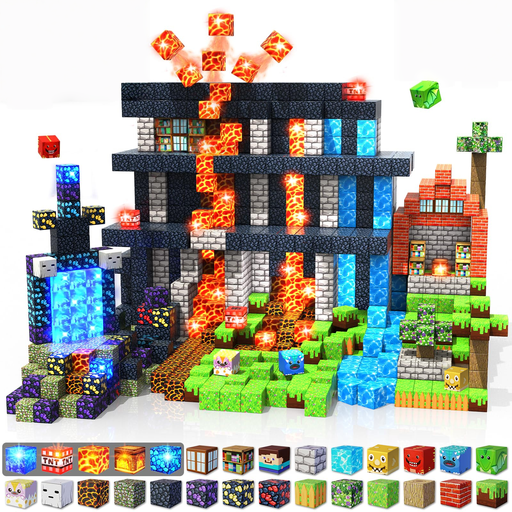
Why it’s a good fit: According to the product details, this construction toy includes 150 magnetic cubes, 24 light blocks and templates for different builds. It’s recommended for children aged 3 and over.
The number of pieces and the small-parts warning are clearly stated. Keep the set somewhere younger siblings can’t reach.
Plenty of building pieces, light-up elements and open-ended possibilities for playing together.
We’ve put together a complete, regularly updated list of products that meet these strict selection criteria and fully comply with the safety regulations in force in the EU.
When choosing a gift for a child, consider their age, interests and the space you have at home. Age-appropriate baby toys or an activity table may suit younger children. For children aged 3 and over, construction toys, vehicles, a race track or creative sets are all possible options. Toys that encourage open-ended play without fixed roles can be a practical choice for a gift for boys and girls.
How long a toy lasts depends on its materials, construction, care and how it’s used. Check wheels, joints, battery compartments, seams and fastenings regularly. If a ride-on toy gets frequent use, check its brakes, handlebars and wheels before every use. Store toys with lots of small parts complete and in a dry place.
As well as the purchase price, you may need to pay for batteries, chargers or replacement parts. Check whether batteries are included and whether the toy uses standard batteries. Mechanical toys, such as a flexible race track or a manual construction toy, generally have no running costs. A volume control is also useful if the toy will be used regularly indoors.