
Lieferung heute & morgen

Qualitätsgarantie

Willkommens-Angebote freischalten: KOSTENLOSE Lieferung | Bis zu 80 % RABATT | Kostenlose 30-Tage-JoyPlus-Testphase
App herunterladen
Toys for children should be fun, suitable for their age and genuinely used in everyday life. With advertising claims, popular characters and added technical features all competing for attention, choosing the right product is not always easy. Parents, grandparents and other gift buyers should therefore look beyond the packaging or a well-known brand and consider clear criteria such as the recommended age, type of play, materials and safety information.
A set for children aged 6 and over may contain too many small parts or overly challenging building instructions for a younger child. Conversely, very simple toys can quickly lose their appeal for older children. The age recommendation is therefore an important starting point, but it does not replace an assessment of the individual child's abilities.
Lights, music, remote controls and numerous accessories may seem attractive at first. What matters, however, is whether the child can use the features independently and whether replacement batteries, charging times or complicated settings make everyday use more difficult. When choosing a remote-controlled car for children, you should also check the range, charging method, controls and suitable surfaces.
A child may currently love dinosaurs, ninja characters or superheroes. That does not automatically mean that every product from that theme will be suitable. A better question is: does the child enjoy building, inventing stories, playing alone or playing with others? This makes it easier to choose LEGO NINJAGO sets, a Spider-Man LEGO set, Hot Wheels toys or a family game that genuinely suits them.
Products containing small parts that could be swallowed are generally problematic for children under 3. Warning labels should also be observed for older children. The label “not suitable for children under 3 years” indicates the possible presence of small parts; it is not a general age recommendation for the entire play concept.
The CE mark is required for toys in the EU. It confirms the manufacturer's declaration that the applicable requirements have been met. However, it is not an independent quality seal. Information about standards such as EN 71, along with details of the materials, cleaning and supervision, may also be relevant.
ABS plastic is commonly used for many building and action toys. Even so, buyers should look out for damaged parts, sharp edges and detachable components. For electronic toys, the battery type, charging cable and charging instructions are relevant. A product that only works on smooth floors may not be suitable for a household with carpets or for outdoor use.
The size of the product should also match the available storage space. A movable dragon may take up considerably more room during play than its packaging suggests.
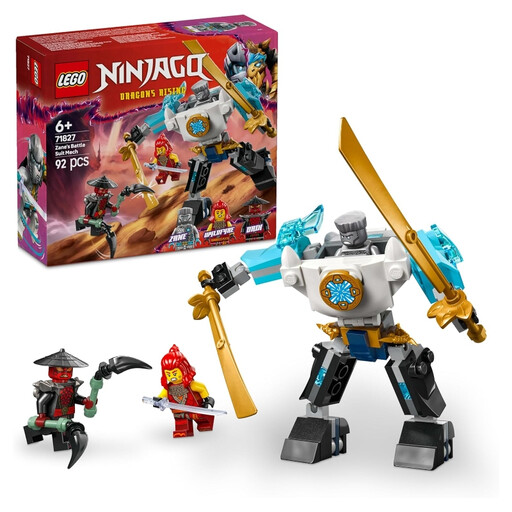
Why this product suits the profile: This set is designed for children aged 6 and over, combining a manageable building project with imaginative role play afterwards.
The 92-piece count is clear before purchase; the recommended age and warning about small parts are also provided.
Moving arms, legs and hands, a rotating torso, cockpit and three minifigures.
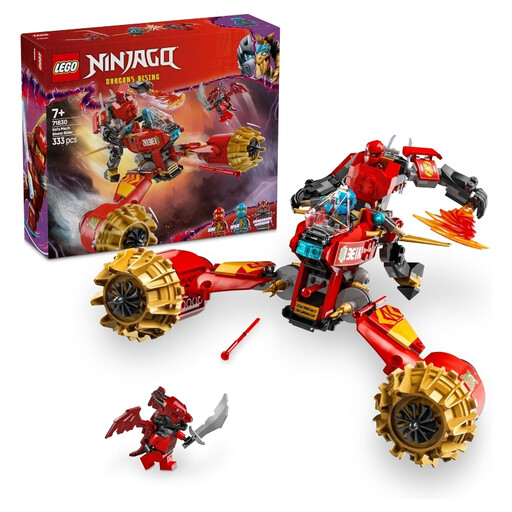
Why this product suits the profile: For children aged 7 and over who want to combine more challenging building with several ways to play.
The play concept is not limited to a single mechanism: the model can be split into two smaller models.
333 pieces, a movable mech, flying motorbike and three minifigures.
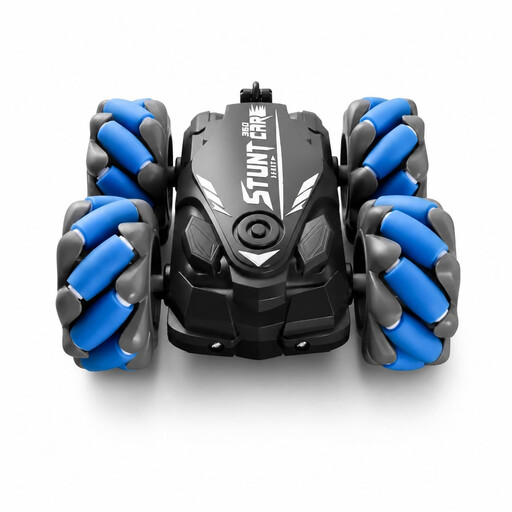
Why this product suits the profile: For children aged 8 and over who want to use a remote-controlled car for children indoors and on flat outdoor surfaces.
The power supply is clearly described: an integrated battery, USB cable and 2.4 GHz control. Charging and supervision instructions should be followed.
Four-wheel drive, gesture and remote control, plus spinning, drifting and flipping functions.

Why this product suits the profile: This cooperative board game is designed for two players aged 10 and over, making it ideal for regular evenings of play together.
The number of players, minimum age and 21 different airport scenarios are clearly stated, making it easier to assess before purchase.
Cooperative dice-placement gameplay, no batteries required and varied tasks.
We have put together a complete, regularly updated list of products that fully meet these strict selection criteria and the safety regulations applicable in the EU.
For superhero fans, the LEGO Spidey 11208 Team Spidey Pirate Ship may be an exciting choice from age 4. It includes larger building elements, several figures and play mechanisms. For children who enjoy performing magic tricks, the two MOFARI magic sets for ages 6 and over are worth considering. Before buying, check whether adult supervision is required.
Vehicle fans can choose not only classic Hot Wheels, but also the Mattel Hot Wheels Speed Series Build Kit for children aged 10 and over. The set contains 289 pieces and is designed more for building and displaying than for spontaneous role play.
Products with a clear age recommendation of 3 and over, larger parts and simple ways to play are suitable. Warnings about small parts must still be observed. A vehicle without batteries can be straightforward for younger children, while building or role-play sets require an appropriate level of fine motor skill.
Their lifespan depends on the materials, construction and how they are used. Moving parts, wheels and rechargeable batteries are typical areas subject to wear. Before every use, check for damaged housings, loose connections and missing parts. With electronic toys, charging cycles and correct storage affect how suitable they remain for everyday use.
For a battery-powered vehicle, the main cost after purchase is the electricity used for charging. You should also check the charging accessories and the recommended charging method. Battery-operated products can incur ongoing costs for replacement batteries. For a realistic assessment, it is therefore important to consider not only the purchase price, but also the power supply and maintenance.