
Lieferung heute & morgen

Qualitätsgarantie

Willkommens-Angebote freischalten: KOSTENLOSE Lieferung | Bis zu 80 % RABATT | Kostenlose 30-Tage-JoyPlus-Testphase
App herunterladen
Toys for children should suit their age, daily routine and interests. At the same time, products can differ considerably in terms of materials, operation, safety information and ongoing costs. An eye-catching package or a long list of features therefore says little about whether a toy is genuinely suitable for everyday family life.
The age recommendation is not a decorative note but an important selection criterion. Small parts, magnets, batteries or sharp-edged accessories may be unsuitable for younger children. A product recommended for ages 8 and over should not be given to a nursery-age child simply because it looks appealing.
For example, a children’s camera may contain printer paper, USB accessories or small decorative elements that pose a choking hazard. A marble-run extension often contains small balls, too. Adult supervision does not replace the specified age suitability, although it can provide additional safety during shared activities.
Many functions seem convincing at first glance: lights, music, several control methods or numerous effects. What matters, however, is whether the child can understand the functions independently and whether they are suitable for the intended location.
An RC stunt car requires sufficient open space. A children’s camera with instant printing creates ongoing costs for thermal paper. An experiment kit for children requires time, a suitable workspace and usually adult supervision. Before buying, it should therefore be clear how and where the product will be used.
Electronic toys require power, accessories or replacement parts. Check whether batteries are included, how the product is charged and whether consumables can be purchased separately. Magnetic building blocks should be checked regularly for cracks and exposed magnets. For toys with wheels, joints or remote controls, it is also worth checking the availability of replacement parts and storage options.
Pay attention to the specific age recommendation and the manufacturer’s safety instructions. Extra care is required with products containing small parts for children under three. Strong magnets must never be placed in the mouth. If magnets are swallowed, seek medical help immediately. Electronic products should not come into contact with water; lithium batteries should be charged in accordance with the manufacturer’s instructions and under suitable supervision.
Smooth edges, sturdy housings and durable connections are practical indicators of quality. For building blocks made from ABS plastic, information about the material and safety compliance should be easy to verify. The CE mark indicates that the supplier has declared compliance with the relevant EU requirements; it is not, however, an independent quality seal. Parents should also look for complete warnings, manufacturer details and a responsible person in the EU.
A children’s LCD writing tablet is usually ready to use straight away and, depending on the model, only requires a button cell battery for erasing. A children’s microscope with LED lighting, on the other hand, requires batteries and a stable table. For a remote-controlled car for children, range, charging time, driving surface and available space are more important than purely promotional claims.
Size should also be taken into account: a large electric vehicle requires a safe, level outdoor area and an accompanying adult. A small dinosaur toy or writing tablet, by contrast, is easier to use when travelling or in a child’s bedroom.
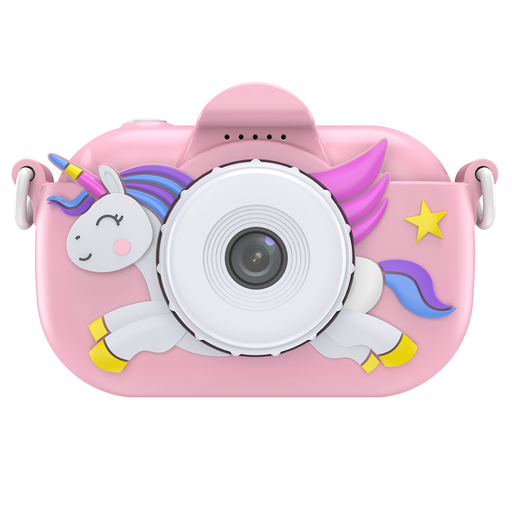
Why this product suits the profile: This compact digital camera is specified for children aged 3 and over. It features simple buttons, a soft protective cover, as well as photo, music and playback functions.
The controls are straightforward. The manufacturer’s instructions remain important: the camera is not waterproof, contains small parts and should be used under direct adult supervision.
1080P specification, portable format and integrated functions without separate accessories for first use.
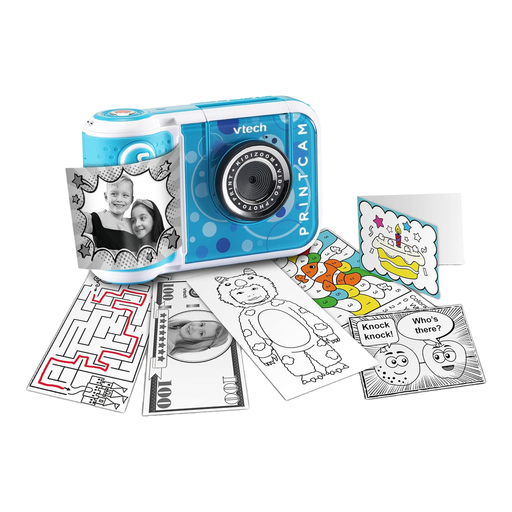
Why this product suits the profile: According to the product information, this instant camera for children is intended for ages 4 to 12 and combines photo, video, selfie and black-and-white printing functions.
The printing function uses thermal paper rather than ink. Before buying, check the cost and availability of replacement rolls.
5-megapixel lens, 4x digital zoom, integrated printer and, according to the description, up to 80 prints per paper roll.
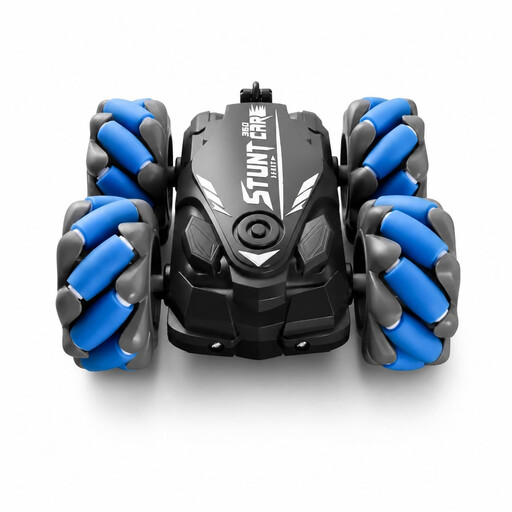
Why this product suits the profile: According to the supplier, this remote-controlled car for children is suitable for ages 8 and over. It is designed for children who want to try controlled stunts on level surfaces.
The product information lists indoor floors, carpets and level outdoor surfaces as suitable locations. Before each use, check the wheels, housing and connections.
2.4 GHz remote control, gesture control, four-wheel drive, driving on both sides and an integrated rechargeable battery.
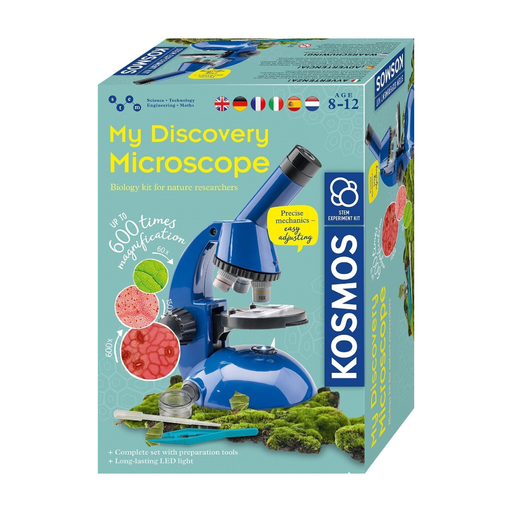
Why this product suits the profile: This children’s microscope is specified for ages 8 and over and includes accessories for observing plants, fibres and other samples.
The age recommendation takes small parts and individual functional points into account. According to the description, batteries are not included and must be purchased separately.
Up to 600x magnification, LED lighting and included specimen-preparation tools for guided observations.
For younger children, magnetic building blocks with 28 pieces can encourage open-ended construction. Parents should pay particular attention to the warning about small, powerful magnets. A children’s LCD writing tablet is suitable for drawings, notes and travel, while a marble-run extension for ages around 3 and over supports spatial thinking and cause-and-effect play.
For children aged 8 and over who are interested in science, an experiment kit for children such as the Clementoni Slime Lab could be a suitable choice. It should only be used under direct supervision and in accordance with the instructions. Dinosaur toys with a pull-back mechanism do not require batteries and can be practical for short play sessions; the specific warning about small parts must still be observed.
We have put together a complete, regularly updated list of products that fully meet these strict selection criteria and the safety regulations applicable in the EU.
This depends primarily on the child’s age and interests. For creative activities, consider a children’s camera, magnetic building blocks or an LCD writing tablet. Children who are interested in technology may enjoy an RC stunt car or a children’s microscope. Before buying, always check the age recommendation, space requirements and accessories.
Pay attention to the battery type, the charging cable supplied and the charging instructions. Lithium batteries must not be opened or left on charge indefinitely. Charging should be carried out by adults or under direct supervision. For a remote-controlled vehicle, also check that the driving area is sufficiently clear and level.
Play value depends less on the number of functions than on the opportunities for the child to create and explore independently. Building and experiment sets can often be used in different ways. Electronic toys are more likely to remain interesting when the controls are easy to understand and accessories continue to be available. Choosing realistically according to age, daily routine and interests reduces the risk of giving an unwanted or unused gift.