
Lieferung heute & morgen

Qualitätsgarantie

Willkommens-Angebote freischalten: KOSTENLOSE Lieferung | Bis zu 80 % RABATT | Kostenlose 30-Tage-JoyPlus-Testphase
App herunterladen
Toys should keep children occupied, support their curiosity and suit their age. However, choosing the right product is not always easy for parents, grandparents and other family members: many products promote numerous functions, educational benefits or eye-catching light effects. What matters is not the number of promises, but whether the toy suits the child’s stage of development, your living situation and how you intend to use it.
A toy with music, lights, buttons and movement may seem versatile at first glance. For babies and younger toddlers, however, too many stimuli can be confusing. A clear connection between action and response is more useful: when the child presses a button, a sound is produced; when they move a part, something visibly changes.
‘From 3 years’ is not a universal recommendation for every child of that age. Small parts, ease of use, volume and the level of supervision required should also be considered. A remote-controlled toy may be suitable for a child with good motor skills, but it often requires more space and an introduction from an adult.
For musical toys and electronic vehicles, batteries or rechargeable batteries are ongoing costs. A product with loud sound effects can also quickly become impractical in a home. Adjustable volume, a quiet mode or a rechargeable battery are therefore important buying criteria.
For toys from 6 months, choose large, easy-to-grip elements, simple cause-and-effect functions and stable bases. Baby toys should not contain small parts that can easily come loose and should only be used in accordance with the manufacturer’s instructions.
For toys for toddlers aged around 1 to 3, activity cubes, sorting games, simple musical instruments and toys with short, easy-to-understand sequences are suitable. With educational toys, it is not just the label ‘educational’ that matters, but the specific activity the child performs: sorting, pressing, turning, stacking or copying.
From around the age of 3, creative materials, remote-controlled toys and role play become options. An RC car for children needs sufficient open space. When using products with lights, sound or fast-moving parts, an adult should supervise the activity.
Look for:
The CE marking is not a quality seal. Instead, it indicates that the manufacturer has declared compliance with relevant EU requirements. For specific products, you should also check the packaging, instructions for use and the seller’s information. The products mentioned below include information referring to ABS plastic, BPA-free materials or EN71. These details come from the respective manufacturer or product descriptions.
For musical toys, adjustable volume and controls that adults can easily reach are practical features. Batteries should be inserted according to the polarity markings and stored out of children’s reach. Rechargeable batteries can make handling easier when the toy is used frequently. Electronic products should not be immersed in water unless they are expressly designed for this purpose.
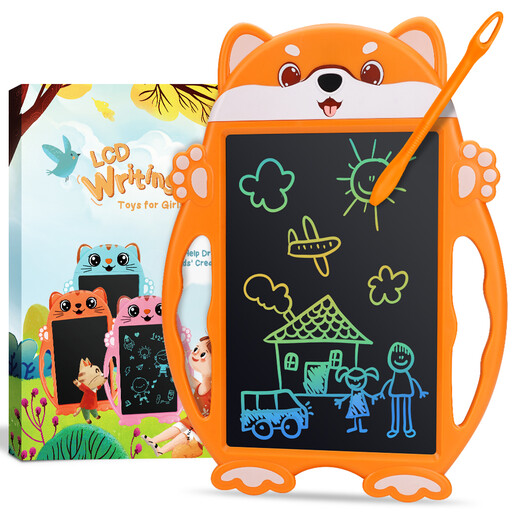
Why this product suits the profile: This drawing tablet for children is designed for creative activities without the need for paper or replacement colouring supplies. According to the product description, it is intended for children aged 3 to 8 and weighs 0,178 kg.
The functions focus on drawing, writing notes and erasing. This avoids relying on numerous sound or light modes.
LCD writing surface, one-button erasing function and compact dimensions of approximately 26,5 × 20,31 × 1 cm.

Why this product suits the profile: This activity cube combines several hands-on ways to play in a compact format and, according to the product information, is intended for children aged 1 to 3.
Rather than relying solely on electronic effects, the cube includes features such as gears, buttons, a toy telephone and instrument functions.
Eight play areas, a carry handle and product description details referring to ABS, rounded edges and BPA-free material.
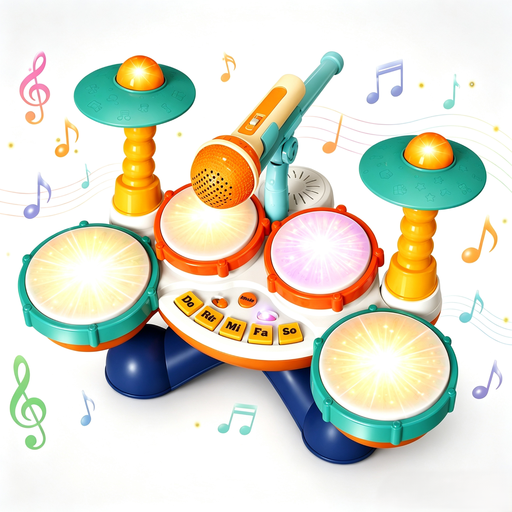
Why this product suits the profile: For families looking for musical toys, this set offers drum pads, cymbals, a microphone, melodies and animal sounds. The stated age range is 1 to 4 years.
The product description states that the volume can be adjusted. This makes it possible to adapt the sound to indoor spaces, but it should not be considered a substitute for an appropriate play duration.
Four illuminated drum pads, two cymbals and three play modes; according to the product information, batteries are not included.
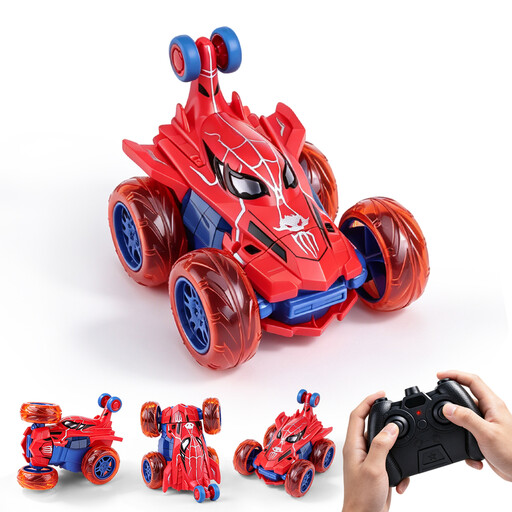
Why this product suits the profile: According to the product information, this RC car for children is intended for children aged 4 and over and offers functions for indoor use and flat outdoor surfaces.
The product information explicitly states the warning ‘not suitable for children under 3 years’. Before buying, you should consider the driving area, supervision and batteries.
2,4-GHz remote control, 360-degree stunts, LED wheels and rechargeable battery; the remote control requires additional batteries.
We have put together a complete, regularly updated list of products that fully meet these strict selection criteria and the safety regulations applicable in the EU.
From 6 months, large, easy-to-grip and stable products with simple cause-and-effect functions may be considered. These include sensory toys, sorting elements or a flat activity station. The specific age recommendation, construction and supervision during play are crucial.
Service life depends on construction, frequency of use, storage and battery care. Before buying, check whether batteries are replaceable, which batteries are required and whether spare parts or care instructions are mentioned. Regularly checking for cracks, loose parts and damaged cables can help you assess whether the toy remains safe to use.
Battery-powered educational and musical toys require replacement batteries, which creates ongoing costs. RC vehicles usually have a rechargeable battery for the vehicle and additional batteries for the remote control. Before assessing the total price, check the contents, charging options and stated power supply.