
Lieferung heute & morgen

Qualitätsgarantie

Willkommens-Angebote freischalten: KOSTENLOSE Lieferung | Bis zu 80 % RABATT | Kostenlose 30-Tage-JoyPlus-Testphase
App herunterladen
The selection of creative toys for children is vast, but not every product delivers on its promise. Many parents and relatives know the problem: a toy planned as a major gift ends up gathering dust in a corner because it's too complicated, of poor quality, or simply boring. This guide will help you avoid common buying pitfalls and make an informed decision that genuinely nurtures your child's creativity.
Before we dive into the selection criteria, it's important to understand the typical issues that can lead to disappointment:
To avoid the pitfalls mentioned above, you should check three central aspects. These will help you objectively evaluate a toy's quality and educational value.
A good creative toy is one that can be rediscovered again and again. Look for products that facilitate open-ended play concepts. Construction toys like magnetic tiles or interlocking bricks can be reassembled into new structures an infinite number of times. Check if the toy is compatible with other sets from the same manufacturer or even across different brands. This significantly increases its long-term value and repeatedly encourages imaginative play.
Your child's safety is the top priority. Look for the CE marking, with which the manufacturer declares that the product meets EU requirements. Even more meaningful is the voluntary GS mark ("Geprüfte Sicherheit" or "Tested Safety"), which is awarded by an independent testing body.
For plastic toys, ABS plastic is a good choice as it is considered robust, durable, and dimensionally stable. Look for descriptions like "rounded edges" and "non-toxic." High-quality craftsmanship is especially essential for motor skills toys for younger children.
Take a close look at what's included in the box. A detailed list of the included parts in the product description is a good sign. This way, you can avoid discovering that accessories are missing right when the fun is supposed to start.
The manufacturer's age recommendation is more than just a suggestion. It indicates whether the toy's complexity and the size of its parts are tailored to the cognitive abilities and fine motor skills of a child at a specific developmental stage. For example, a toy for ages 3+ should not contain any small parts that could be a choking hazard. Conversely, a complex educational toy for older children could overwhelm and frustrate younger ones.
Based on the criteria above, we have identified some products that are well-suited for different creative inclinations.

Why This Fits Their Persona: Ideal for kids who love to build and experiment. This set promotes spatial reasoning and foundational STEM skills (Science, Technology, Engineering, Mathematics) through free-form 2D and 3D construction.
This set bypasses the "one-and-done" effect with its unlimited replay value. The tiles can be combined into new figures and buildings over and over again.
Strong magnets ensure stable constructions. The set is made of durable, drop-resistant ABS material with smooth edges for safe play.
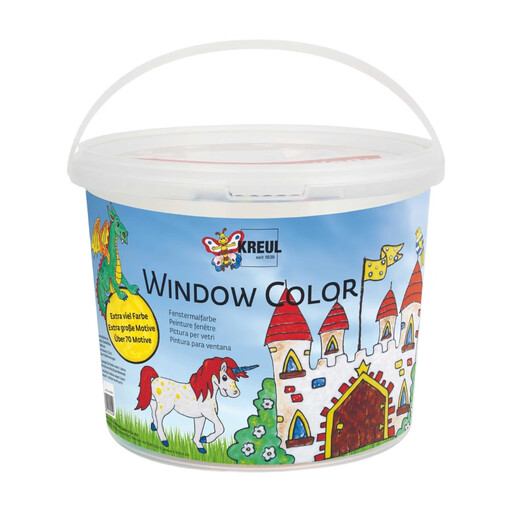
Why This Fits Their Persona: Perfect for kids who love to paint and decorate. With this set, they can create their own window clings that adhere to any smooth surface, beautifying their room or the home.
This is a complete kit that avoids hidden costs. It includes seven large bottles of paint, a special film, and over 70 design templates, so the crafting fun can begin immediately.
The paints are water-based, and the dried images can be peeled off without residue and repositioned. This allows for repeated use and redecoration.
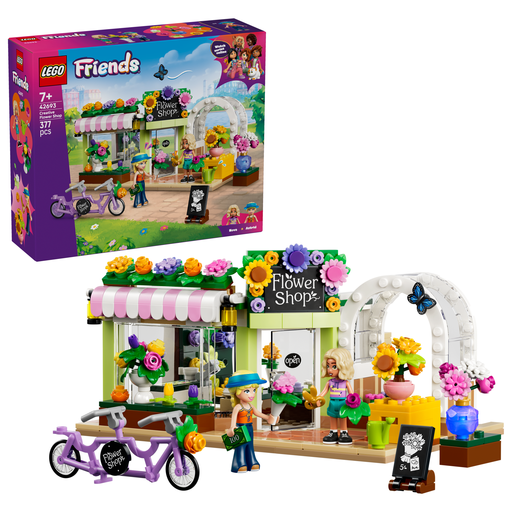
Why This Fits Their Persona: This set combines the fun of building with creative role-playing. Kids can not only build a flower shop but also invent their own stories and act out social interactions with the Nova and Astrid mini-dolls.
The high quality and precision fit of LEGO bricks guarantee long-lasting fun. Additionally, the set is compatible with the entire LEGO universe, which enormously increases its replay value.
In addition to creativity and fine motor skills, it also fosters social skills through role-play. The set includes numerous accessories like flowers, vases, and a cash register for detailed storytelling.
We've compiled a complete, up-to-date list of products that fully meet these strict selection criteria and German safety regulations.
Look for the CE marking on the packaging. An additional GS mark ("Geprüfte Sicherheit" or "Tested Safety") signals that it has been tested by an independent body. Read the material specifications and prefer robust materials like ABS plastic. Check the age recommendation and ensure the toy does not contain small parts if it is intended for children under three.
STEM toys are a subcategory of creative and educational toys that specifically promote skills in Science, Technology, Engineering, and Mathematics. Examples include construction toys like magnetic tiles or simple coding robots. General creative toys for fostering creativity can be broader and also include artistic activities like painting, crafting, or musical expression. The lines are often blurred, as many toys address multiple skills at once.
Read the product description carefully. Reputable sellers list the exact contents (e.g., "Included in the set:", "Package contents:"). Look for notes like "Batteries not included" or "Glue required." Pictures on the packaging can sometimes show accessories that are not included in the set; the text description is more reliable here.