
Lieferung heute & morgen

Qualitätsgarantie

Willkommens-Angebote freischalten: KOSTENLOSE Lieferung | Bis zu 80 % RABATT | Kostenlose 30-Tage-JoyPlus-Testphase
App herunterladen
Toys for children should suit their age, interests and the family’s everyday situation. However, flashy light effects, lots of accessories or supposedly educational promises don’t tell you much about whether a product will be genuinely useful in the long run. That’s why parents, grandparents and relatives should check a few technical and practical points before buying.
The age recommendation isn’t just marketing information. It takes into account small parts, movement patterns and the intended level of difficulty. A toy with small figures or balls may be unsuitable for younger children, even if it seems simple to use.
With toys for ages 3 and up, pay particular attention to the warning “not suitable for children under 36 months”. Adult supervision does not replace this age limit.
Lights, music and sounds can grab attention. In everyday life, however, products are often chosen whose features quickly become boring or require batteries. With electronic baby toys, volume control, the battery compartment and cleaning options are also important criteria.
A simple building set for children, a vehicle with moving parts or a plush toy without electronics can, depending on the child, stay interesting for longer than a product with lots of pre-set effects.
“Robust” or “safe” are hard to assess without specific details. Look for material information, rounded edges, securely fixed parts and clear warning labels. With magnetic toys, extra caution is needed: swallowed magnets can cause serious injuries. Damaged parts should be removed from the children’s room immediately.
First, check the manufacturer’s age recommendation and compare it with the child’s developmental stage. For babies, for example, large-format grasping and sensory toys are suitable, whereas collectible figures or complex building sets usually only make sense for older children.
For products with moving parts, balls, magnets or detachable accessories, the supervision recommendation should be taken seriously. This also applies to seemingly robust vehicles for children.
For baby toys, smooth surfaces, rounded edges and easy cleaning are practical. Product details like ABS plastic or polyester only describe the material; they don’t replace checking the actual product for cracks, loose seams or damaged small parts.
With plush toys, the care instructions should be followed. The SQUISHMALLOWS product is made from polyester according to the product description and is intended for surface cleaning with a damp cloth. Machine washing or tumble drying is not recommended according to the information.
With electronic learning toys, you should check whether batteries are included, how the volume is adjusted and whether the toy is intended for the floor, table or outdoor use. An RC toy also needs space, a stable surface and a safe storage place after playing.
For products with a lithium battery, charging instructions must be followed. Charging should be done under supervision and not near water or heat sources.
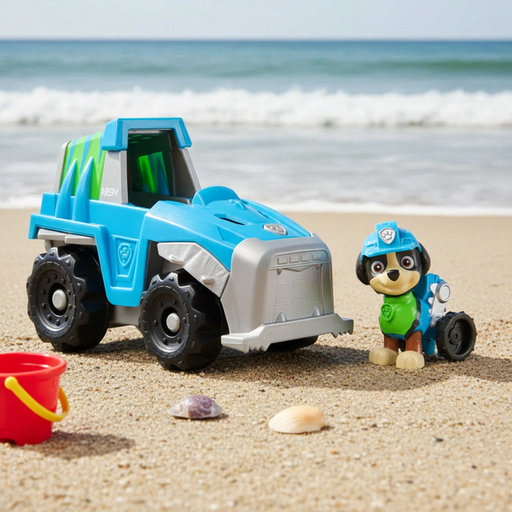
Why this product suits the profile: The vehicle is ready to use straight away without batteries or assembly. For children aged 3 and over, it offers a straightforward play idea with a vehicle, moving ramp and play figure.
It requires no batteries and, according to the product information, no assembly is needed. The age limit and warning about small parts should still be observed.
Vehicle with realistic details, real wheels and a moving ramp; made from at least 71% recycled plastic according to the product description.
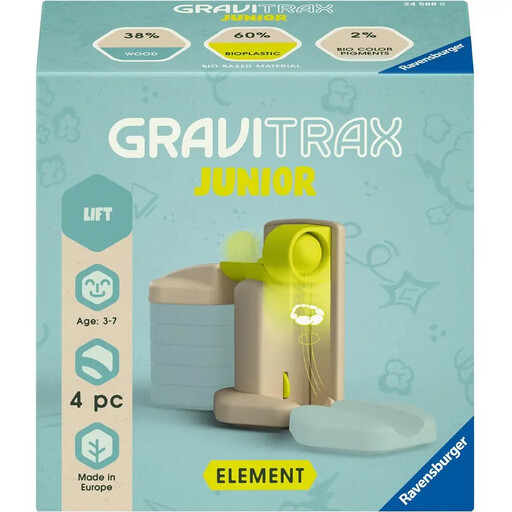
Why this product suits the profile: The expansion element is aimed at children aged 3 and over and can be combined with GraviTrax Junior starter sets. It suits families who value an expandable play system.
Compatibility with the Junior starter sets is specifically stated. However, without a suitable base set, the element is not intended as a complete marble run.
No batteries required; made from wood-bioplastic according to the product information and suitable for modular tracks.
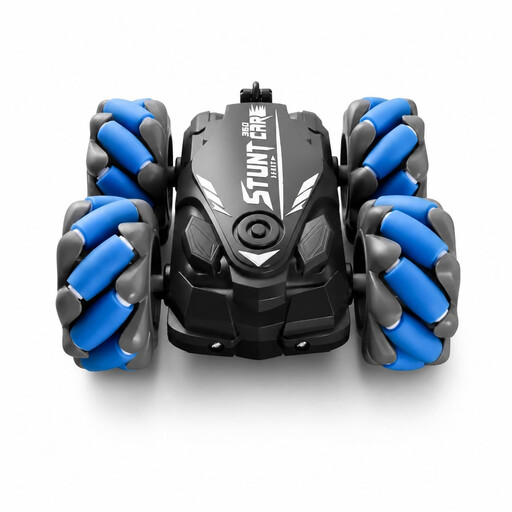
Why this product suits the profile: The RC vehicle is intended for children aged 8 and over according to the product description and offers remote control as well as gesture control. It is aimed at older children with enough space to drive.
The age limit, charging instructions and the need to check before each use are clearly to be observed. This reduces buying mistakes caused by misjudging the target group.
2.4 GHz remote control, gesture control, four-wheel drive and rechargeable lithium battery according to the product information.
Why this product suits the profile: The compact musical instrument for babies combines drum surfaces, shape and colour sorting, and animal sounds. According to the product description, it is suitable for 6 to 36 months.
The product details state the material, age range and that batteries are not included. Before buying, the volume should be considered in the intended environment.
ABS plastic, rounded edges and several manual and electronic play elements according to the product description.
We’ve put together a complete, regularly updated list of products that fully meet these strict selection criteria and the safety regulations in force in the EU.
For babies, large-format, grippy products without loose small parts are suitable. Baby toys, grasping toys and simple musical instruments for babies should be checked regularly for cracks, detachable parts and dirt. The manufacturer’s specific age recommendation remains the key guide.
The lifespan depends on the material, use and care. Vehicles with moving axles, building sets and RC toys should be checked regularly for damaged wheels, housings, battery compartments and connecting parts. Plush toys need cleaning according to the care instructions; if seams are damaged, they should no longer be used.
In addition to the purchase price, batteries, charging accessories or spare parts may be needed. So compare whether batteries are included, whether a rechargeable battery is built in and how the product is charged. For a gift for children, a battery-free learning toy or a manual building set can keep ongoing costs manageable.