
Lieferung heute & morgen

Qualitätsgarantie

Willkommens-Angebote freischalten: KOSTENLOSE Lieferung | Bis zu 80 % RABATT | Kostenlose 30-Tage-JoyPlus-Testphase
App herunterladen
Children’s toys should offer more than a short-lived distraction in everyday life. Parents often look for products that encourage movement, coordination and independent play, without becoming impractical after just a few uses. But with so much choice, deciding what to buy can be difficult. Elaborate features, eye-catching product images and broad claims don’t tell you much about whether a toy is actually suitable.
A toy recommended for children aged 3 and over won’t automatically be suitable for a two-year-old. Small parts, moving components or greater strength and coordination requirements may mean an adult needs to supervise play. So it’s important to consider not just the advertised age range, but also your child’s individual development.
When choosing an electric train set for children, there’s more to consider than the locomotive and carriages. The track layout, space needed to set it up, charging accessories and noise levels can all affect how it fits into family life. A large track may look appealing, but it needs enough room and a safe, level surface.
A DIY racing track for children also needs a suitable area. Suction cups won’t stick equally well to every surface, and flexible tracks should be checked regularly once assembled.
A non-slip surface, sturdy fixings and soft materials are specific features. Vague claims such as ‘educationally valuable’ don’t replace checking the materials, dimensions and safety warnings. For products with a rechargeable battery, parents should also follow the charging instructions and store the product safely.
First, check the age recommendation and compare it with your child’s stage of development. A balance board for children measuring 40 cm long and 32,2 cm wide takes up less space than an electric train set with an extensive track layout, but it still needs a level, dry, non-slip surface.
For toys for children aged 3 and over, make sure any small parts are kept out of reach of younger children. For active products such as a balance board or a balance bike and tricycle, you’ll also need enough space to move around, clear of furniture edges and trip hazards.
Look for clear information about materials and surfaces. A textured, non-slip surface on a balance board can make it easier to use, but it doesn’t remove the need for supervision. Check plastic parts for cracks, sharp edges and loose connections before each use.
For a DIY racing track, consider the flexible PVC sections, how they connect or stick together, and whether they’re compatible with the vehicles included. For a reaction game for children, look for soft catching sticks, a secure wall fixing and a dry place to store it.
Electric toys need more attention than purely mechanical learning toys. Check whether the toy uses a rechargeable battery or disposable batteries, whether a charging cable is included and whether an adult should handle charging. Keep water, direct heat and damaged cables away from chargers.
Many products can be cared for with a damp or dry cloth and stored in a dry place. Check moving parts, tracks and fixings regularly to make sure they’re working properly. This helps you spot wear and signs of use early.
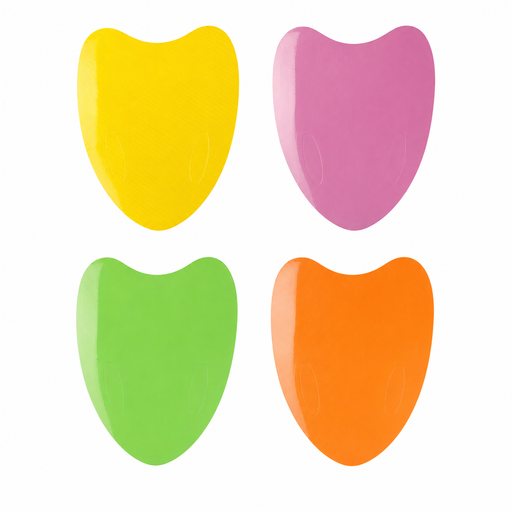
Why it suits this profile: This compact balance board is designed for children aged 3 to 8 and is ideal for short bursts of indoor activity. Measuring 40 cm long and 32,2 cm wide, it’s easy to store without taking up much space.
The dimensions and textured surface are clearly specified, making it easier to work out how much space you’ll need before buying.
A-shape design, non-slip surface and easy cleaning with a damp cloth. Use only on a level, dry surface and under adult supervision.

Why it suits this profile: This set combines a modular track with a motorised locomotive, carriages, lights and sounds. It’s aimed at children aged 3 to 5 who enjoy building and imaginative role play.
The description lists 8 curved and 4 straight track pieces, with a layout measuring around 70 × 41 inches. That makes it easier to plan how much space you’ll need.
Rechargeable locomotive, modular track, LED lights, plus sound and steam effects. Follow the water and charging instructions.
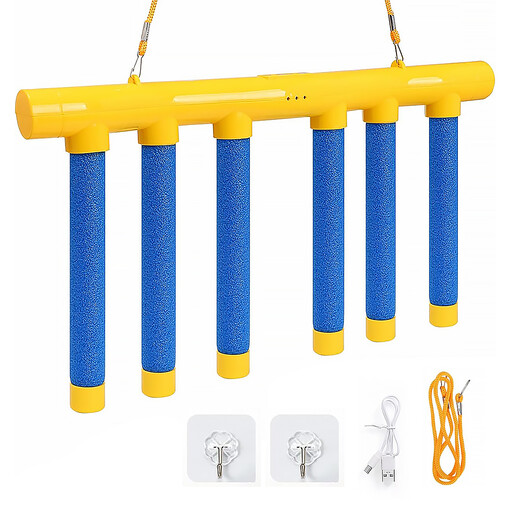
Why it suits this profile: This wall-mounted reaction game has three adjustable drop speeds and is ideal for family games indoors. It’s designed for children aged 3 and over.
The three speeds are clearly specified. An adult should handle assembly and USB charging, and small parts and water should be kept away from the play area.
USB-rechargeable battery, dimensions of 38,5 × 21,5 cm and adjustable speed to suit different skill levels.
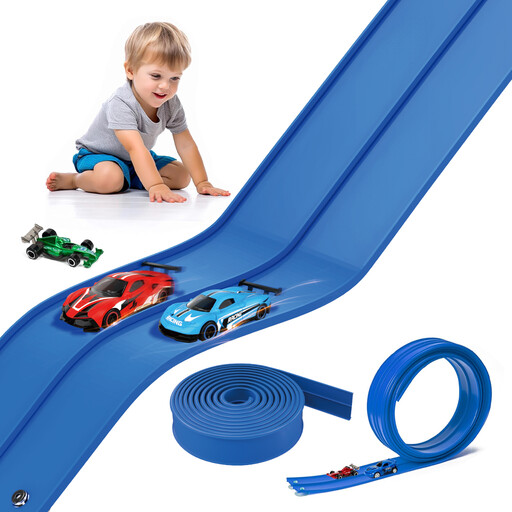
Why it suits this profile: The 4,5 m flexible dual-lane track can be set up in straight lines, curves, loops and ramps. It’s a good fit for children aged 3 and over who enjoy creating their own layouts.
The track doesn’t need a power supply. The suction cups included should still only be used on suitable, clean surfaces and checked before each use.
Dual-lane track, four friction-powered cars, roll-up storage and indoor or outdoor use on a suitable surface.
A balance bike and tricycle can be a good option for children aged 2 to 5, provided the seat height, steering and surface are suited to their size. An adjustable seat and removable pedals make it easier to adapt the bike to different stages of development. When riding outdoors, safe use means wearing a helmet, choosing clear paths and having an adult nearby.
Learning toys don’t have to be limited to number or letter games. Building, sorting, constructing and moving can all help develop different skills. What matters is that children can shape the activity themselves, rather than the toy only performing a set function. In this way, active toys and creative sets can help bring coordination and motor skills into everyday play.
We’ve put together a complete, regularly updated list of products that meet these strict selection criteria and fully comply with the safety regulations in force in the EU.
Look for products with a clear age recommendation, a straightforward set-up and easy-to-understand safety instructions. An adult should always be present when children are playing with small parts, electrical components or toys that involve lots of movement. The age recommendation doesn’t replace an individual assessment of your child.
How long a toy lasts depends on its materials, how often it’s used, how it’s stored and how much wear it gets. Check plastic parts, tracks, wheels, suction cups and rechargeable batteries regularly. Don’t continue using damaged parts. Storing toys in a dry place and cleaning them according to the manufacturer’s instructions can help them last longer.
For rechargeable products, the main ongoing cost is the electricity used to charge them. You may also need to pay for replacement batteries, charging accessories or individual components. Before buying, check whether a rechargeable battery is included and what accessories are listed as part of the set.