
Lieferung heute & morgen

Qualitätsgarantie

Willkommens-Angebote freischalten: KOSTENLOSE Lieferung | Bis zu 80 % RABATT | Kostenlose 30-Tage-JoyPlus-Testphase
App herunterladen
Finding the right toys for children may seem straightforward at first. But there are plenty of products on offer with similar promises: creative, durable, educational or especially safe. For parents, grandparents and other adults buying a gift, the important thing is less what the marketing claims and more whether the toy suits the child’s age, surroundings and actual play habits.
‘Ages 3+’ is a minimum recommendation, but it doesn’t automatically mean a child can use the product independently. With construction toys, magnetic building blocks and LEGO sets for children, you should also consider the number of small parts, how complex the instructions are and how much supervision is needed.
LED wheels, sounds and remote-control functions can be interesting at first. But they don’t replace a well-thought-out play concept. Check whether the product is still useful without lights or sound effects, and whether it needs batteries or rechargeable batteries.
Claims such as ‘non-toxic’ or ‘durable’ should be backed up with specific details. Check the material, build quality, warnings and the responsible person in the EU. Take particular care with magnetic toys: swallowed magnets can cause serious injuries. Any damaged parts with exposed magnets should be kept out of children’s hands.
For toys for ages 3+, pay particular attention to the information on the packaging and product page. Small parts can pose a choking hazard, even if a product is suitable for older children. LEGO sets for children, for example, carry warnings about small parts and the need to supervise younger children.
A practical guide:
The age recommendation is only a starting point. Read the warnings too, and check whether an adult should help with assembly or first use.
A toy may be too large for your home or too heavy to carry around. The CHEERFUN Pink Kitten LCD Writing Tablet, for example, measures 26,5 × 20,3 × 1 cm and weighs 0,178 kg, according to the product information. This makes it easy to slip into a bag. For children’s scooters, on the other hand, handlebar height, deck width, folded dimensions and weight limit are key.
For larger sets, you should also check:
For LCD writing tablets, remote-control toys and light-up toys, it’s worth checking the power supply. Find out whether batteries are included, what type is needed and whether a rechargeable battery needs charging. The LCD writing tablet is cleared at the touch of a button; according to the product description, it doesn’t need consumables such as paper or felt-tip pens.
According to the product information, a remote-control dinosaur needs 3 AA batteries for the body and 2 AA batteries for the remote control; these aren’t included. Details like these affect the actual cost of using a toy and should factor into your decision when choosing birthday or Christmas gifts for children.

Why it suits this profile: The LCD writing tablet is listed as suitable for children aged 3 to 8. It’s easy to carry and can be used for drawing, writing notes or keeping children occupied while travelling.
You don’t need paper or pens. According to the manufacturer, the casing is made from ABS plastic, and the tablet is cleared at the touch of a button.
Lightweight at 0,178 kg, with compact dimensions of 26,5 × 20,3 × 1 cm.
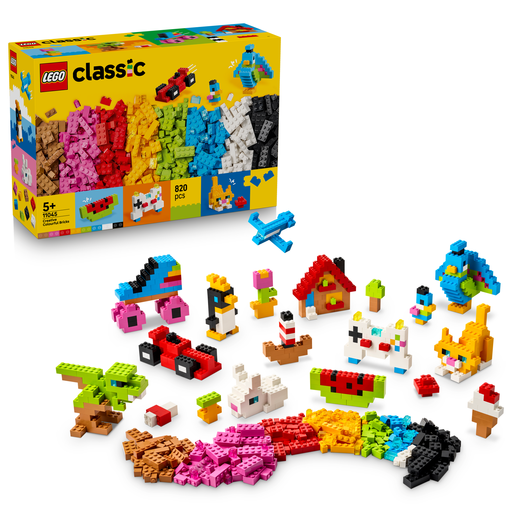
Why it suits this profile: According to the product information, this set is intended for children aged 5 and over. It combines suggested models with free building.
The number of pieces and recommended age are clearly stated. The warning about small parts means the set should be stored out of reach of younger children.
820 pieces, instructions for 14 models and additional digital building instructions.

Why it suits this profile: According to the product title, this three-wheeled scooter is designed for children aged 3 to 10 and can carry up to 30 kg. It’s suitable for outdoor journeys and play areas.
The adjustable handlebar and wide, non-slip deck are clearly specified. Before buying, check the child’s height, the weight limit and how the brake works.
Three wheels, an adjustable-height handlebar and LED light-up wheels, according to the product description.
We’ve put together a complete, regularly updated list of products that meet these strict selection criteria and fully comply with the safety regulations in force in the EU.
Look for products with a clear age recommendation, a manageable number of functions and easy-to-understand warnings. Creative toys, simple vehicles for children and magnetic building blocks may be suitable, as long as small parts and magnets aren’t used without supervision.
Lifespan depends on the material, how the toy is used and how well it’s cared for. Check wheels, edges, fastenings, cables, battery compartments and components regularly. With building and magnetic toys, damaged parts or exposed magnets should be removed straight away. For children’s scooters, choosing the right weight limit helps extend their useful life.
Check the range, power supply, charging time, replacement batteries and recommended setting. For indoor use, noise levels and the space needed are important; outdoors, consider the ground surface and keeping the toy in sight. Children should only use remote-control toys in a safe, clear area.