
Lieferung heute & morgen

Qualitätsgarantie

Willkommens-Angebote freischalten: KOSTENLOSE Lieferung | Bis zu 80 % RABATT | Kostenlose 30-Tage-JoyPlus-Testphase
App herunterladen
Toys should be fun, suit your child’s age and get plenty of use in everyday life. In practice, unclear age recommendations, missing accessories or complicated features can easily lead to disappointing purchases. It’s worth checking the product details carefully, especially for pretend-play toys, magnetic building blocks and water toys.
Lights, sounds and electronic effects can look appealing in product photos, but they don’t automatically offer a variety of ways to play. For a toy cash register, for example, check whether the scanner, play money, shopping basket and calculator are actually included. For a toy kitchen, make sure it comes with accessories such as bowls, measuring cups or play food.
A gift marked for children aged 3 and over isn’t necessarily suitable for every child of that age. Magnetic pieces, marbles, small building blocks and accessories can be swallowed. Before buying, check the age recommendation, warnings and any guidance on supervision against your child’s stage of development.
A marble run, a car racing track or a large water toy needs more room than product photos might suggest. Before buying, check the assembled dimensions, storage requirements and how easy it is to clean. Roll-up or dismantlable systems are often more practical in smaller homes.
Look for the marking “not suitable for children under 36 months” if the toy contains small parts. You should also follow any advice on adult supervision. A CE marking is an important formal indicator, but it doesn’t replace checking the build quality, edges, connections and accessories.
For magnetic building blocks and construction toys for children, sturdy connections, undamaged surfaces and clear organisation are important. Keep sets with lots of small parts out of reach of younger siblings.
For plastic toys, details such as ABS or BPA-free materials can be useful, if stated by the seller. Smooth edges, securely fitted parts and easy cleaning make regular use more convenient. Electronic toys should not be submerged in water. With water toys, it’s best to empty them after play and leave the individual parts to dry.
Check whether batteries are included. For example, batteries are not included with the toy cash register in the range, and the product details don’t specify the battery type or quantity required. Remember to factor this in before giving it as a gift.
The option to expand a toy can also affect its usefulness. A marble run that works with compatible building blocks or an extendable canal system can be adapted later. A car racing track that doesn’t need a power supply, on the other hand, won’t require batteries, while flexible track layouts offer more ways to build new courses.
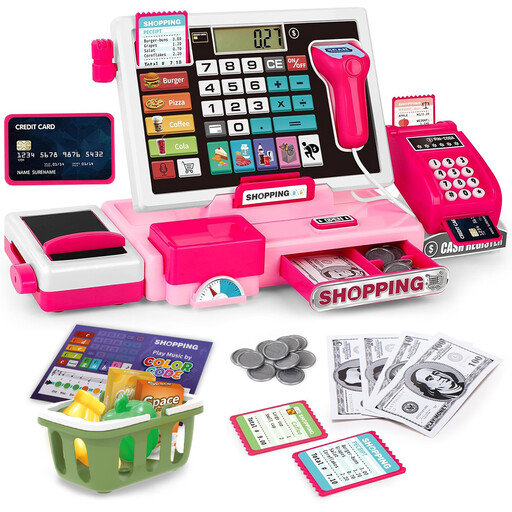
Why this product suits this profile: This set combines pretend play with a calculator, play money, a credit card, scanner, shopping basket and play food. It’s suitable for children aged 3 and over who enjoy acting out everyday situations.
The contents are listed clearly, making it easier to check that the key parts for playing shop are included. Remember to buy batteries separately.
37,49 × 8,99 × 19 cm, around 720 g, several play modes and a built-in calculator. Small parts require supervision.
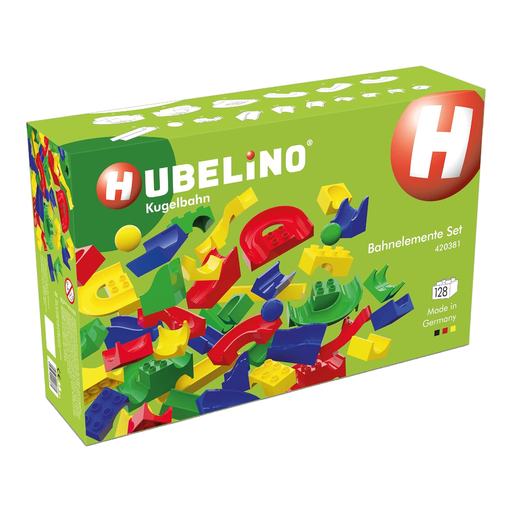
Why this product suits this profile: This expansion set is designed for families who already have building blocks and want to add to their marble run in different ways. According to the product information, it’s suitable for children aged 4 and over.
It’s clearly stated that the set is compatible with building blocks from several major brands. This reduces the risk of buying a standalone system with no suitable expansion options.
128 pieces, including bends, straight sections, tunnels, crossings and four marbles. The manufacturer lists Germany as the country of production.

Why this product suits this profile: This large canal system is designed for shared water play indoors or outdoors. Its canals, locks, boats and accessories make it easy to create layouts you can return to again and again.
The set is designed to be assembled and emptied as part of normal use. After play, empty out the water and let the set dry completely.
Expandable system with canals, locks and boats; listed as suitable for children aged 3 and over. Water and small parts require adult supervision.
We’ve put together a complete, regularly updated list of products that meet these strict selection criteria and fully comply with the safety regulations in force across the EU.
For creative construction play, consider magnetic building blocks, classic building blocks for children or more challenging models. The 438-piece WANGE armoured vehicle model is listed as suitable for children aged 6 and over when supervised. The LEGO Architecture sets Notre-Dame de Paris and Neuschwanstein Castle, on the other hand, are aimed at fans aged 18 and over and contain several thousand pieces.
For outdoor fun, try garden toys, a flexible race track set or a BRUDER gardening set. If you’re buying a toy bow and arrow, use only suction-cup arrows designed for it and set clear safety rules for the play area.
Simple role-play toys, such as a toy cash register, a toy kitchen with accessories or a straightforward track or construction set, are good options. Look for an age recommendation that suits your child, easy-to-grip pieces and a set-up that lets them start playing without complicated assembly.
A toy’s lifespan depends on its materials, how it’s used and stored, and how well it’s cared for. Check plastic parts regularly for cracks and sharp edges. With magnetic building blocks and marble runs, it’s a good idea to remove any missing or damaged pieces from use as soon as possible. Store water toys and outdoor toys dry, and protect them from prolonged exposure to the elements.
Toys with lights or sounds may need batteries. Before buying, check the battery type, quantity and what’s included. Battery-free alternatives, such as building blocks, a manual car racing track or classic creative learning toys, don’t incur any additional energy costs during use.