
Lieferung heute & morgen

Qualitätsgarantie

Willkommens-Angebote freischalten: KOSTENLOSE Lieferung | Bis zu 80 % RABATT | Kostenlose 30-Tage-JoyPlus-Testphase
App herunterladen
Toys should be fun, support your child’s development and be practical for family life. But product descriptions often list lots of features without clearly highlighting important details such as age recommendations, part size or the need for supervision. This can easily lead to the wrong purchase, particularly when choosing toys for children.
A label saying ‘from 3 years’ doesn’t automatically mean a product will be easy for every three-year-old to use. Some building sets already require children to place or sort pieces carefully, or concentrate for longer periods. A building set for toddlers with large, easy-to-grip pieces is usually better suited to younger children than a set with lots of small bricks.
On the other hand, a very simple toy can quickly lose its appeal for older children. So, as well as checking the age recommendation, ask yourself:
With active and outdoor toys, space, the playing surface and storage all matter. A ball game might work well in the garden, but be impractical in a small flat. Product descriptions don’t always make it equally clear whether you’ll need batteries, spare parts or extra playing surfaces.
Before you buy, check:
There’s also an important safety warning for the Outdoor Play Croquet Set described here: according to the product information, it is not a toy, contains small valve components and must not be operated or used for play by children. Families with children should therefore keep products for family use separate from toys designed specifically for children.
Terms such as ‘educational’, ‘creative’ or ‘safe’ shouldn’t be the only things guiding your purchase. Look for clear information about materials, age recommendations, warnings and the manufacturer. The CE mark is a legally required conformity marking for certain product groups. It is not an independent quality mark, nor does it prove that a product is especially durable.
For toys for 2-year-olds, large bricks, simple connections and short, easy-to-follow ways to play are often a good choice. Toys for 3-year-olds can introduce role play, simple games with rules and more challenging movement. A magic set for children, on the other hand, is often aimed at older children, as it requires them to follow instructions, use their fingers skilfully and understand a sequence of steps.
Take warnings about small parts seriously. Even if your child is older than the stated age limit, supervise play when younger siblings or guests are around.
With plastic toys, it’s worth checking the material information, edges, joins and cleaning instructions. Smooth surfaces are easier to wipe clean. For outdoor toys, parents should also check whether the product needs to be stored dry after use and whether any parts could get lost.
For building bricks, grip size, how much force is needed to connect them and the number of pieces are all practical considerations. The LEGO DUPLO range uses larger bricks designed for little hands. Even so, check the age recommendation and warnings for each set.
Creative learning toys can encourage independent play, while active toys often need a clear space and an adult nearby. Check whether throwing or swinging movements can be carried out safely where the toy will be used. For example, if you’re using a ball catcher or children’s golf set, leave plenty of space between the game and windows, roads or delicate items.
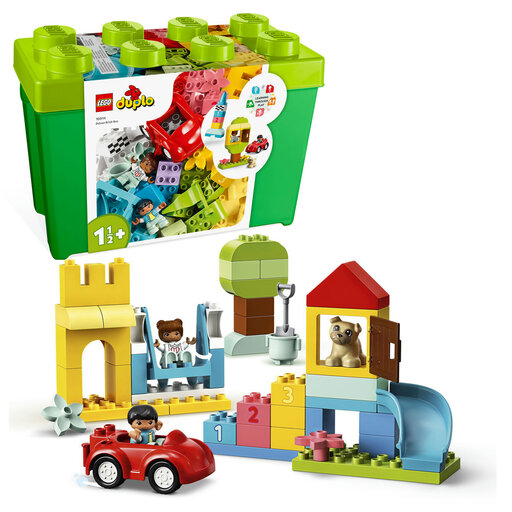
Why it suits this profile: According to the product information, the box contains 85 pieces and is aimed at children from around 18 months. It includes a variety of bricks and accessories for all sorts of different play ideas.
The wide selection of pieces means you’re less reliant on extra accessories. Even so, check the age recommendation and small-parts warning before buying.
85 pieces, a storage box, bricks and themed accessories for free building and role play.
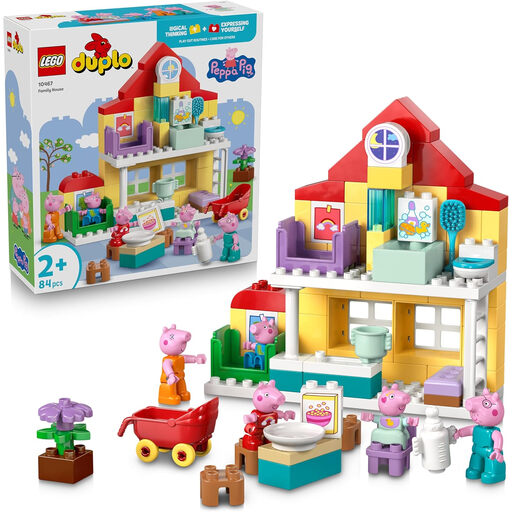
Why it suits this profile: According to the product description, this set is intended for children aged 2 and over. It combines building a house with everyday situations and character role play.
The product description lists specific rooms, characters and accessories, so it’s easier to see what kinds of play are possible before you buy.
Several rooms, five named characters and accessories for everyday scenes such as mealtimes, bedtime and walks.
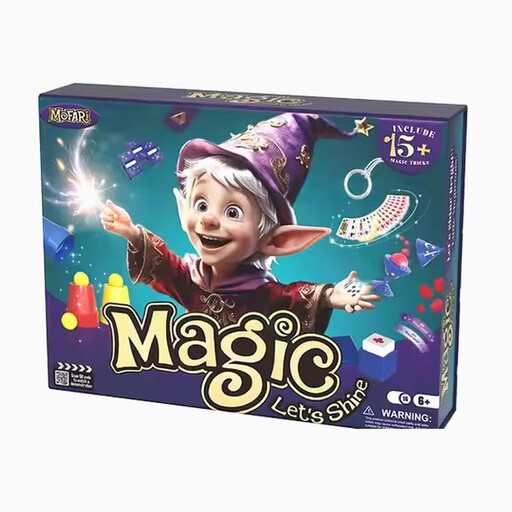
Why it suits this profile: The set is listed for children aged 6 and over. According to the product name, it includes eight props, along with instructions and video tutorials for 15 tricks.
The age recommendation clearly distinguishes this set from toys for toddlers. Follow the warning and make sure an adult supervises use directly.
Instructions and video tutorials; according to the product name, 15 tricks and eight props.
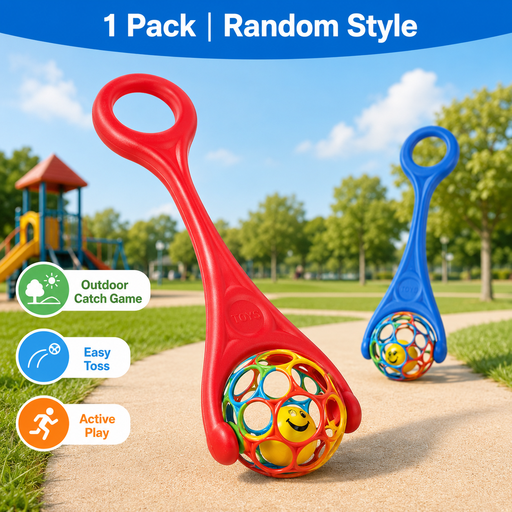
Why it suits this profile: This set is designed for simple throwing and catching games outdoors and comes as one set. You can get started without complicated assembly.
The way to play is clearer than with products involving lots of separate activities. According to the product name, the colour or design is sent at random, so bear this in mind when choosing.
One set for throwing and catching games; according to the product information, it’s easy to use and should be stored somewhere dry.
We’ve put together a comprehensive, regularly updated list of products that meet these strict selection criteria and fully comply with the safety regulations in force in the EU.
Large, easy-to-grip bricks, simple construction toys, figure sets and age-appropriate active toys are often good choices. Check the specific age recommendation and any small-parts warnings, and consider whether your child can understand how to play with little help.
How long a toy stays in use depends less on the number of pieces and more on how many ways there are to play with it. Bricks, figures and accessories for different kinds of role play can keep children engaged for longer than a toy with just one fixed function. For outdoor toys, durability is also affected by the weather, storage and regular checks of the parts.
Check whether batteries are included, what battery life is stated and whether the battery compartment closes securely. For toys with lights or sounds, also make sure your child can operate the features themselves. Younger children should still be supervised, and all warnings should be followed.