
Lieferung heute & morgen

Qualitätsgarantie

Willkommens-Angebote freischalten: KOSTENLOSE Lieferung | Bis zu 80 % RABATT | Kostenlose 30-Tage-JoyPlus-Testphase
App herunterladen
Toys should be fun, safe to use and suited to a child’s stage of development. In practice, unclear age guidance, underestimated space requirements or ongoing costs can quickly lead to purchases you regret. It’s especially worth checking the materials, features and intended use of toys for children aged 3 and over before buying.
‘Ages 3+’ doesn’t automatically mean a product is equally suitable for every three-year-old. Small parts, complex rules or time-consuming assembly can be a challenge for younger children. For board games and puzzles, you should also check whether the language and motor skills required are right for your child.
For example, the Kosmos EXIT – The Game Kids: Monster Puzzle Fun is listed as suitable for children aged 5 and over, while many role-play sets are available for children aged 3 and over. Always consider the age guidance alongside the safety warnings.
Lights and sound effects can add to the fun, but they also bring extra costs and maintenance. Check:
A toy kitchen that needs two AA batteries involves noticeably more ongoing effort than a toy that doesn’t need a power source. If a role-play toy is used often, parents should also check whether its electronic features remain useful without batteries.
A toy kitchen may look compact in a product photo, but it needs a permanent spot. The Theo Klein Miele Family Kitchen measures 83.5 × 30 × 101 cm and weighs 16.3 kg, according to the product details. Compact sets or foldable options are more practical for smaller homes.
Small parts also need a dedicated place to be stored. A doctor’s case with a transparent lid or a puzzle in a metal case makes it easier to keep things organised and reduces the risk of losing pieces.
As well as the manufacturer’s age guidance, it’s important to ask:
For games for children and family board games, the number of players and playing time are key. A game for 1 to 4 players is suited to a different group than a set that only works with three or four players.
With wooden toys, check the edges, surfaces and joints. For plastic products, robust surfaces that are easy to clean are practical. Whatever the material, small parts can present a choking hazard. Read the warnings on the packaging and product page before buying.
Also look for:
Large sets need room not only for storage, but also for play. A kitchen with accessories works better when children have room to stand in front of it and set down several utensils. Keep liquids away from the battery compartment of electronic toys. Clean wooden surfaces only with a dry or slightly damp cloth, as advised by the manufacturer.
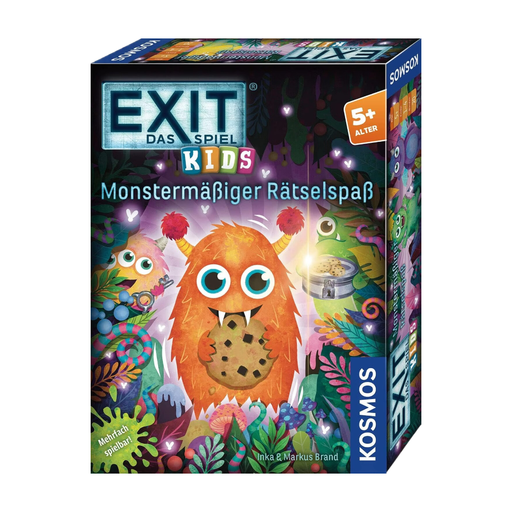
Why this product suits this profile: This game is designed for children aged 5 and over, needs no batteries and is suitable for 1 to 4 players. It’s a good choice for shared puzzle-solving sessions, with a manageable number of components.
The age guidance and number of players are clearly stated, and no batteries are needed. According to the product description, an adult can help introduce the rules.
Co-operative puzzle-solving, an optional app and gameplay for up to four people.
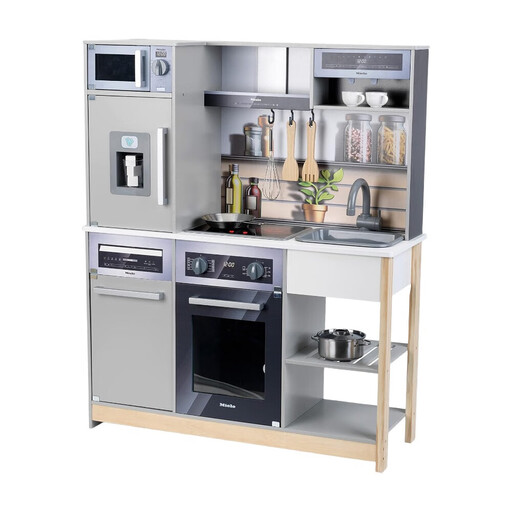
Why this product suits this profile: This wooden kitchen has several play areas, including a hob, microwave, fridge and sink. Measuring 83.5 × 30 × 101 cm, it’s designed for homes with enough floor space.
The dimensions, weight of 16.3 kg, assembly requirements and need for two AA batteries are all stated. This makes it easier to assess the space and care involved in advance.
Several play areas, wooden construction and accessories made from wood and metal, according to the product description.

Why this product suits this profile: Designed for children aged 3 and over, the case includes a stethoscope, syringe, thermometer and reflex hammer, among other items. It can be closed and stored away after play.
No batteries are needed. The transparent lid lets you see what’s inside and helps you check and store all the accessories.
Compact dimensions of around 22 × 8.5 × 19.5 cm, a carry handle and a wide range of accessories for role-play.

Why this product suits this profile: According to the product details, this Junior edition is designed for children aged 6 and over and for 2 to 4 players. It’s aimed at families looking for a board game with simplified rules.
The age guidance and number of players are clearly stated, and no batteries are needed. Go through the rules together before your first game.
For 2 to 4 players, simplified trading rules and gameplay without batteries.
We’ve put together a complete, regularly updated list of products that meet these strict selection criteria and fully comply with the safety regulations in force in the EU.
Simple role-play toys, toy kitchens, doctor’s cases, puzzles with an age-appropriate number of pieces and toys that develop motor skills may all be suitable. The key things to consider are the specific age guidance, the size of the pieces and whether your child can handle the rules or accessories safely. Adult supervision is advisable when small parts are involved.
How long a toy lasts depends on its materials, how it’s used and how it’s stored. Wooden toys can remain in good condition for a long time if their joints are sturdy and they’re kept dry. Check moving parts, battery compartments and accessories on plastic and electronic toys regularly. Don’t continue using parts that are damaged or splintering.
Before you buy, check the battery type, number required and whether they’re included. Remove batteries before storing the toy for a long time, and check the compartment for any leaking batteries. It’s also worth checking whether the educational toy is still enjoyable to play with without sound or lights. That way, its play value won’t depend entirely on its electronic features.