
Lieferung heute & morgen

Qualitätsgarantie

Willkommens-Angebote freischalten: KOSTENLOSE Lieferung | Bis zu 80 % RABATT | Kostenlose 30-Tage-JoyPlus-Testphase
App herunterladen
Toys for children should be fun, safe to use and suited to their stage of development. In practice, however, the choice can often seem overwhelming: product images show extensive sets, age recommendations appear contradictory and supposed educational features are not always clear. This buying guide explains which details matter before you buy and which types of products suit different families and interests.
An age recommendation is not merely a decorative detail. Small parts, magnets and detachable accessories can pose a choking hazard for children under three. Some listings also include general age recommendations in the description that do not match the safety warning. For this reason, the specific warnings on the product page and packaging should always take priority.
Terms such as educational toys or Montessori toys do not automatically indicate a proven learning benefit. The actual features included are more informative: for example, a busy book for toddlers may contain zips, buttons and laces. By contrast, for a pretend-play shop, play money, a calculator, a scanner and accessories are the relevant features.
A large construction vehicle toy needs sufficient space to play with in a child’s bedroom or sandpit. Magnetic building blocks require safe storage, while a DIY kit calls for time, patience and a suitable workspace. Before buying, you should therefore check the dimensions, contents, batteries, assembly requirements and cleaning instructions.
Do not choose toys solely based on the desired theme; consider how they will actually be used. For toddlers from the age of one, products with securely attached or sufficiently large elements are suitable. Magnetic toys require particular care: the product information should explicitly mention strong magnets and the possible dangers if they are swallowed. Damaged parts, cracks or exposed magnets are reasons to stop using the toy.
For plastic products, details such as ABS plastic, rounded edges and regular checks for damage are helpful. For fabric and felt products, seams, ribbons and moving elements should be securely attached. A general description such as “non-toxic” does not replace checking the warnings, manufacturer’s information and intended age group.
Pay attention to the product dimensions and the number of parts included. A children’s cash register with a calculator, LED lights and sound effects may require batteries that are not included. Pull-back vehicles, on the other hand, work without batteries. For complex models, such as a building-block tank or miniature house kit, you should consider the number of parts, assembled size and language of the instructions.

Why this product suits the profile: This compact busy book for toddlers is designed for children aged around 1 to 3 and can be used at home or while travelling.
The 15 activities are described clearly and include buttons, zips, laces and hook-and-loop fasteners. The age guidance and recommended supervision should be followed.
Felt material, movable everyday elements and a low weight make this book suitable for short periods of play.

Why this product suits the profile: With 28 parts and a stated individual part size of 5.5 cm, this set is aimed at children aged 3 and over who want to explore open-ended construction.
The description explicitly mentions small, strong magnets, regular checks and storage in the supplied bag. The set must not be used if it is damaged.
28 ABS parts, no batteries required and intended use for two-dimensional patterns as well as three-dimensional constructions.
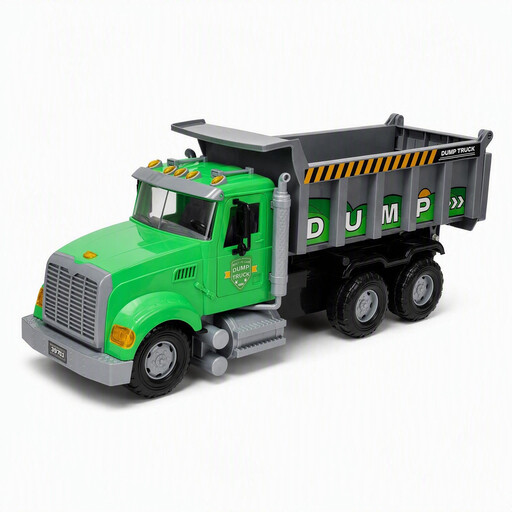
Why this product suits the profile: This large construction vehicle toy is designed for indoor use, children’s bedrooms and play in the sandpit, and is aimed at children aged 3 and over.
The dimensions of approximately 59.69 × 17.27 × 25.40 cm make the space required clear. The tipping mechanism should be checked for cracks or damage before every use.
Tilting loading platform, pull-back drive without batteries, ABS plastic and a large loading capacity for sand, building blocks or small objects.

Why this product suits the profile: This miniature house kit is designed for people aged 14 and over and is suitable as a longer-term craft project or decorative item.
The product description points out the small parts, functional sharp points and patience required. It is explicitly not a toy for young children.
62 laser-cut wooden parts, a stated size of approximately 13.5 × 5.5 × 15 cm and no batteries required.
Other suitable categories include a children’s cash register for role play, dinosaur cars with pull-back motors, a building-block tank for older children, and a collectible or Pokémon figure for fans and collectors. When comparing products, always focus on the specific age, contents and intended use.
We have put together a complete, regularly updated list of products that fully meet these strict selection criteria and the safety regulations applicable in the EU.
For children from the age of one, large, easy-to-grip products that can be checked easily are worth considering. A busy book with securely attached elements can introduce everyday activities through play. Small parts, loose magnets and toys with difficult-to-access battery compartments should be avoided. The manufacturer’s information and warnings remain crucial.
Lifespan depends on the materials, mechanisms and how the toy is used. ABS vehicles should be checked regularly for cracks, sharp edges and loose axles. With magnetic building blocks, particular attention should be paid to damaged surfaces and exposed magnets. Fabric and felt products remain usable for longer when stored in a dry place and cleaned according to the care instructions.
That depends on the product. A children’s cash register with lights and sound effects may require batteries; batteries are not included with the set mentioned above. Pull-back vehicles, magnetic building blocks and the miniature house kit do not require batteries. Depending on the instructions, DIY models may benefit from additional tools or craft materials.